


Sex-specific changes in gene expression in response to estrogen pollution around the onset of sex differentiation in grayling (Salmonidae)
- PMID: 31307399
- PMCID: PMC6631537
- DOI: 10.1186/s12864-019-5955-z
Sex-specific changes in gene expression in response to estrogen pollution around the onset of sex differentiation in grayling (Salmonidae)
Erratum in
-
Correction to: Sex-specific changes in gene expression in response to estrogen pollution around the onset of sex differentiation in grayling (Salmonidae).BMC Genomics. 2020 May 20;21(1):371. doi: 10.1186/s12864-020-06782-w. BMC Genomics. 2020. PMID: 32434468 Free PMC article.
Abstract
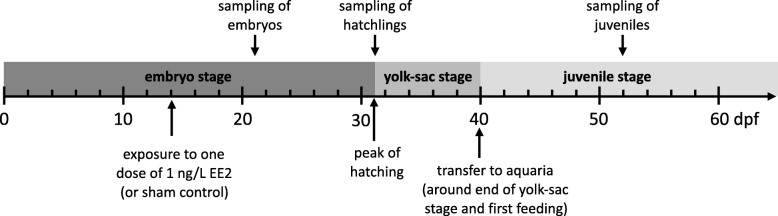
The synthetic 17α-ethinylestradiol (EE2) is a common estrogenic pollutant that has been suspected to affect the demography of river-dwelling salmonids. One possibility is that exposure to EE2 tips the balance during initial steps of sex differentiation, so that male genotypes show female-specific gene expression and gonad formation. Here we study EE2 effects on gene expression around the onset of sex differentiation in a population of European grayling (Thymallus thymallus) that suffers from sex ratio distortions. We exposed singly-raised embryos to one dose of 1 ng/L EE2, studied gene expression 10 days before hatching, at the day of hatching, and around the end of the yolk-sac stage, and related it to genetic sex (sdY genotype). We found that exposure to EE2 affects expression of a large number of genes, especially around hatching. These effects were strongly sex-dependent. We then raised fish for several months after hatching and found no evidence of sex reversal in the EE2-exposed fish. We conclude that ecologically relevant (i.e. low) levels of EE2 pollution do not cause sex reversal by simply tipping the balance at early stages of sex differentiation, but that they interfere with sex-specific gene expression.
Conflict of interest statement
The authors declare that they have no competing interests.
Figures
References
-
- Tiedeken EJ, Tahar A, McHugh B, Rowan NJ. Monitoring, sources, receptors, and control measures for three European Union watch list substances of emerging concern in receiving waters - a 20 year systematic review. Sci Total Env. 2017;574:1140–1163. doi: 10.1016/j.scitotenv.2016.09.084. - DOI - PubMed
MeSH terms
Substances
Grants and funding
LinkOut - more resources
Full Text Sources
Other Literature Sources
Research Materials
Miscellaneous
