Review
. 2019 Jul 15;10(8):540.
doi: 10.1038/s41419-019-1769-9.

Clinical update on head and neck cancer: molecular biology and ongoing challenges

Affiliations
Review

Clinical update on head and neck cancer: molecular biology and ongoing challenges

Elham Alsahafi et al. Cell Death Dis. .

Abstract

Head and neck squamous cell carcinomas (HNSCCs) are an aggressive, genetically complex and difficult to treat group of cancers. In lieu of truly effective targeted therapies, surgery and radiotherapy represent the primary treatment options for most patients. But these treatments are associated with significant morbidity and a reduction in quality of life. Resistance to both radiotherapy and the only available targeted therapy, and subsequent relapse are common. Research has therefore focussed on identifying biomarkers to stratify patients into clinically meaningful groups and to develop more effective targeted therapies. However, as we are now discovering, the poor response to therapy and aggressive nature of HNSCCs is not only affected by the complex alterations in intracellular signalling pathways but is also heavily influenced by the behaviour of the extracellular microenvironment. The HNSCC tumour landscape is an environment permissive of these tumours' aggressive nature, fostered by the actions of the immune system, the response to tumour hypoxia and the influence of the microbiome. Solving these challenges now rests on expanding our knowledge of these areas, in parallel with a greater understanding of the molecular biology of HNSCC subtypes. This update aims to build on our earlier 2014 review by bringing up to date our understanding of the molecular biology of HNSCCs and provide insights into areas of ongoing research and perspectives for the future.


Conflict of interest statement

The authors declare that they have no conflict of interest.

Figures
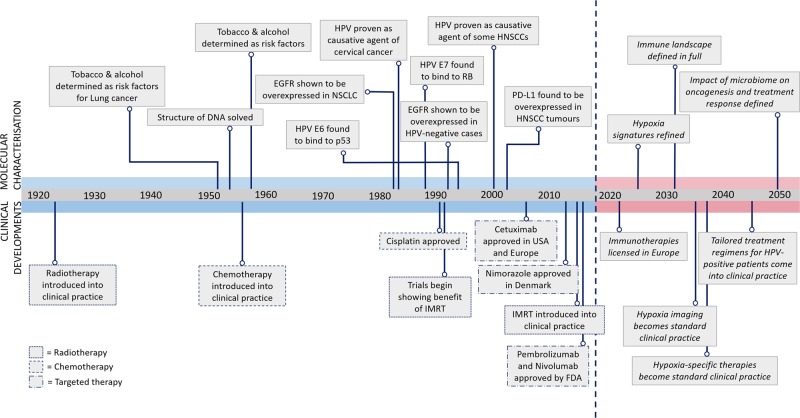
Fig. 1
Fig. 1. Timeline of the molecular characterisation and therapeutic innovations in head and neck cancers, and future perspectives.
Interestingly, the major advances in our understanding of HNSCCs have only been made in the past 20–30 years. Also, some major discoveries concerning the molecular characterisation of HNSCCs have been made almost 20 years after similar discoveries in other cancers. For example, where HPV was proven unequivocally to cause cervical cancers around 1983, the same discovery was not made for HNSCCs until around the year 2000. It is not so hard to understand therefore why therapeutic options for HNSCCs are so far behind, when our understanding of the molecular biology of these diseases only began to develop over the past 2–3 decades. Dates are not exact, and the details presented are by no means exhaustive
Fig. 2
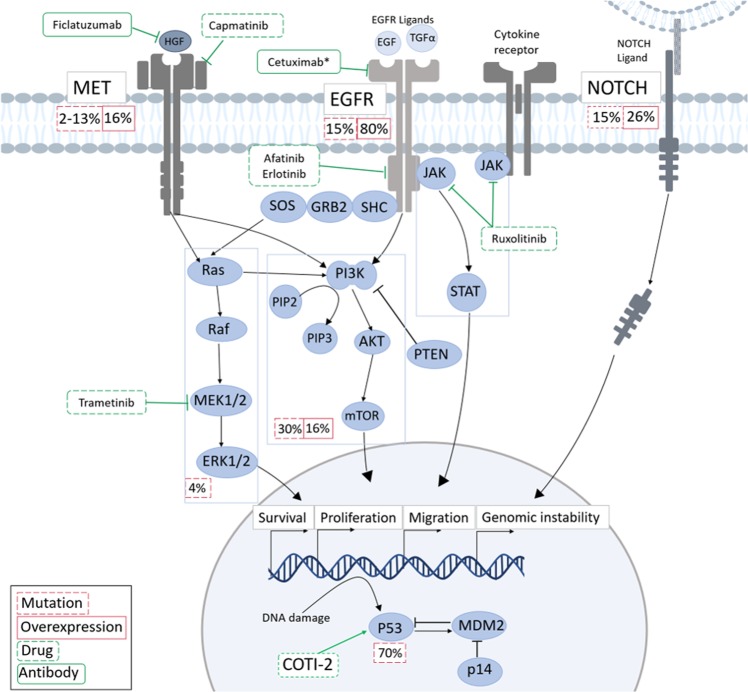
Fig. 2. The genetic alterations in HPV-negative HNSCCs.
EGFR, MET and NOTCH alterations promotes proliferation, migration and cellular survival via signalling through the RAS/RAF/ERK, PI3K and JAK/STAT pathways, all of which are regularly dysregulated in HNSCC. Disruption of the p53 pathway also leads to high levels of genomic instability. Green boxes show possible therapeutic agents either approved (*) or under investigation for clinical use in HNSCC. Information about the percentage of HNSCC cases showing either mutations or overexpression of the pathway as a whole shown in red boxes, where this data are available. Note, though activation of the JAK/Stat pathway is regularly seen in HNSCC, no mutations have yet been found
Fig. 3
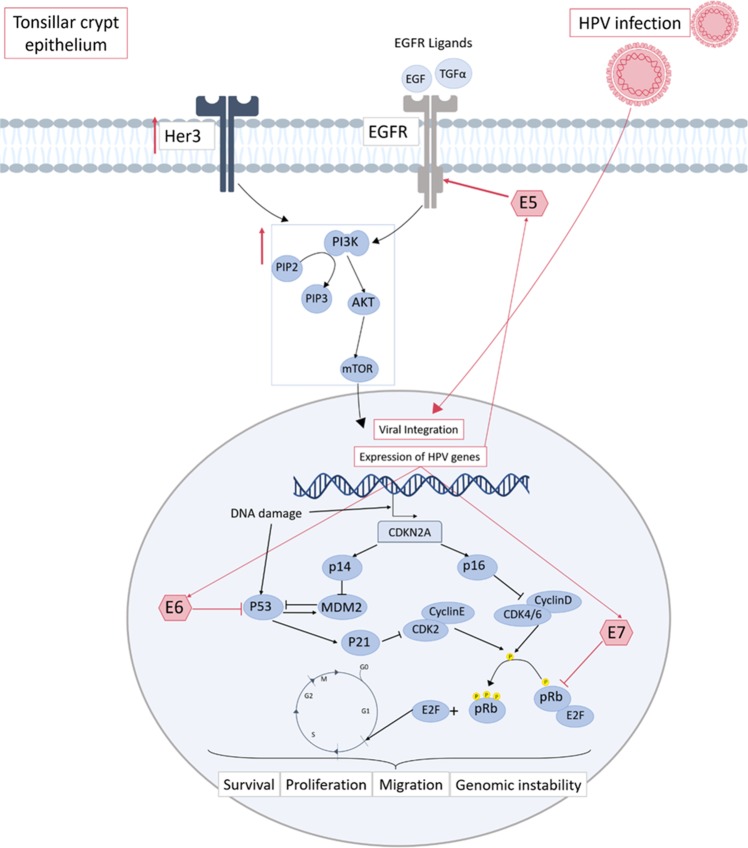
Fig. 3. Aberrant signalling in HPV-positive HNSCC.
HPV oncogenesis occurs mainly in the tonsillar crypt epithelium of the oropharynx. Upon HPV infection, viral DNA is either integrated or exists in the cells in episomes. Regardless, this allows for transcription of viral oncoproteins E5, E6 and E7. The main dysregulation attributed to carcinogenesis in HPV-positive cases stems from the inhibition of p53 by the E6 viral protein, and of Rb by E7. This leads to entry into the cell cycle via release of E2F, and inhibition of p53-mediated cell death. It also results in the accumulation of p16, which subsequently acts as a surrogate marker of HPV infection in HNSCC. Though previously considered a minor player, E5 has also been shown to activate EGFR leading to further oncogenic potential. Amongst the signalling pathways shown to be activated in HPV-HNSCC, the PI3K pathway has been found to be significantly upregulated. This may in part be due to activation by ErbB family members, including both EGFR and Her3,,–

Similar articles

Cited by

References

    1. Shaw R, Beasley N. Aetiology and risk factors for head and neck cancer: United Kingdom National Multidisciplinary Guidelines. J. Laryngol. Otol. 2016;130:S9–S12. doi: 10.1017/S0022215116000360. - DOI - PMC - PubMed
    1. Carbone M, et al. Consensus report of the 8 and 9th Weinman Symposia on gene x environment interaction in carcinogenesis: novel opportunities for precision medicine. Cell Death Differ. 2018;25:1885–1904. doi: 10.1038/s41418-018-0213-5. - DOI - PMC - PubMed
    1. Ha PK, Chang SS, Glazer CA, Califano JA, Sidransky D. Molecular techniques and genetic alterations in head and neck cancer. Oral. Oncol. 2009;45:335–339. doi: 10.1016/j.oraloncology.2008.05.015. - DOI - PMC - PubMed
    1. Suh Y, Amelio I, Guerrero Urbano T, Tavassoli M. Clinical update on cancer: molecular oncology of head and neck cancer. Cell death Dis. 2014;5:e1018. doi: 10.1038/cddis.2013.548. - DOI - PMC - PubMed
    1. Leemans CR, Snijders PJF, Brakenhoff RH. The molecular landscape of head and neck cancer. Nat. Rev. Cancer. 2018;18:269–282. doi: 10.1038/nrc.2018.11. - DOI - PubMed

Publication types

MeSH terms

Substances