


Lifestyle changes for treating psoriasis
- PMID: 31309536
- PMCID: PMC6629583
- DOI: 10.1002/14651858.CD011972.pub2
Lifestyle changes for treating psoriasis
Abstract
Background: Psoriasis is an inflammatory skin disease that presents with itching, red, scaling plaques; its worsening has been associated with obesity, drinking, smoking, lack of sleep, and a sedentary lifestyle. Lifestyle changes may improve psoriasis.
Objectives: To assess the effects of lifestyle changes for psoriasis, including weight reduction, alcohol abstinence, smoking cessation, dietary modification, exercise, and other lifestyle change interventions.
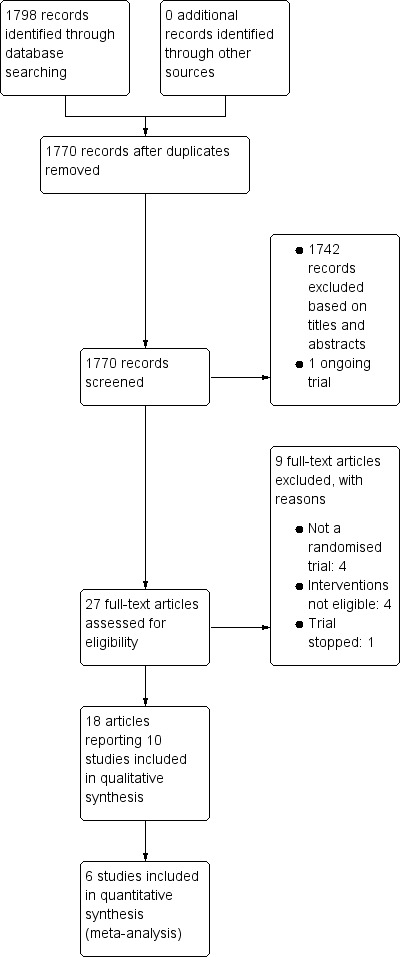
Search methods: We searched the following databases up to July 2018: the Cochrane Skin Specialised Register, CENTRAL, MEDLINE, Embase, and LILACS. We also searched the China National Knowledge Infrastructure, the Airiti Library, and five trials registers up to July 2018. We checked the references of included trials for further relevant trials, and we asked the authors of the included trials if they were aware of any relevant unpublished data.
Selection criteria: We included randomised controlled trials (RCTs) of lifestyle changes (either alone or in combination) for treating psoriasis in people diagnosed by a healthcare professional. Treatment had to be given for at least 12 weeks. Eligible comparisons were no lifestyle changes or another active intervention.
Data collection and analysis: We used standard methodological procedures expected by Cochrane. The primary outcome measures were 'Severity of psoriasis' and 'Adherence to the intervention'. Secondary outcomes were 'Quality of life', 'Time to relapse', and 'Reduction in comorbidities'. We used GRADE to assess the quality of the evidence for each outcome.
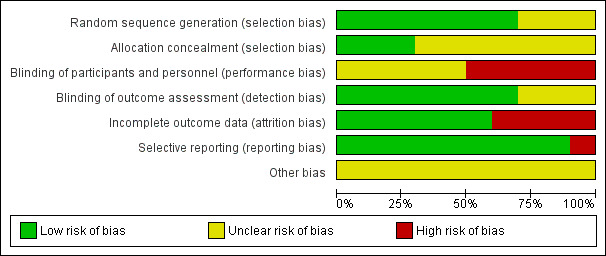
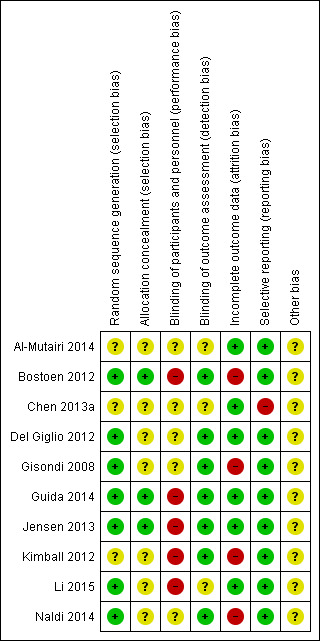
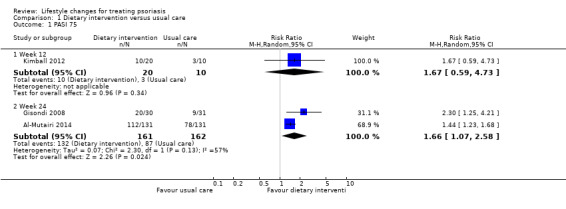
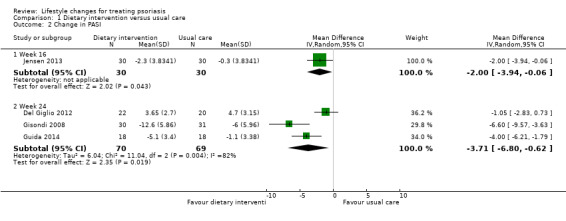
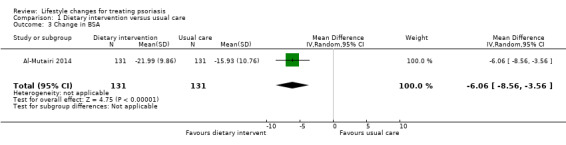
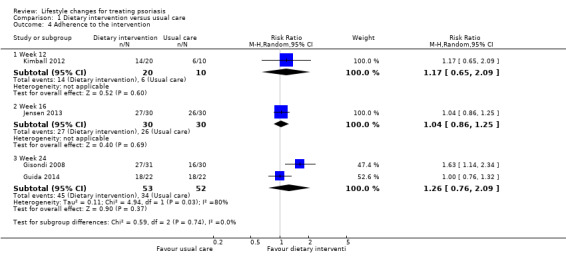
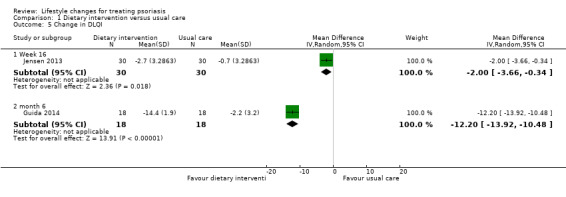
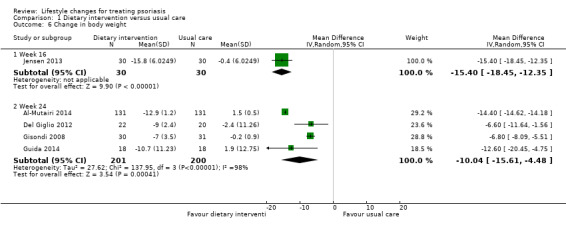
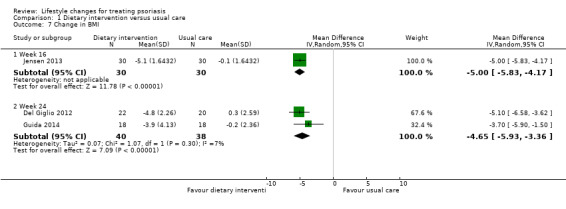
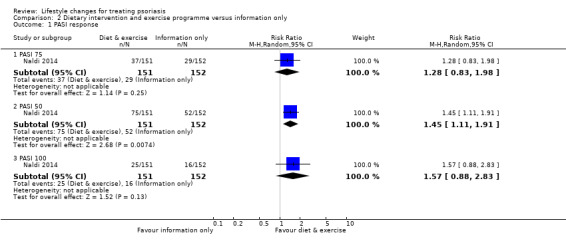
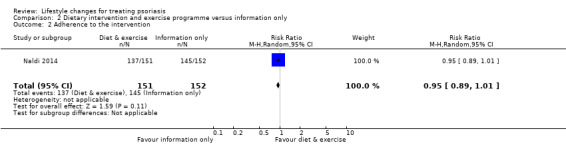
Main results: We included 10 RCTs with 1163 participants (mean age: 43 to 61 years; 656 men and 478 women were reported). Six trials examined the effects of dietary intervention (low-calorie diet) in 499 obese participants (mean age: 44.3 to 61 years; where reported, 395 had moderate-to-severe psoriasis). One trial assessed a combined dietary intervention and exercise programme in 303 obese participants with moderate-to-severe psoriasis who had started a systemic therapy for psoriasis and had not achieved clearance after four weeks of continuous treatment (median age: 53 years). Another trial assessed a walking exercise and continuous health education in 200 participants (mean age: 43.1 years, severity not reported). Finally, two trials included education programmes promoting a healthy lifestyle in 161 participants (aged 18 to 78 years), with one trial on mild psoriasis and the other trial not reporting severity.Comparisons included information only; no intervention; medical therapy alone; and usual care (such as continuing healthy eating).All trials were conducted in hospitals and treated participants for between 12 weeks and three years. One trial did not report the treatment period. Seven trials measured the outcomes at the end of treatment and there was no additional follow-up. In two trials, there was follow-up after the treatment ended. Five trials had a high risk of performance bias, and four trials had a high risk of attrition bias.We found no trials assessing interventions for alcohol abstinence or smoking cessation. No trials assessed time to relapse. Only two trials assessed adverse events; in one trial these were caused by the add-on therapy ciclosporin (given in both groups). The trial comparing two dietary interventions to a no-treatment group observed no adverse events.The results presented in this abstract are based on trials of obese participants.Outcomes for dietary interventions versus usual care were measured 24 weeks to six months from baseline. Compared to usual care, dietary intervention (strict caloric restriction) may lead to 75% or greater improvement from baseline in the Psoriasis Area and Severity Index (PASI 75) (risk ratio (RR) 1.66, 95% confidence interval (CI) 1.07 to 2.58; 2 trials, 323 participants; low-quality evidence). Adherence to the intervention may be greater with the dietary intervention than usual care, but the 95% CI indicates that the dietary intervention might also make little or no difference (RR 1.26, 95% CI 0.76 to 2.09; 2 trials, 105 participants; low-quality evidence). Dietary intervention probably achieves a greater improvement in dermatology quality-of-life index (DLQI) score compared to usual care (MD -12.20, 95% CI -13.92 to -10.48; 1 trial, 36 participants; moderate-quality evidence), and probably reduces the BMI compared to usual care (MD -4.65, 95% CI -5.93 to -3.36; 2 trials, 78 participants; moderate-quality evidence).Outcomes for dietary interventions plus exercise programme were measured 16 weeks from baseline and are based on one trial (303 participants). Compared to information only (on reducing weight to improve psoriasis), combined dietary intervention and exercise programme (dietetic plan and physical activities) probably improves psoriasis severity, but the 95% CI indicates that the intervention might make little or no difference (PASI 75: RR 1.28, 95% CI 0.83 to 1.98). This combined intervention probably results in a greater reduction in BMI (median change -1.10 kg/m², P = 0.002), but there is probably no difference in adherence (RR 0.95, 95% CI 0.89 to 1.01; 137/151 and 145/152 participants adhered in the treatment and control group, respectively). There were no data on quality of life. These outcomes are based on moderate-quality evidence.
Authors' conclusions: Dietary intervention may reduce the severity of psoriasis (low-quality evidence) and probably improves quality of life and reduces BMI (moderate-quality evidence) in obese people when compared with usual care, while combined dietary intervention and exercise programme probably improves psoriasis severity and BMI when compared with information only (moderate-quality evidence). None of the trials measured quality of life.We did not detect a clear difference in treatment adherence between those in the combined dietary intervention and exercise programme group and those given information only (moderate-quality evidence). Adherence may be improved through dietary intervention compared with usual care (low-quality evidence). Participants generally adhered well to the lifestyle interventions assessed in the review.No trials assessed the time to relapse. Trial limitations included unblinded participants and high dropout rate.Future trials should reduce dropouts and include comprehensive outcome measures; they should examine whether dietary intervention with or without an exercise programme is effective in non-obese people with psoriasis, whether an additional exercise programme is more effective than dietary intervention alone, whether the time to relapse prolongs in people who receive dietary intervention with or without exercise programme, and whether smoking cessation and alcohol abstinence are effective in treating psoriasis.
Conflict of interest statement
Shu‐Hua Ko: nothing to declare. Ching‐Chi Chi: I received fees for speaking from AbbVie Taiwan (Aug 2017), Ego Pharmaceuticals Taiwan (Jan 2017), Janssen‐Cilag Taiwan (April 2017), Novartis Taiwan (May 2017), and Pfizer Taiwan (Sept 2017). These companies distribute biologics for treating psoriasis in Taiwan. Mei‐Ling Yeh: nothing to declare. Shu‐Hui Wang: nothing to declare. Yu‐Shiun Tsai: nothing to declare. Mei‐Ya Hsu: nothing to declare.
Ching‐Chi Chi, lead author on the protocol of this Cochrane Review, became conflicted in terms of Cochrane’s commercial sponsorship policy and has been replaced by Shu‐Hua Ko, as lead author. Shu‐Hua Ko has no relevant financial conflict of interest, and in the judgement of Cochrane Skin’s editorial team, she has made a contribution equal to Ching‐Chi Chi, which justifies her position as first author. This change has been discussed with and approved by the Funding Arbiters.
Content referee Luigi Naldi was an author of one of the included studies (Naldi 2014).
Figures
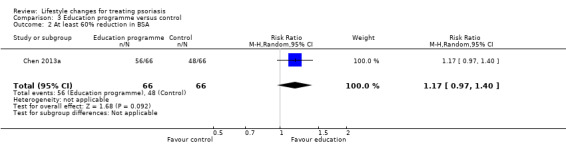
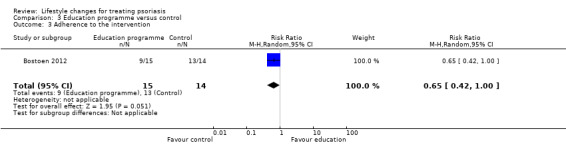
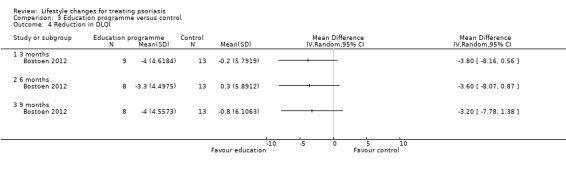
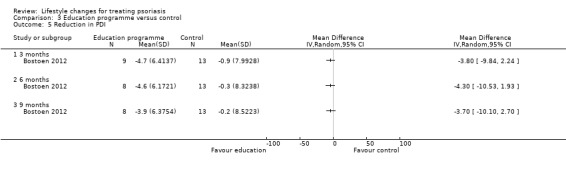
Comment in
-
From the Cochrane Library: Lifestyle changes for treating psoriasis.J Am Acad Dermatol. 2024 Jan;90(1):e35-e37. doi: 10.1016/j.jaad.2023.09.023. Epub 2023 Sep 17. J Am Acad Dermatol. 2024. PMID: 37717729 No abstract available.
References
References to studies included in this review
Al‐Mutairi 2014 {published data only}
-
- Al‐Mutairi N, Manchanda Y. The effect of weight reduction on treatment outcomes in obese patients of psoriasis on biologic therapy. Journal of the American Academy of Dermatology 2015;72(5 Suppl 1):AB254.
-
- Al‐Mutairi N, Nour T. The effect of weight reduction on treatment outcomes in obese patients with psoriasis on biologic therapy: a randomized controlled prospective trial. Expert Opinion on Biological Therapy 2014;14(6):749‐56. [CENTRAL: CN‐00993130; PUBMED: 24661040] - PubMed
Bostoen 2012 {published data only}
-
- Bostoen J, Bracke S, Keyser S, Lambert J. An educational programme for patients with psoriasis and atopic dermatitis: a prospective randomized controlled trial. British Journal of Dermatology 2012;167(5):1025‐31. [CENTRAL: CN‐00856431; PUBMED: 22709422] - PubMed
-
- Bostoen J, Geusens B, Lambert J, Bracke S, Dekeyser S. An educational program for patients with psoriasis and atopic dermatitis: a prospective randomized, controlled trial. British Journal of Dermatology 2012; Vol. 66, issue 4 Suppl 1:Ab84. [CENTRAL: CN‐01005670] - PubMed
Chen 2013a {published data only}
-
- Chen GL. Sensible diet and nursing strategy for psoriasis [銀屑病的合理飲食和護理對策]. Laboratory Medicine and Clinic 2013;10(16):2186‐7.
Del Giglio 2012 {published data only}
-
- Giglio M, Gisondi P, Tessari G, Girolomoni G. Weight reduction alone may not be sufficient to maintain disease remission in obese patients with psoriasis: a randomized, investigator‐blinded study. Dermatology 2012;224(1):31‐7. [CENTRAL: CN‐01017641; PUBMED: 22456343] - PubMed
Gisondi 2008 {published data only}
-
- Gisondi P, Giglio M, Francesco V, Zamboni M, Girolomoni G. Weight loss improves the response of obese patients with moderate‐to‐severe chronic plaque psoriasis to low‐dose cyclosporine therapy: a randomized, controlled, investigator‐blinded clinical trial. American Journal of Clinical Nutrition 2008;88(5):1242‐7. [CENTRAL: CN‐00665491] - PubMed
Guida 2014 {published data only}
-
- Guida B, Napoleone A, Trio R, Nastasi A, Balato N, Laccetti R, et al. Energy‐restricted, n‐3 polyunsaturated fatty acids‐rich diet improves the clinical response to immuno‐modulating drugs in obese patients with plaque‐type psoriasis: a randomized control clinical trial. Clinical Nutrition (Edinburgh, Scotland) 2014;33(3):399‐405. [CENTRAL: CN‐00988461] - PubMed
Jensen 2013 {published data only}
-
- Geiker N, Jensen P, Zachariae C, Christensen R, Schaadt B, Stender S, et al. Weight loss improves the cardiovascular risk profile of obese patients with psoriasis. Obesity Reviews 2014;15(S2):175. [CENTRAL: CN‐01066070] - PubMed
-
- Jensen P. Erratum: Effect of weight loss on the severity of psoriasis: a randomized clinical study (JAMA Dermatology (2013) 149:7 (795‐801) doi:10.1001/ jamadermatol.2013.722). JAMA Dermatology 2013;149(8):997. [PUBMED: 23752669] - PubMed
-
- Jensen P, Christensen R, Zachariae C, Geiker NR, Schaadt BK, Stender S, et al. Long‐term effects of weight reduction on the severity of psoriasis in a cohort derived from a randomized trial: a prospective observational follow‐up study. American Journal of Clinical Nutrition 2016;104(2):259‐65. [PUBMED: 27334236] - PubMed
-
- Jensen P, Zachariae C, Christensen R, Geiker N, Schaadt B, Stender S, et al. Effect of weight loss on the severity of psoriasis: a randomised controlled trial. Journal of Investigative Dermatology 2013;133(Supp 1):S182. [EMBASE: 71083543] - PubMed
-
- Jensen P, Zachariae C, Christensen R, Geiker NR, Schaadt BK, Stender S, et al. Effect of weight loss on the cardiovascular risk profile of obese patients with psoriasis. Acta Dermato‐Venereologica 2014;94(6):691‐4. [CENTRAL: CN‐01022975] - PubMed
Kimball 2012 {published data only}
-
- Kimball AB, Alavian C, Alora‐Palli M, Bagel J. Weight loss in obese patients with psoriasis can be successfully achieved during a course of phototherapy. Journal of the European Academy of Dermatology and Venereology : JEADV 2012;26(12):1582‐4. [CENTRAL: CN‐00899892] - PubMed
Li 2015 {published data only}
-
- Li YF, Jiang LJ, Tao Y, Qin GL, Li Z, He W. The effects of walking exercise combined with continuous health education on prevention of psoriasis recurrence [慢走運動與持續健康教育對預防銀屑病復發的效果研究]. Journal of Nursing Adminstration 2015;15(4):294‐6.
Naldi 2014 {published data only}
-
- Naldi L, Conti A, Cazzaniga S, Patrizi A, Pazzaglia M, Lanzoni A, et al. Diet and physical exercise in psoriasis: a randomized controlled trial. British Journal of Dermatology 2014;170(3):634‐42. [CENTRAL: CN‐00981223] - PubMed
References to studies excluded from this review
ACTRN12613001031752 {unpublished data only}
-
- ACTRN12613001031752. Exercise and nutrition intervention for patients with psoriasis [The effect of an exercise and nutrition intervention on body composition in patients with psoriasis]. www.anzctr.org.au/Trial/Registration/TrialReview.aspx?id=364970 (first received 12 September 2013). [ACTRN12613001031752]
Balato 2013 {published data only}
-
- Balato N, Megna M, Costanzo L, Balato A, Ayala F. Educational and motivational support service: a pilot study for mobile‐phone‐based interventions in patients with psoriasis. British Journal of Dermatology 2013; Vol. 168, issue 1:201‐5. [CENTRAL: CN‐00966396] - PubMed
Chang 2016 {published data only}
-
- Chang YH, Wang CF. Application of sweating exercise in treating psoriasis vulgaris [運動汗法在尋常型銀屑病治療中的運用]. Asia‐Pacific Traditional Medicine 2016;12(4):97‐8. [DOI: 10.11954/ytctyy.201604042] - DOI
Fortes 2006 {published data only}
-
- Fortes C, Mastroeni S, Leffondré K. Relationship between smoking and the clinical severity of psoriasis [吸煙与銀屑病臨床嚴重度的關系]. Digest of the World Core Medical Journals ‐ Dermatology 2006;2(3):28‐9.
He 2016 {published data only}
-
- He H, Dong D, Jiang G. Influence of eight‐section brocade on quality of life of psoriasis patients with qiyu stagnation [八段錦對氣郁質銀屑病病人生活質量的影響]. Chinese Nursing Research 2016;30(6):2251‐2. [DOI: 10.3969/j.issn.1009-6493.2016.18.025] - DOI
Hsiao 2001 {published data only}
-
- Hsaio CL, Yen DC, He XC, Liu SC, Fang YL. Effects of various diets on the flares of psoriasis [不同飲食結構對銀屑病患者病情轉歸的影響]. Chinese Journal of Dermatology 2001;34(2):132.
Keyworth 2014 {published data only}
-
- Keyworth C, Nelson PA, Bundy C, Griffiths CE, Cordingley L. Does health message framing affect behavioural intentions in patients with psoriasis? An experimental study. British Journal of Dermatology 2014;171(6):e143‐4. [CENTRAL: CN‐01088032]
Rucevic 2003 {published data only}
-
- Barisic‐Drusko V, Rucevic I. Psoriasis vulgaris and low energy diet. Journal of the European Academy of Dermatology and Venereology: JEADV 2003;17(Suppl 3):378. [CENTRAL: CN‐00478458]
-
- Rucevic I, Perl A, Barisic‐Drusko V, Adam‐Perl M. The role of the low energy diet in psoriasis vulgaris treatment. Collegium Antropologicum 2003;27(Suppl 1):41‐8. [PUBMED: 12955890] - PubMed
Zackheim 1971 {published data only}
-
- Zackheim HS, Farber EM. Rapid weight reduction and psoriasis. Archives of Dermatology 1971;103(2):136‐40. [PUBMED: 4928232] - PubMed
References to ongoing studies
NCT03440736 {published data only}
-
- Comparison of secukinumab 300 mg combined with a lifestyle intervention to secukinumab alone for the treatment of moderate to severe psoriasis patients with concomitant metabolic syndrome (METABOLYX). clinicaltrials.gov/ct2/show/NCT03440736 (first received 21 February 2018).
Additional references
Adams 2004
-
- Adams G, Gulliford MC, Ukoumunne OC, Eldridge S, Chinn S, Campbell MJ. Patterns of intra‐cluster correlation from primary care research to inform study design and analysis. Journal of Clinical Epidemiology 2004;57(8):785‐94. [PUBMED: 15485730] - PubMed
Alberti 2009
-
- Alberti KG, Eckel RH, Grundy SM, Zimmet PZ, Cleeman JI, Donato KA, et al. Harmonizing the metabolic syndrome: a joint interim statement of the International Diabetes Federation Task Force on Epidemiology and Prevention; National Heart, Lung, and Blood Institute; American Heart Association; World Heart Federation; International Atherosclerosis Society; and International Association for the Study of Obesity. Circulation 2009;120(16):1640‐5. [PUBMED: 19805654] - PubMed
Altunay 2013
-
- Altunay I, Doner N, Mercan S, Demirci GT. Stress coping mechanisms in smoking psoriatics. Dermatologica Sinica 2013;31(3):130‐3. [DOI: 10.1016/j.dsi.2013.02.001] - DOI
Armstrong 2014
-
- Armstrong AW, Harskamp CT, Dhillon JS, Armstrong EJ. Psoriasis and smoking: a systematic review and meta‐analysis. British Journal of Dermatology 2014;170(2):304‐14. [PUBMED: 24117435] - PubMed
Bronsard 2010
-
- Bronsard V, Paul C, Prey S, Puzenat E, Gourraud PA, Aractingi S, et al. What are the best outcome measures for assessing quality of life in plaque type psoriasis? A systematic review of the literature. Journal of the European Academy of Dermatology and Venereology: JEADV 2010;24 Suppl 2:17‐22. [PUBMED: 20443996] - PubMed
Camp 1992
-
- Camp RD. Psoriasis. In: Champion RH, Burton JL, Ebling EJG editor(s). Textbook of Dermatology. 5th Edition. Vol. 2, Oxford: Blackwell Scientific Publications, 1992:1391‐1457.
Chen 2013b
Chi 2012
Chi 2013
-
- Chi CC. Evidence‐based dermatology. Dermatologica Sinica 2013;31(1):2‐6. [DOI: 10.1016/j.dsi.2012.06.002] - DOI
Chi 2014
-
- Chi CC, Wang SH. Efficacy and cost‐efficacy of biologic therapies for moderate to severe psoriasis: a meta‐analysis and cost‐efficacy analysis using the intention‐to‐treat principle. BioMed Research International 2014; Vol. 2014:862851. [DOI: 10.1155/2014/862851; PUBMED: 24605338] - DOI - PMC - PubMed
Chi 2015
-
- Chi CC, Wang J, Chen YF, Wang SH, Chen FL, Tung TH. Risk of incident chronic kidney disease and end‐stage renal disease in patients with psoriasis: a nationwide population‐based cohort study. Journal of Dermatological Science 2015;78(3):232‐8. [DOI: 10.1016/j.jdermsci.2015.03.012; PUBMED: 25862150] - DOI - PubMed
Chi 2017
CS‐COUSIN 2019
-
- Cochrane Skin Core Outcome Set Initiative. cs‐cousin.org/ (accessed prior to 11 July 2019).
De Vries 2013
Debbaneh 2014
Deeks 2017
-
- Deeks JJ, Higgins JP, Altman DG (editors), on behalf of the Cochrane Statistical Methods Group. Chapter 9: Analysing data and undertaking meta‐analyses. In: Higgins JPT, Churchill R, Chandler J, Cumpston MS (editors), Cochrane Handbook for Systematic Reviews of Interventions version 5.2.0 (updated June 2017), Cochrane, 2017. Available from www.training.cochrane.org/handbook.
Di Minno 2014
-
- Minno MN, Peluso R, Iervolino S, Russolillo A, Lupoli R, Scarpa R. Weight loss and achievement of minimal disease activity in patients with psoriatic arthritis starting treatment with tumour necrosis factor alpha blockers. Annals of the Rheumatic Diseases 2014;73(6):1157‐62. [PUBMED: 23771989] - PMC - PubMed
Essayli 2017
-
- Essayli JH, Murakami JM, Wilson RE, Latner JD. The impact of weight labels on body image, internalized weight stigma, affect, perceived health, and intended weight loss behaviors in normal‐weight and overweight college women. American Journal of Health Promotion 2017;31(6):484‐90. [PUBMED: 27553058] - PubMed
Feldman 2005
Follman 1982
-
- Follmann D, Elliot P, Suh I, Cutler J. Variance imputation for overviews of clinical trials with continuous response. Journal of Clinical Epidemiology 1992;45(7):769‐73. - PubMed
Ford 2018
-
- Ford AR, Siegel M, Bagel J, Cordoro KM, Garg A, Gottlieb A, et al. Dietary recommendations for adults with psoriasis or psoriatic arthritis from the medical board of the National Psoriasis Foundation: a systematic review. JAMA dermatology 2018;154(8):934‐50. [PUBMED: 29926091] - PubMed
Foss 1980
-
- Foss ML, Lampman RM, Schteingart DE. Extremely obese patients: improvements in exercise tolerance with physical training and weight loss. Archives of Physical Medicine and Rehabilitation 1980;61(3):119‐24. [PUBMED: 7369849] - PubMed
Frankel 2012
Gelfand 2006
-
- Gelfand JM, Neimann AL, Shin DB, Wang X, Margolis DJ, Troxel AB. Risk of myocardial infarction in patients with psoriasis. JAMA 2006;296(14):1735‐41. [PUBMED: 17032986] - PubMed
Gelfand 2009
Gerdes 2010
-
- Gerdes S, Zahl VA, Weichenthal M, Mrowietz U. Smoking and alcohol intake in severely affected patients with psoriasis in Germany. Dermatology 2010;220(1):38‐43. [PUBMED: 19996578] - PubMed
Gerdes 2011
-
- Gerdes S, Rostami‐Yazdi M, Mrowietz U. Adipokines and psoriasis. Experimental Dermatology 2011;20(2):81‐7. [PUBMED: 21255085] - PubMed
Higgins 2011
-
- Higgins JP, Green S (editors). Cochrane Handbook for Systematic Reviews of Interventions Version 5.1.0 (updated March 2011). The Cochrane Collaboration, 2011. Available from handbook.cochrane.org.
Higgins 2011b
-
- Higgins JP, Deeks JJ, Altman DG (editors). Chapter 16: Special topics in statistics. In: Higgins JPT, Green S (editors). Cochrane Handbook for Systematic Reviews of Interventions. Version 5.1.0 (updated March 2011). The Cochrane Collaboration, 2011. Available from handbook.cochrane.org.
Higgins 2017
-
- Higgins JP, Altman DG, Sterne JA (editors). Chapter 8: Assessing risk of bias in included studies. In: Higgins JPT, Churchill R, Chandler J, Cumpston MS (editors), Cochrane Handbook for Systematic Reviews of Interventions version 5.2.0 (updated June 2017), Cochrane, 2017. Available from www.training.cochrane.org/handbook.
Hunter 2013
-
- Hunter HJ, Griffiths CE, Kleyn CE. Does psychosocial stress play a role in the exacerbation of psoriasis?. British Journal of Dermatology 2013;169(5):965‐74. [PUBMED: 23796214] - PubMed
Khilji 2001
-
- Khilji FA, Gonzalez M, Finlay AY. Clinical meaning of change in Dermatology Life Quality Index scores. British Journal of Dermatology 2001;147(Suppl 62):25‐54.
Ko 2016
-
- Ko W‐C, Tsai T‐F, Tang C‐H. Health state utility, willingness to pay, and quality of life among Taiwanese patients with psoriasis. Dermatologica Sinica 2016;34(4):185‐91. [EMBASE: 20160830045]
Lu 2013
Ma 2013
-
- Ma C, Harskamp CT, Armstrong EJ, Armstrong AW. The association between psoriasis and dyslipidaemia: a systematic review. British Journal of Dermatology 2013;168(3):486‐95. [PUBMED: 23106411] - PubMed
Mason 2013
Mrowietz 2011
Naldi 2005
-
- Naldi L, Chatenoud L, Linder D, Belloni Fortina A, Peserico A, Virgili AR, et al. Cigarette smoking, body mass index, and stressful life events as risk factors for psoriasis: results from an Italian case‐control study. Journal of Investigative Dermatology 2005;125(1):61‐7. [PUBMED: 15982303] - PubMed
Nestle 2009
-
- Nestle FO, Kaplan DH, Barker J. Psoriasis. New England Journal of Medicine 2009;361(5):496‐509. [PUBMED: 19641206] - PubMed
NICE 2008
-
- National Institute for Health and Care Excellence. Adalimumab for the treatment of adults with psoriasis. Technology appraisal guidance [TA146] 2008. www.nice.org.uk/guidance/ta146. London, (accessed 17 October 2017).
Owen 2000
Parisi 2013
-
- Parisi R, Symmons DP, Griffiths CE, Ashcroft DM. Global epidemiology of psoriasis: a systematic review of incidence and prevalence. Journal of Investigative Dermatology 2013;133(2):377‐85. [PUBMED: 23014338] - PubMed
Parker 2005
-
- Parker DR, Evangelou E, Eaton CB. Intraclass correlation coefficients for cluster randomized trials in primary care: the cholesterol education and research trial (CEART). Contemporary Clinical Trials 2005;26(2):260‐7. [PUBMED: 15837446] - PubMed
Puzenat 2010
-
- Puzenat E, Bronsard V, Prey S, Gourraud PA, Aractingi S, Bagot M, et al. What are the best outcome measures for assessing plaque psoriasis severity? A systematic review of the literature. Journal of the European Academy of Dermatology and Venereology: JEADV 2010;24 Suppl 2:10‐6. [PUBMED: 20443995] - PubMed
Review Manager 2014 [Computer program]
-
- Nordic Cochrane Centre, The Cochrane Collaboration. Review Manager 5 (RevMan 5). Version 5.3. Copenhagen: Nordic Cochrane Centre, The Cochrane Collaboration, 2014.
Ryan 2014
-
- Ryan C, Korman NJ, Gelfand JM, Lim HW, Elmets CA, Feldman SR, et al. Research gaps in psoriasis: opportunities for future studies. Journal of the American Academy of Dermatology 2014;70(1):146‐67. [PUBMED: 24126079] - PubMed
Schünemann 2013
-
- Schünemann H, Brożek J, Guyatt G, Oxman A, editor(s). Handbook for grading the quality of evidence and the strength of recommendations using the GRADE approach (updated October 2013). GRADE Working Group, 2013. Available from gdt.guidelinedevelopment.org/app/handbook/handbook.html.
Schünemann 2017
-
- Schünemann HJ, Oxman AD, Higgins JP, Vist GE, Glasziou P, Akl E, et al. on behalf of the Cochrane GRADEing Methods Group and the Cochrane Statistical Methods Group. Chapter 11: Completing ‘Summary of findings’ tables and grading the confidence in or quality of the evidence. In: Higgins JPT, Churchill R, Chandler J, Cumpston MS (editors), Cochrane Handbook for Systematic Reviews of Interventions version 5.2.0 (updated June 2017). Cochrane, 2017. Available from www.training.cochrane.org/handbook.
Serwin 2007
-
- Serwin AB, Sokolowska M, Chodynicka B. Tumour necrosis factor alpha (TNF‐alpha)‐converting enzyme (TACE) and soluble TNF‐alpha receptor type 1 in psoriasis patients treated with narrowband ultraviolet B. Photodermatology, Photoimmunology & Photomedicine 2007;23(4):130‐4. [PUBMED: 17598866] - PubMed
Serwin 2008
-
- Serwin AB, Sokolowska M, Dylejko E, Chodynicka B. Tumour necrosis factor (TNF‐alpha) alpha converting enzyme and soluble TNF‐alpha receptor type 1 in psoriasis patients in relation to the chronic alcohol consumption. Journal of the European Academy of Dermatology and Venereology: JEADV 2008;22(6):712‐7. [PUBMED: 18312327] - PubMed
Stata 2009 [Computer program]
-
- StataCorp. Stata. Version SE 11.2. College Station, TX, USA: StataCorp, 2009.
Toussirot 2014
Treloar 2010
-
- Treloar V. Integrative dermatology for psoriasis: facts and controversies. Clinics in Dermatology 2010;28(1):93‐9. [PUBMED: 20082958] - PubMed
Tsai 2017
-
- Tsai TF, Lee CH, Huang YH, Chi CC, Chang YT, Wong TW, et al. Taiwanese Dermatological Association consensus statement on management of psoriasis. Dermatologica Sinica 2017;35(2):66‐77. [DOI: 10.1016/j.dsi.2017.01.002] - DOI
Upala 2015
-
- Upala S, Sanguankeo A. Effect of lifestyle weight loss intervention on disease severity in patients with psoriasis: a systematic review and meta‐analysis. International Journal of Obesity (2005) 2015;39(8):1197‐202. [PUBMED: 25920774] - PubMed
Wang 2014
-
- Wang SH, Chi CC, Hu S. Cost‐efficacy of biologic therapies for moderate to severe psoriasis from the perspective of the Taiwanese healthcare system. International Journal of Dermatology 2014;53(9):1151‐6. [PUBMED: 24738910] - PubMed
Yang 2015
-
- Yang HJ, Yang KC. Impact of psoriasis on quality of life in Taiwan. Dermatologica Sinica 2015;33(3):146‐50. [DOI: 10.1016/j.dsi.2015.02.001] - DOI
Zhang 2015
-
- Zhang A, Silverberg JI. Association of atopic dermatitis with being overweight and obese: a systematic review and metaanalysis. Journal of the American Academy of Dermatology 2015;72(4):606‐16.e4. [PUBMED: 25773409] - PubMed
Publication types
MeSH terms
LinkOut - more resources
Full Text Sources
Medical
