


A scent of romance: human putative pheromone affects men's sexual cognition
- PMID: 31309986
- PMCID: PMC6778825
- DOI: 10.1093/scan/nsz051
A scent of romance: human putative pheromone affects men's sexual cognition
Abstract
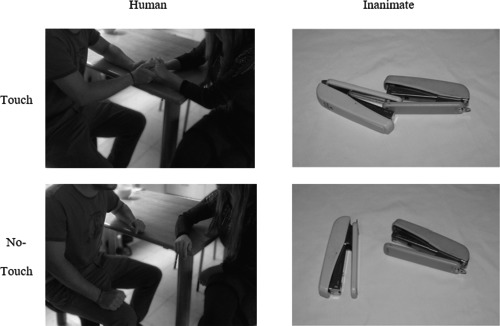
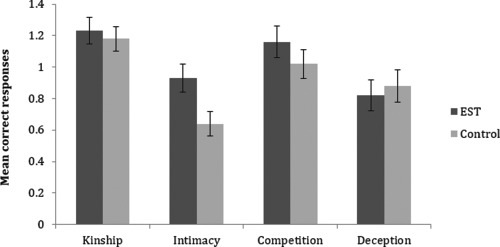
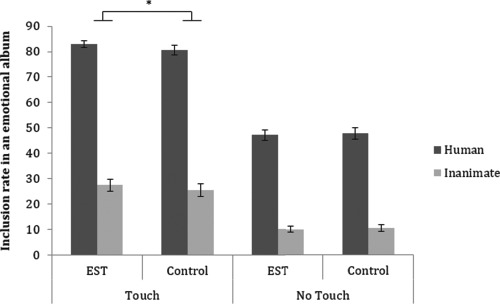
Previous studies suggest that the putative human pheromone estratetraenol affects several systems underlying human functioning and appears to activate neural systems that are known to affect sexual behavior. In this study, we investigated whether exposure to estratetraenol affects men's social cognition abilities. In the first experiment, men performed the Interpersonal Perception task while being exposed to estratetraenol and to a control solution. Men performed the task with better accuracy while being exposed to estratetraenol. This improvement was evident especially in the Intimacy category where participants evaluated romantic relationships. In a second experiment, we exposed a different sample of men to estratetraenol and to a control solution while performing a task that implicitly measured their emotional reaction to photos depicting two humans either romantically touching or not, with a control condition of two inanimate objects either touching or not. We found that the participants' emotional reaction to touch was stronger under exposure to estratetraenol. Together, these results suggest that exposure to estratetraenol may trigger a change in men's social cognition, especially in sexually related situations.
Keywords: affective touch; chemosignaling; estratetraenol; mating behavior; sexual cognition.
© The Author(s) 2019. Published by Oxford University Press.
Figures
References
-
- Adolphs R. (1999). Social cognition and the human brain. Trends in Cognitive Sciences, 3, 469–79. - PubMed
-
- Barlow D.H., Durand V.M. (2012). Abnormal Psychology: An Integrative Approach. Sixth edition, Toronto: Cengage Learning.
-
- Bensafi M., Brown W., Khan R., et al. (2004). Sniffing human sex-steroid derived compounds modulates mood, memory and autonomic nervous system function in specific behavioral contexts. Behavioural Brain Research, 152, 11–22. - PubMed
-
- Bernieri F. (2001). Toward a taxonomy of interpersonal sensitivity In: Hall J.A., Bernieri F.J., editors. Interpersonal Sensitivity: Theory and Measurement, Mahwah, NJ: Lawrence Erlboum Associates, pp. 3–20.
-
- Brown R.E., Macdonald D.W. (1985). Social Odours in Mammals, Oxford University Press.
