


Cancer Testis Antigens and Immunotherapy: Where Do We Stand in the Targeting of PRAME?
- PMID: 31311081
- PMCID: PMC6678383
- DOI: 10.3390/cancers11070984
Cancer Testis Antigens and Immunotherapy: Where Do We Stand in the Targeting of PRAME?
Abstract
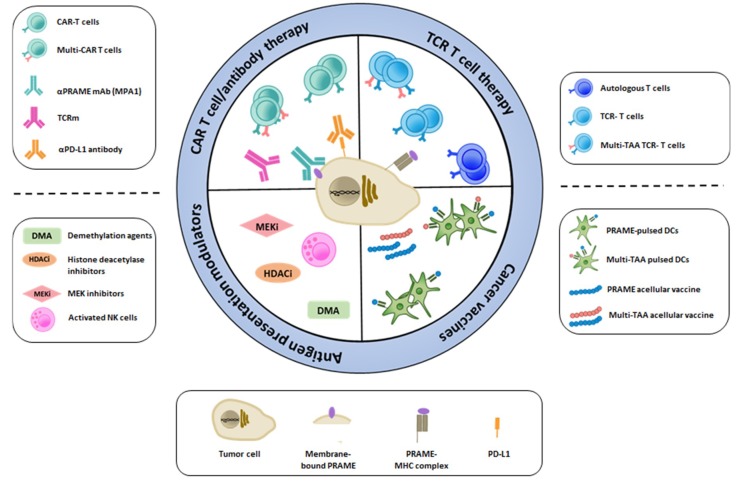
PRAME or PReferentially expressed Antigen in Melanoma is a testis-selective cancer testis antigen (CTA) with restricted expression in somatic tissues and re-expression in various cancers. It is one of the most widely studied CTAs and has been associated with the outcome and risk of metastasis. Although little is known about its pathophysiological function, PRAME has gained interest as a candidate target for immunotherapy. This review provides an update on our knowledge on PRAME expression and function in healthy and malignant cells and the current immunotherapeutic strategies targeting PRAME with their specific challenges and opportunities. We also highlight some of the features that position PRAME as a unique cancer testis antigen to target.
Keywords: PRAME; adoptive T cell therapy; antibody; cancer testis antigen; cancer vaccine; immunotherapy.
Conflict of interest statement
The authors declare no conflict of interest.
Figures
References
-
- Coiffier B., Lepage E., Briere J., Herbrecht R., Tilly H., Bouabdallah R., Morel P., Van Den Neste E., Salles G., Gaulard P., et al. CHOP chemotherapy plus rituximab compared with CHOP alone in elderly patients with diffuse large-B-cell lymphoma. N. Engl. J. Med. 2002;346:235–242. doi: 10.1056/NEJMoa011795. - DOI - PubMed
Publication types
Grants and funding
LinkOut - more resources
Full Text Sources
Other Literature Sources
