


Uterine receptivity, embryo attachment, and embryo invasion: Multistep processes in embryo implantation
- PMID: 31312101
- PMCID: PMC6613011
- DOI: 10.1002/rmb2.12280
Uterine receptivity, embryo attachment, and embryo invasion: Multistep processes in embryo implantation
Abstract
Background: Recurrent implantation failure is a critical issue in IVF-ET treatment. Successful embryo implantation needs appropriate molecular and cellular communications between embryo and uterus. Rodent models have been used intensively to understand these mechanisms.
Methods: The molecular and cellular mechanisms of embryo implantation were described by referring to the previous literature investigated by us and others. The studies using mouse models of embryo implantation were mainly cited.
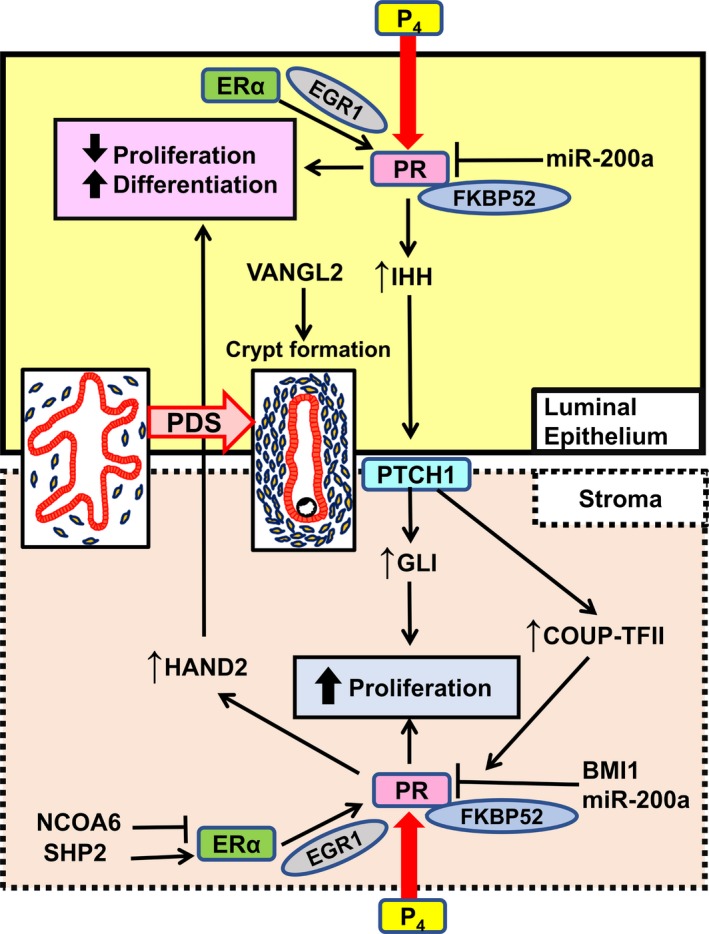
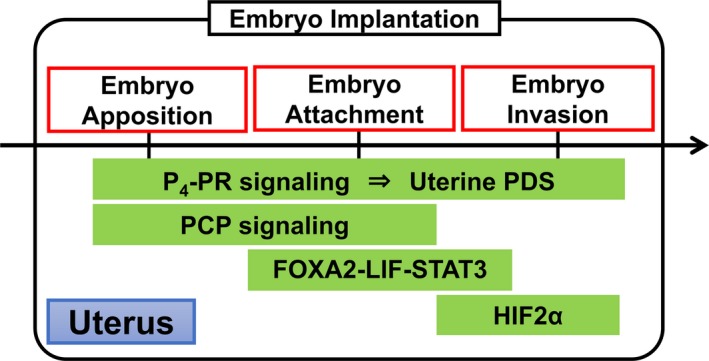
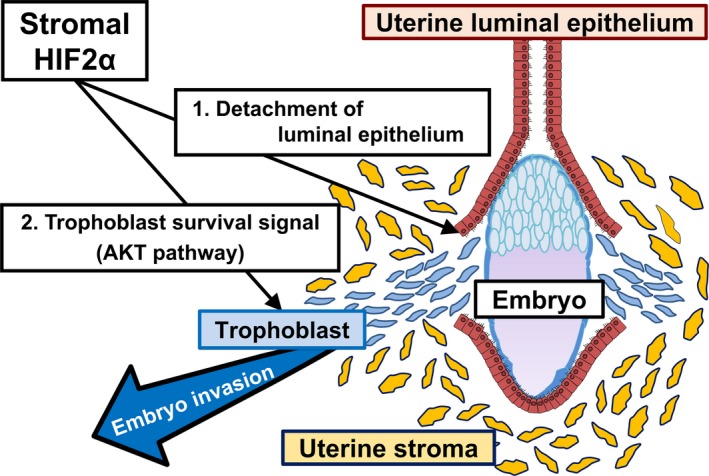
Results: Progesterone (P4) produced by ovarian corpus luteum provides the uterus with receptivity to the embryo, and uterine epithelial growth arrest and stromal proliferation, what we call uterine proliferation-differentiation switching (PDS), take place in the peri-implantation period before embryo attachment. Uterine PDS is a hallmark of uterine receptivity, and several genes such as HAND2 and BMI1, control uterine PDS by modulating P4-PR signaling. As the next implantation process, embryo attachment onto the luminal epithelium occurs. This process is regulated by FOXA2-LIF pathway and planar cell polarity signaling. Then, the luminal epithelium at the embryo attachment site detaches from the stroma, which enables trophoblast invasion. This process of embryo invasion is regulated by HIF2α in the stroma.
Conclusion: These findings indicate that embryo implantation contains multistep processes regulated by specific molecular pathways.
Keywords: cell proliferation; embryo implantation; infertility; mouse models; uterine receptivity.
Conflict of interest statement
Conflict of interest: The authors declare that they have no conflict of interest. Human/animal rights: This article does not contain any studies with human and animal subjects performed by the any of the authors.
Figures
References
-
- Nachtigall RD. International disparities in access to infertility services. Fertil Steril. 2006;85(4):871‐875. - PubMed
-
- Vander Borght M, Wyns C. Fertility and infertility: definition and epidemiology. Clin Biochem. 2018;62:2‐10. - PubMed
-
- Dey SK, Lim H, Das SK, et al. Molecular cues to implantation. Endocr Rev. 2004;25(3):341‐373. - PubMed
Publication types
LinkOut - more resources
Full Text Sources
Medical
Research Materials
Miscellaneous