


MSC: immunoregulatory effects, roles on neutrophils and evolving clinical potentials
- PMID: 31312397
- PMCID: PMC6614638
MSC: immunoregulatory effects, roles on neutrophils and evolving clinical potentials
Abstract
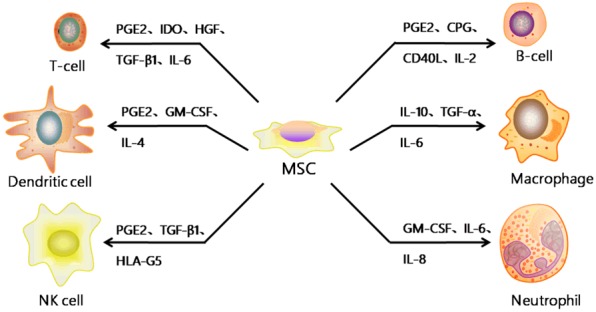
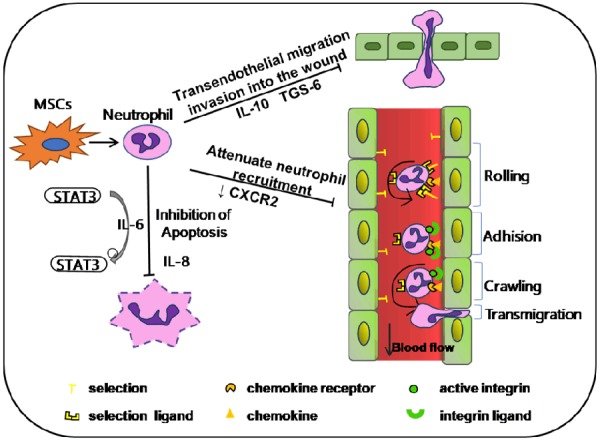
Mesenchymal stem cells (MSCs) are multipotent, non-hematopoietic stem cells capable of differentiating into varieties of mature cell types such as osteoblasts, chondrocytes, adipocytes, and myoblasts. MSCs can be isolated from different kinds of tissues and cultivated in vitro for amplification and passage easily. These cells have drawn researcher's attention lately due to their ability of tissue repair, properties of hematopoiesis support and function of immunoregulation through the secretion of a variety of cytokines and growth factors that have both paracrine and autocrine activities. MSCs can regulate the proliferation of T cells, the antibodies secretion of B cells, maturation of DC, polarization of macrophages and also have many effects on neutrophils such as the suppression of NO secretion, inhibition of apoptosis, reduction of their infiltration, decreasing of N-Formy l-L-Methionine-L-leucy l-L-phenylalanine, induction of respiratory bursts and promotion of survivals. In some conditions, MSCs exert their function of treatment through immunoregulation. We reviewed the multifaceted roles of MSCs in communicating with immune cells mainly neutrophils in both in vivo and in vitro experiments. MSCs may provide promising trends for cell therapy in future.
Keywords: MSCs; immunoregulation; neutrophils.
Conflict of interest statement
None.
Figures
References
-
- Tavassoli M, Friedenstein A. Hemopoietic stromal microenvironment. Am J Hematol. 1983;15:195–203. - PubMed
-
- Wilson A, Trumpp A. Bone-marrow haematopoietic-stem-cell niches. Nat Rev Immunol. 2006;6:93–106. - PubMed
-
- Dominici M, Le Blanc K, Mueller I, Slaper-Cortenbach I, Marini F, Krause D, Deans R, Keating A, Prockop D, Horwitz E. Minimal criteria for defining multipotent mesenchymal stromal cells. The international society for cellular therapy position statement. Cytotherapy. 2006;8:315–317. - PubMed
LinkOut - more resources
Full Text Sources