


Human plague system associated with rodent diversity and other environmental factors
- PMID: 31312490
- PMCID: PMC6599787
- DOI: 10.1098/rsos.190216
Human plague system associated with rodent diversity and other environmental factors
Abstract
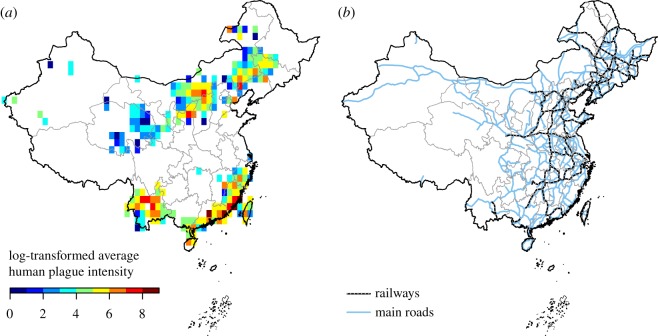
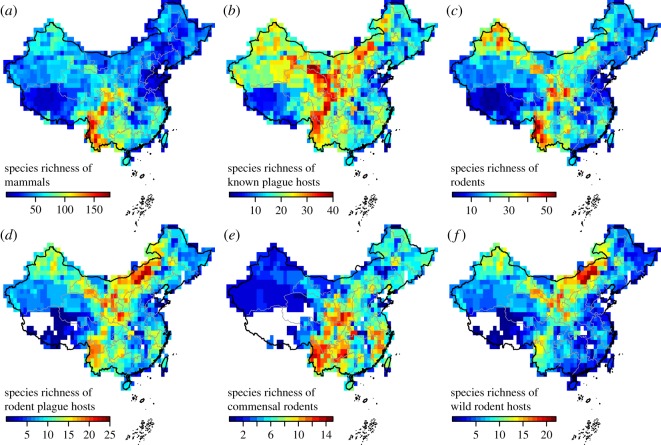
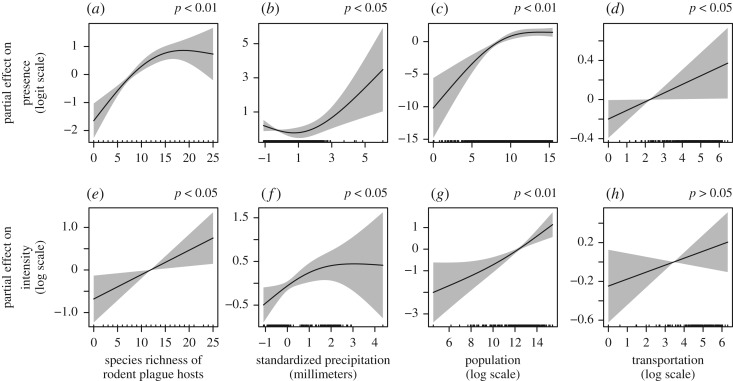
Plague remains a threat to public health and is considered as a re-emerging infectious disease today. Rodents play an important role as major hosts in plague persistence and driving plague outbreaks in natural foci; however, few studies have tested the association between host diversity in ecosystems and human plague risk. Here we use zero-inflated generalized additive models to examine the association of species richness with human plague presence (where plague outbreaks could occur) and intensity (the average number of annual human cases when they occurred) in China during the Third Pandemic. We also account for transportation network density, annual precipitation levels and human population size. We found rodent species richness, particularly of rodent plague hosts, is positively associated with the presence of human plague. Further investigation shows that species richness of both wild and commensal rodent plague hosts are positively correlated with the presence, but only the latter correlated with the intensity. Our results indicated a positive relationship between rodent diversity and human plague, which may provide suggestions for the plague surveillance system.
Keywords: generalized additive model; species richness–disease relationship; the Third Pandemic.
Conflict of interest statement
We have no competing interests.
Figures
References
Associated data
LinkOut - more resources
Full Text Sources
