


Protective efficacy using Cape- golden berry against pre-carcinogenic aflatoxins induced in rats
- PMID: 31312606
- PMCID: PMC6609784
- DOI: 10.1016/j.toxrep.2019.06.012
Protective efficacy using Cape- golden berry against pre-carcinogenic aflatoxins induced in rats
Erratum in
-
Erratum regarding missing Declaration of Competing Interest statements in previously published articles.Toxicol Rep. 2020 Dec 25;8:60-61. doi: 10.1016/j.toxrep.2020.12.006. eCollection 2021. Toxicol Rep. 2020. PMID: 33391997 Free PMC article.
Abstract
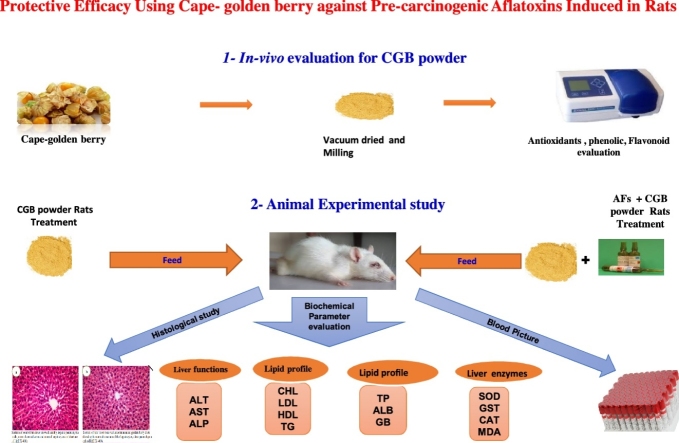
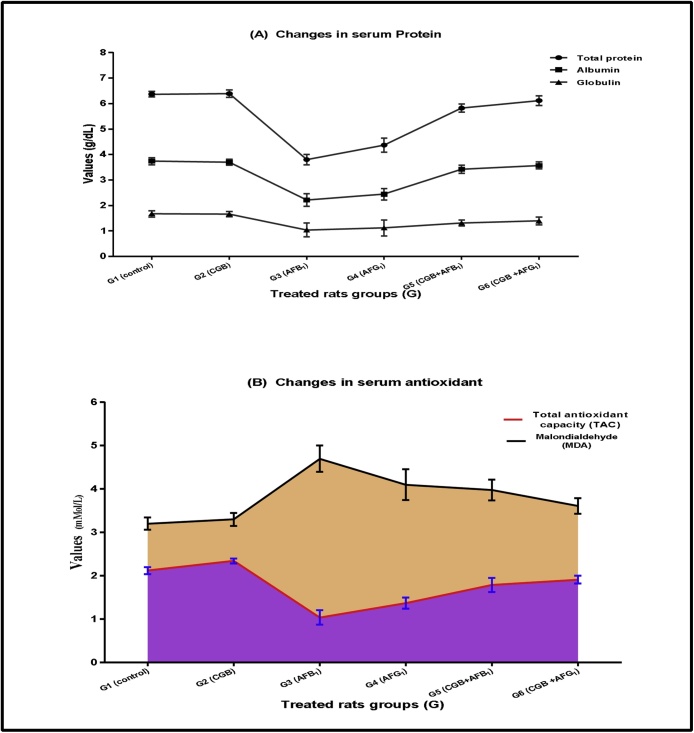
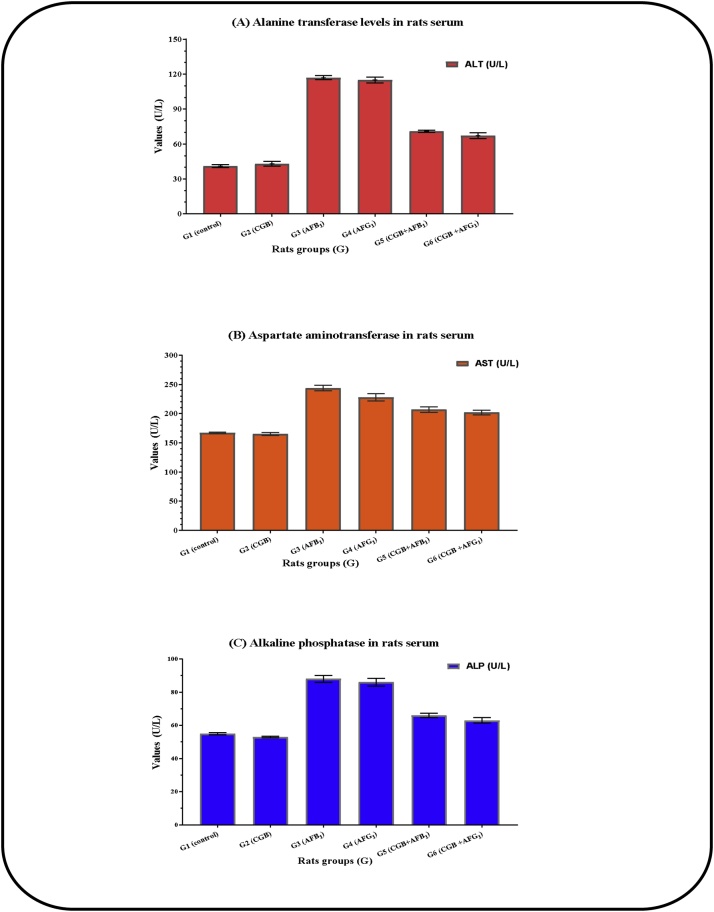
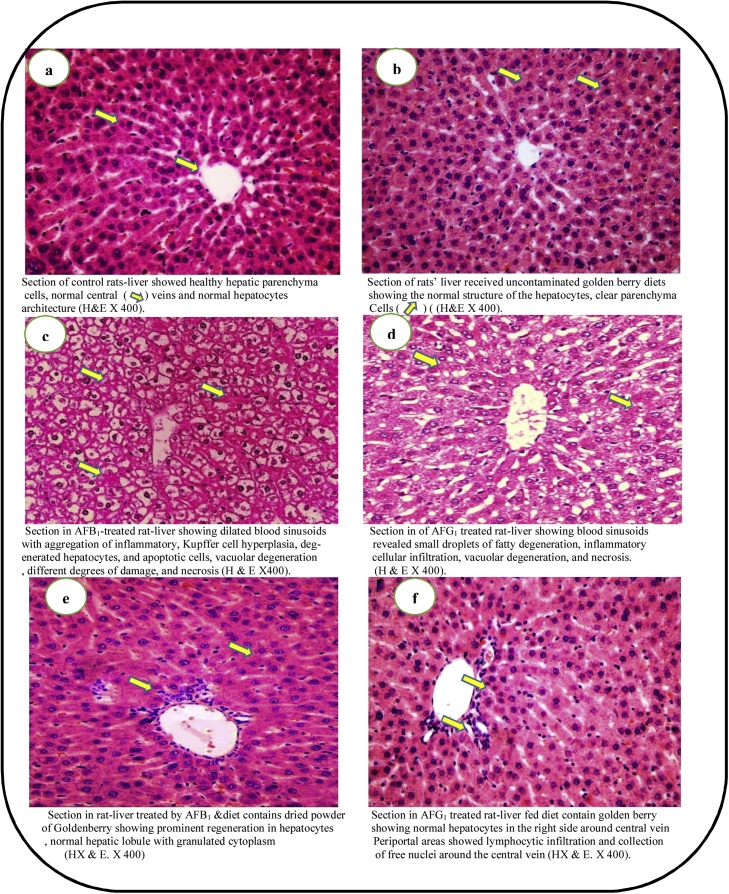
Aflatoxins are harmful compounds that induced carcinogenic impacts on tissues. It could generate oxidative stress causing cells damage. Bioactive substances from natural plants could avoid mycotoxins' bad impacts. Cape-goldenberry (CGB), a source of active substances, was vacuum-dried at 30 °C then milled. Fresh and dried CGB-powder properties were estimated. Animal experiment was designed using six rat-groups to evaluate CBG effect to reduce harmful effect of aflatoxins. Rats treated groups were orally administrated by aflatoxins (AFs) with or without CGB in diets. Blood parameters, liver and kidney functions, serum lipids, and liver histological changes were estimated. The CGB powder showed several time doubles of phenolics, flavonoids, and antioxidants than fresh fruits. Diet supplementation by CGB of AFs-treated rats showed enhancement in final weight, food efficiency, and weight gain compared to AFs treatment only. Also, liver and kidney functions, liver enzymes, iron level, tumors indicator, and serum lipids of AFs- rats. Moreover, total protein, albumin, and globulin reduction by AFs have been improved by CGB presence in diets. Histopathological studies for AFs-rats liver showed dilated blood sinusoids with aggregation of inflammatory, Kupffer cell hyperplasia, degenerated hepatocytes, and apoptotic cells. However, in AFs-rat groups fed CGB in diets, liver hepatocytes appeared to be almost normal similar to the control. Results pointed out that CGB recorded a corrective action for aflatoxin B1 and G1 toxicity. This was recorded for the blood and serum parameters, and liver enzymes. This CGB action avoiding AFs-toxicity was more clearly declared in the liver tissues.
Keywords: Aflatoxins; Biochemical parameters; Cape-golden berry; Carcinogenic impacts; Corrective action; Liver tissues.
Figures
References
-
- Ramadan M.F. Bioactive phytochemicals, nutritional value, and functional properties of cape gooseberry (Physalis peruviana): an overview. Food Res. Int. 2011;44(7):1830–1836.
-
- Ramadan M.F., Moersel J.T. Impact of enzymatic treatment on chemical composition, physicochemical properties and radical scavenging activity of goldenberry (Physalis peruviana L.) juice. J. Sci. Food Agric. 2007;87(3):452–460.
-
- Puente L.A., Pinto-Muñoz C.A., Castro E.S., Cortés M. Physalis peruviana Linnaeus, the multiple properties of a highly functional fruit: a review. Food Res. Int. 2011;44(7):1733–1740.
-
- Mokhtar S.M., Swailam H.M., Embaby H.E.S. Physicochemical properties, nutritional value and techno-functional properties of goldenberry (Physalis peruviana) waste powder concise title: composition of goldenberry juice waste. Food Chem. 2018;248:1–7. - PubMed
-
- Bravo K., Sepulveda-Ortega S., Lara-Guzman O., Navas-Arboleda A.A., Osorio E. Influence of cultivar and ripening time on bioactive compounds and antioxidant properties in Cape gooseberry (Physalis peruviana L.) J. Sci. Food Agric. 2015;95(7):1562–1569. - PubMed
LinkOut - more resources
Full Text Sources
Research Materials
Miscellaneous
