


Emerging Therapeutics for the Treatment of Light Chain and Transthyretin Amyloidosis
- PMID: 31312767
- PMCID: PMC6609907
- DOI: 10.1016/j.jacbts.2019.02.002
Emerging Therapeutics for the Treatment of Light Chain and Transthyretin Amyloidosis
Abstract
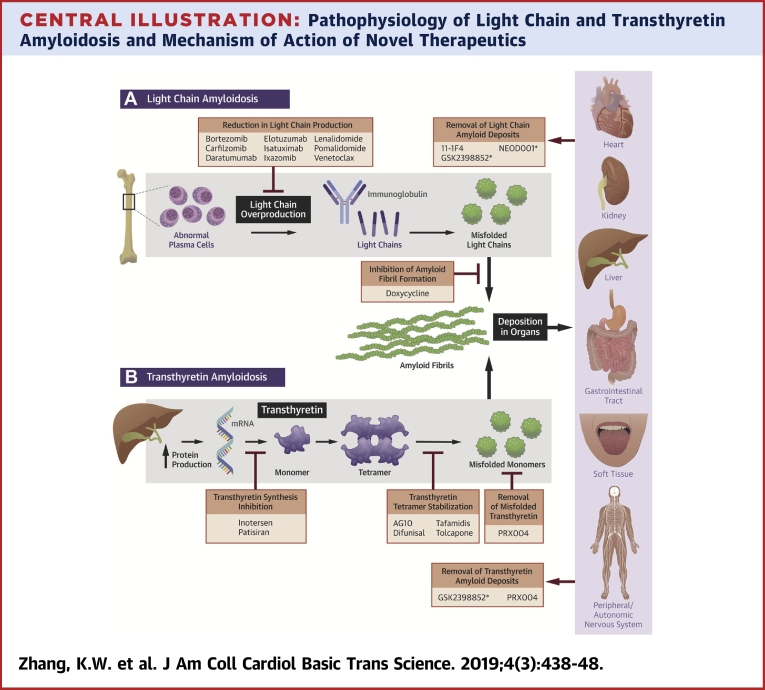
Cardiac amyloidosis is a restrictive cardiomyopathy that results from the deposition of misfolded light chain or transthyretin proteins, most commonly, in cardiac tissue. Traditionally, treatment options for light chain (AL) and transthyretin (ATTR) amyloidosis have been limited. However, there are now multiple novel therapeutics in development and several therapeutics recently approved that promise to revolutionize clinical management of AL and ATTR. Most of these agents disrupt specific stages of amyloidogenesis such as light chain or transthyretin protein production, formation of amyloidogenic intermediates, or amyloid fibril aggregation. Others aim to remove existing amyloid tissue deposits using monoclonal antibody technology. Although these advances represent an important step forward in the care of cardiac amyloidosis patients, additional studies are needed to define the optimal treatment paradigms for AL and ATTR and to validate clinical, imaging, or serum biomarker strategies that may confirm a cardiac response to therapy.
Keywords: AL, light chain amyloidosis; ASCT, autologous stem cell transplantation; ATTR, transthyretin amyloidosis; CA, cardiac amyloidosis; GLS, global longitudinal strain; MGUS, monoclonal gammopathy of undetermined significance; MM, multiple myeloma; MMP, matrix metalloproteinase; NT-proBNP, N-terminal prohormone of brain natriuretic peptide; SAP, serum amyloid P; cardiac amyloidosis; clinical trials; therapeutics.
Figures

References
-
- Gillmore J.D., Damy T., Fontana M. A new staging system for cardiac transthyretin amyloidosis. Eur Heart J. 2017;44:1–8. - PubMed
Publication types
LinkOut - more resources
Full Text Sources
Other Literature Sources
Research Materials
Miscellaneous
