


Challenges in Clinical Development of Mesenchymal Stromal/Stem Cells: Concise Review
- PMID: 31313507
- PMCID: PMC6811694
- DOI: 10.1002/sctm.19-0044
Challenges in Clinical Development of Mesenchymal Stromal/Stem Cells: Concise Review
Abstract
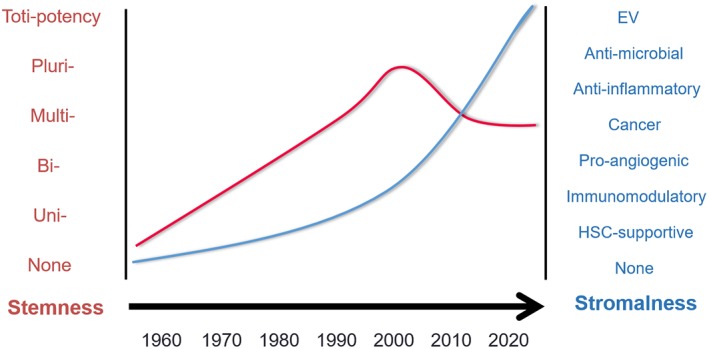
Identified 50 years ago, mesenchymal stromal/stem cells (MSCs) immediately generated a substantial interest among the scientific community because of their differentiation plasticity and hematopoietic supportive function. Early investigations provided evidence of a relatively low engraftment rate and a transient benefit for challenging congenital and acquired diseases. The reasons for these poor therapeutic benefits forced the entire field to reconsider MSC mechanisms of action together with their ex vivo manipulation procedures. This phase resulted in advances in MSCs processing and the hypothesis that MSC-tissue supportive functions may be prevailing their differentiation plasticity, broadening the spectrum of MSCs therapeutic potential far beyond their lineage-restricted commitments. Consequently, an increasing number of studies have been conducted for a variety of clinical indications, revealing additional challenges and suggesting that MSCs are still lagging behind for a solid clinical translation. For this reason, our aim was to dissect the current challenges in the development of still promising cell types that, after more than half a century, still need to reach their maturity. Stem Cells Translational Medicine 2019;8:1135-1148.
© 2019 The Authors. Stem Cells Translational Medicine published by Wiley Periodicals, Inc. on behalf of AlphaMed Press.
Conflict of interest statement
M.D. declared patent holder in the field of cell and gene therapy, a consultancy role, research funding, and stock ownership with Rigenerand srl. The other authors indicated no potential conflicts of interest.
Figures
References
-
- Friedenstein AJ, Piatetzky‐Shapiro II, Petrakova KV. Osteogenesis in transplants of bone marrow cells. J Embryol Exp Morphol 1966;16:381–390. - PubMed
-
- Friedenstein AJ. Precursor cells of mechanocytes. Int Rev Cytol 1976;47:327–359. - PubMed
-
- Lanotte M, Metcalf D, Dexter TM. Production of monocyte/macrophage colony‐stimulating factor by preadipocyte cell lines derived from murine marrow stroma. J Cell Physiol 1982;112:123–127. - PubMed
-
- Owen M, Friedenstein AJ. Stromal stem cells: Marrow‐derived osteogenic precursors. Ciba Found Symp 1988;136:42–60. - PubMed
-
- Caplan AI. Mesenchymal stem cells. J Orthop Res 1991;9:641–650. - PubMed
Publication types
MeSH terms
LinkOut - more resources
Full Text Sources
Other Literature Sources
