. 2019 Oct 1;317(4):L475-L485.
doi: 10.1152/ajplung.00567.2018. Epub 2019 Jul 17.

The role of DJ-1 in human primary alveolar type II cell injury induced by e-cigarette aerosol

Affiliations

The role of DJ-1 in human primary alveolar type II cell injury induced by e-cigarette aerosol

Karim Bahmed et al. Am J Physiol Lung Cell Mol Physiol. .

Abstract

The alveolus participates in gas exchange, which can be impaired by environmental factors and toxins. There is an increase in using electronic cigarettes (e-cigarettes); however, their effect on human primary alveolar epithelial cells is unknown. Human lungs were obtained from nonsmoker organ donors to isolate alveolar type II (ATII) cells. ATII cells produce and secrete pulmonary surfactant and restore the epithelium after damage, and mitochondrial function is important for their metabolism. Our data indicate that human ATII cell exposure to e-cigarette aerosol increased IL-8 levels and induced DNA damage and apoptosis. We also studied the cytoprotective effect of DJ-1 against ATII cell injury. DJ-1 knockdown in human primary ATII cells sensitized cells to mitochondrial dysfunction as detected by high mitochondrial superoxide production, decreased mitochondrial membrane potential, and calcium elevation. DJ-1 knockout (KO) mice were more susceptible to ATII cell apoptosis and lung injury induced by e-cigarette aerosol compared with wild-type mice. Regulation of the oxidative phosphorylation (OXPHOS) is important for mitochondrial function and protection against oxidative stress. Major subunits of the OXPHOS system are encoded by both nuclear and mitochondrial DNA. We found dysregulation of OXPHOS complexes in DJ-1 KO mice after exposure to e-cigarette aerosol, which could disrupt the nuclear/mitochondrial stoichiometry, resulting in mitochondrial dysfunction. Together, our results indicate that DJ-1 deficiency sensitizes ATII cells to damage induced by e-cigarette aerosol leading to lung injury.

Keywords: DJ-1; alveolar type II cells; e-cigarette aerosol; lung; mitochondria.


Conflict of interest statement

No conflicts of interest, financial or otherwise, are declared by the authors.

Figures
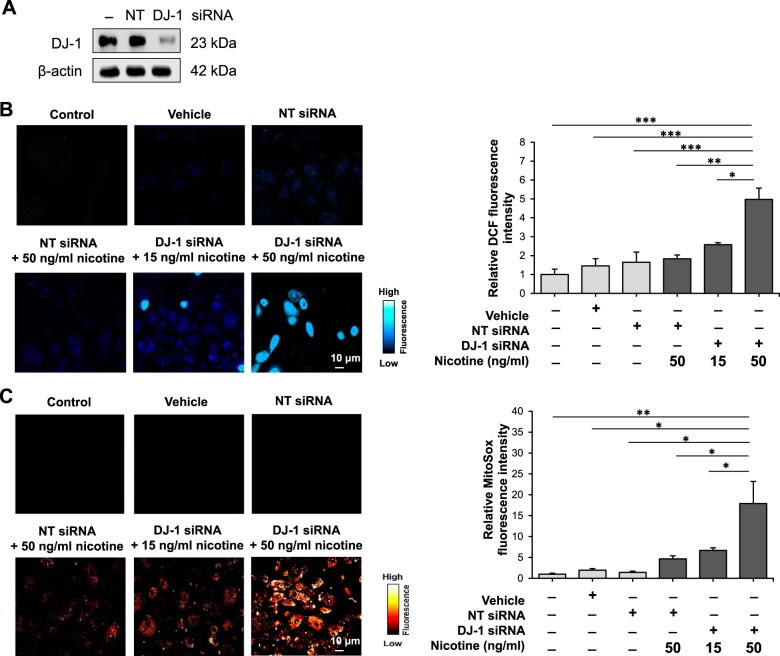
Fig. 1.
Fig. 1.
Nicotine increases reactive oxygen species levels in human primary alveolar type II (ATII) cells with DJ-1 knockdown. A: DJ-1 knockdown in ATII cells. B and C: ATII cells were treated with 15 ng/mL or 50 ng/mL nicotine as described in materials and methods to determine 2′,7′-dichlorofluorescein (DCF; B) and MitoSOX (C) levels using live cell confocal microscope. Representative images and quantification of fluorescence intensity are shown (NT, nontargeting siRNA; *P < 0.05, **P < 0.001, *** P < 0.0001, n = 3 lungs).
Fig. 2.
Fig. 2.
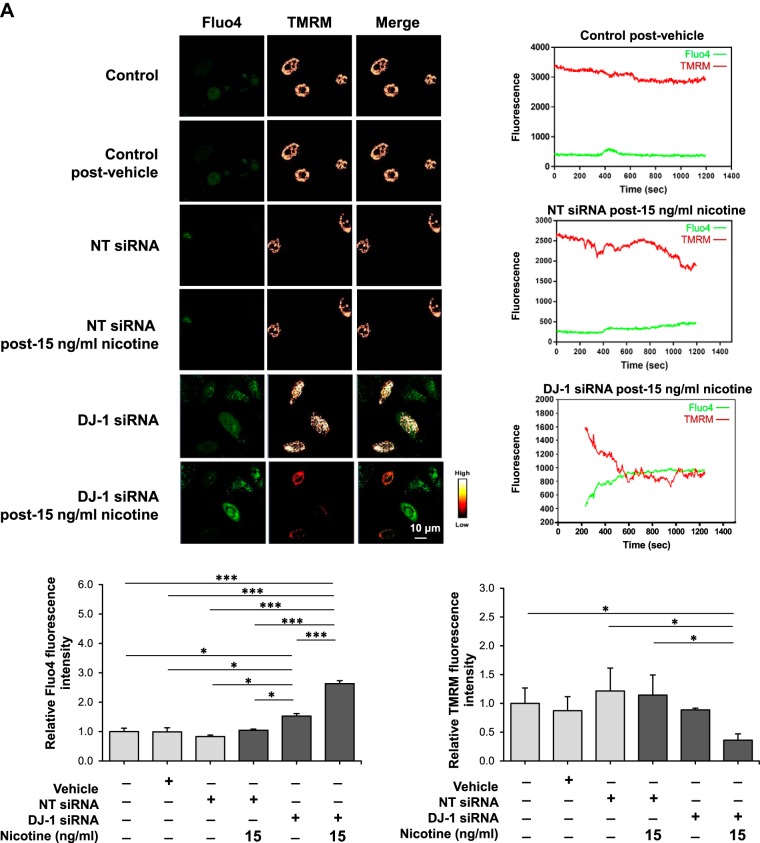
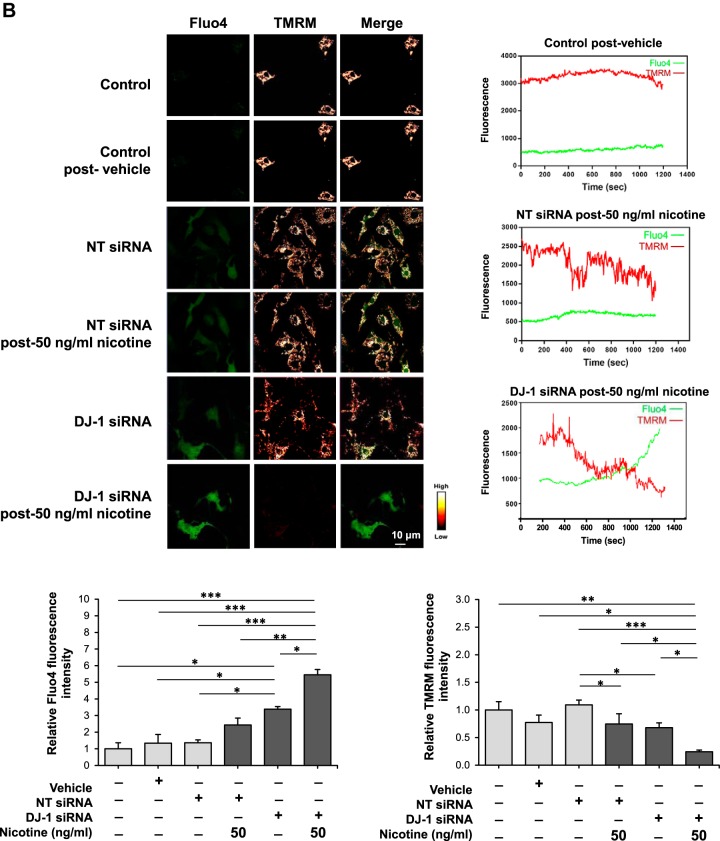
Nicotine alters calcium levels and mitochondrial membrane potential in human primary alveolar type II (ATII) cells with DJ-1 knockdown. A and B: DJ-1 was knocked down in ATII cells followed by treatment with 15 ng/mL (A) or 50 ng/mL (B) nicotine. Calcium levels and mitochondrial membrane potential were analyzed by Fluo-4 (green) and tetramethylrhodamine, methyl ester (TMRM, red) staining, respectively, in single cells using live cell confocal microscope. Representative images and quantification of fluorescence intensity are shown (NT, nontargeting siRNA; *P < 0.05, *** P < 0.0001, n = 3 lungs).
Fig. 2.
Fig. 2.
Nicotine alters calcium levels and mitochondrial membrane potential in human primary alveolar type II (ATII) cells with DJ-1 knockdown. A and B: DJ-1 was knocked down in ATII cells followed by treatment with 15 ng/mL (A) or 50 ng/mL (B) nicotine. Calcium levels and mitochondrial membrane potential were analyzed by Fluo-4 (green) and tetramethylrhodamine, methyl ester (TMRM, red) staining, respectively, in single cells using live cell confocal microscope. Representative images and quantification of fluorescence intensity are shown (NT, nontargeting siRNA; *P < 0.05, *** P < 0.0001, n = 3 lungs).
Fig. 3.
Fig. 3.
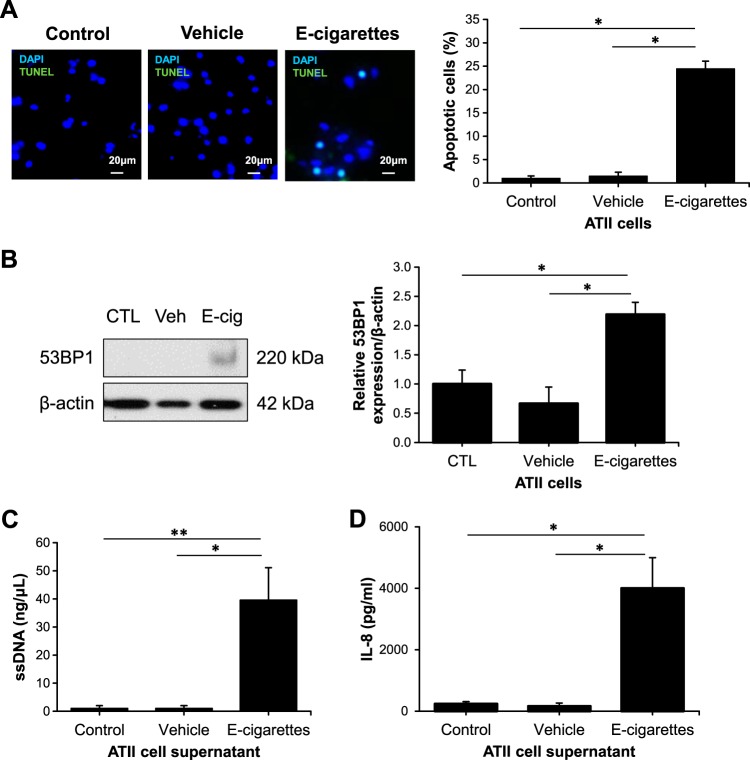
E-cigarette aerosol induces human primary alveolar type II (ATII) cell injury. ATII cells were exposed to e-cigarette aerosol for 1 h and analyzed after 24 h. A: apoptotic ATII cells were detected by TUNEL assay (green) and DAPI (blue). Cell quantification is also shown. B: 53BP1 expression was determined by Western blotting. Densitometric quantification is also shown. C: single-strand (ss) DNA levels in ATII cell supernatant determined by QuantiFluor ssDNA System. D: IL-8 levels in ATII cell supernatant as measured by ELISA (CTL, control; Veh, vehicle; E-cig, e-cigarette aerosol; *P < 0.05, **P < 0.001, n = 8 lungs).
Fig. 4.
Fig. 4.
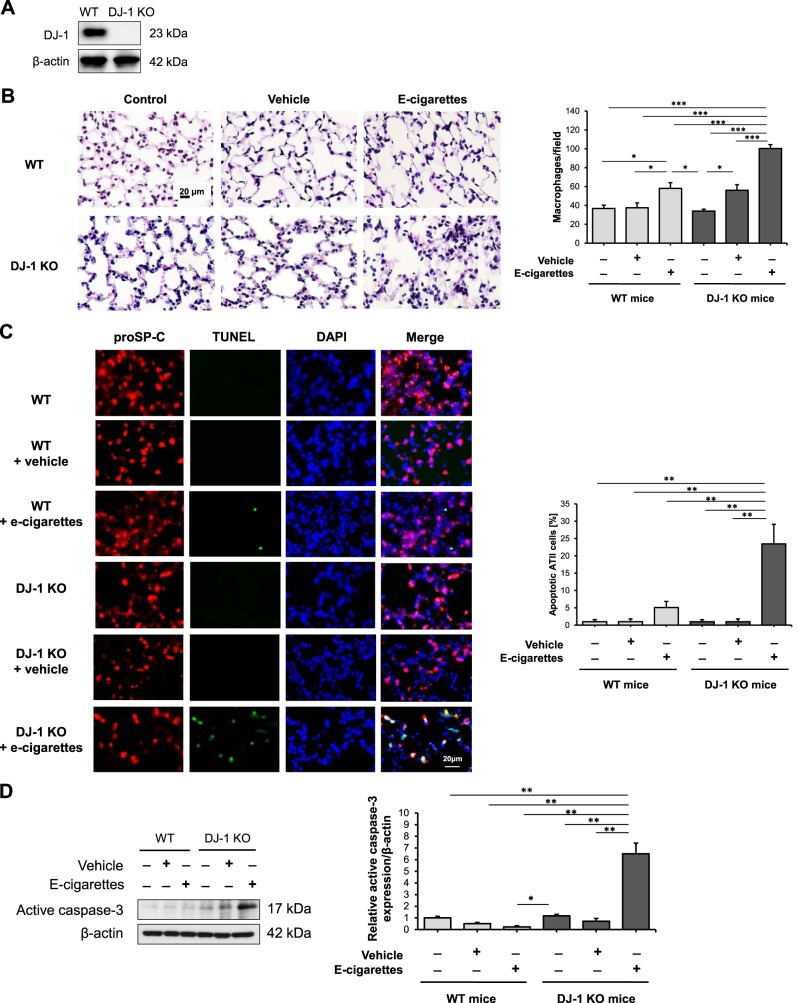
Murine alveolar type II (ATII) cell and lung injury in DJ-1 knockout (KO) mice exposed to e-cigarette aerosol. A: DJ-1 expression in murine lung tissue by Western blotting. B: H&E staining in murine lung tissue. Mice were exposed to e-cigarette aerosol as described in materials and methods. Number of alveolar macrophages per field is also shown. C: apoptotic ATII cells were identified in murine lung tissue using proSP-C (red), TUNEL assay (green), and DAPI (blue) by immunohistofluorescence. Cell quantification is also shown. D: active caspase-3 expression in murine lung tissue by Western blotting. Densitometric quantification is also shown (WT, wild-type mice; *P < 0.05, **P < 0.001, *** P < 0.0001, n = 5 mice per group).
Fig. 5.
Fig. 5.
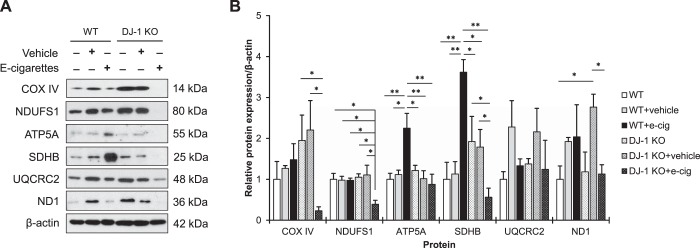
Oxidative phosphorylation (OXPHOS) complexes expression in wild-type (WT) and DJ-1 knockout (KO) mice exposed to e-cigarette aerosol. A: mice were exposed to e-cigarette aerosol as described in materials and methods. COX IV, NDUFS1, ATP5A, SDHB, UQCRC2 and ND1 expression in murine lung tissue by Western blotting. B: protein expression was normalized to β-actin and densitometric quantification is also shown (e-cig, e-cigarette aerosol; *P < 0.05, **P < 0.001, n = 7 mice per group).
Fig. 6.
Fig. 6.
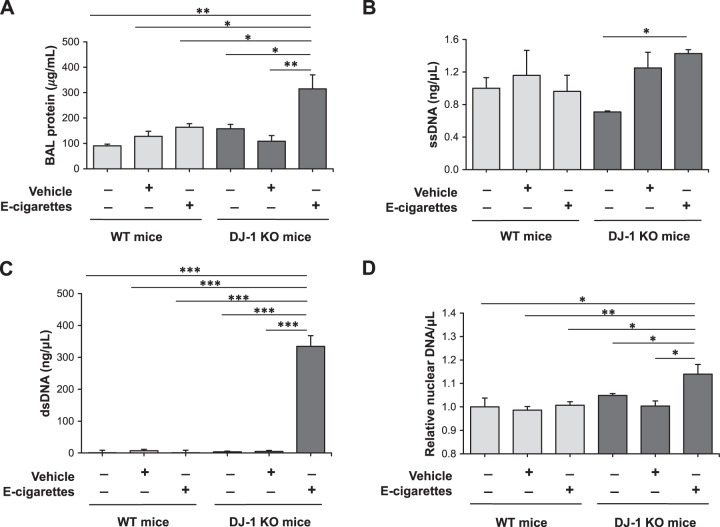
DNA release in bronchoalveolar lavage (BAL) fluid in DJ-1 knockout (KO) mice exposed to e-cigarette aerosol. Wild-type (WT) and DJ-1 KO mice were exposed to e-cigarette aerosol as described in materials and methods. Analysis was performed in BAL fluid. A: total protein concentration. B: single-strand (ss) DNA levels determined by QuantiFluor ssDNA System. C: double-strand (ds) DNA levels evaluated by QuantiFluor dsDNA System. D: nuclear DNA levels by qPCR (*P < 0.05, **P < 0.001, *** P < 0.0001, n = 7 mice per group).

References

    1. Aoshiba K, Tamaoki J, Nagai A. Acute cigarette smoke exposure induces apoptosis of alveolar macrophages. Am J Physiol Lung Cell Mol Physiol 281: L1392–L1401, 2001. doi: 10.1152/ajplung.2001.281.6.L1392. - DOI - PubMed
    1. Ariga H, Takahashi-Niki K, Kato I, Maita H, Niki T, Iguchi-Ariga SM. Neuroprotective function of DJ-1 in Parkinson’s disease. Oxid Med Cell Longev 2013: 683920, 2013. doi: 10.1155/2013/683920. - DOI - PMC - PubMed
    1. Bahmed K, Messier EM, Zhou W, Tuder RM, Freed CR, Chu HW, Kelsen SG, Bowler RP, Mason RJ, Kosmider B. DJ-1 modulates nuclear erythroid 2-related factor-2-mediated protection in human primary alveolar type II cells in smokers. Am J Respir Cell Mol Biol 55: 439–449, 2016. doi: 10.1165/rcmb.2015-0304OC. - DOI - PMC - PubMed
    1. Balli D, Ren X, Chou FS, Cross E, Zhang Y, Kalinichenko VV, Kalin TV. Foxm1 transcription factor is required for macrophage migration during lung inflammation and tumor formation. Oncogene 31: 3875–3888, 2012. doi: 10.1038/onc.2011.549. - DOI - PMC - PubMed
    1. Batelli S, Albani D, Rametta R, Polito L, Prato F, Pesaresi M, Negro A, Forloni G. DJ-1 modulates alpha-synuclein aggregation state in a cellular model of oxidative stress: relevance for Parkinson’s disease and involvement of HSP70. PLoS One 3: e1884, 2008. doi: 10.1371/journal.pone.0001884. - DOI - PMC - PubMed

Publication types

MeSH terms