


Emotional Expressions Reconsidered: Challenges to Inferring Emotion From Human Facial Movements
- PMID: 31313636
- PMCID: PMC6640856
- DOI: 10.1177/1529100619832930
Emotional Expressions Reconsidered: Challenges to Inferring Emotion From Human Facial Movements
Erratum in
-
Corrigendum: Emotional Expressions Reconsidered: Challenges to Inferring Emotion From Human Facial Movements.Psychol Sci Public Interest. 2019 Dec;20(3):165-166. doi: 10.1177/1529100619889954. Epub 2019 Nov 15. Psychol Sci Public Interest. 2019. PMID: 31729935 No abstract available.
Abstract
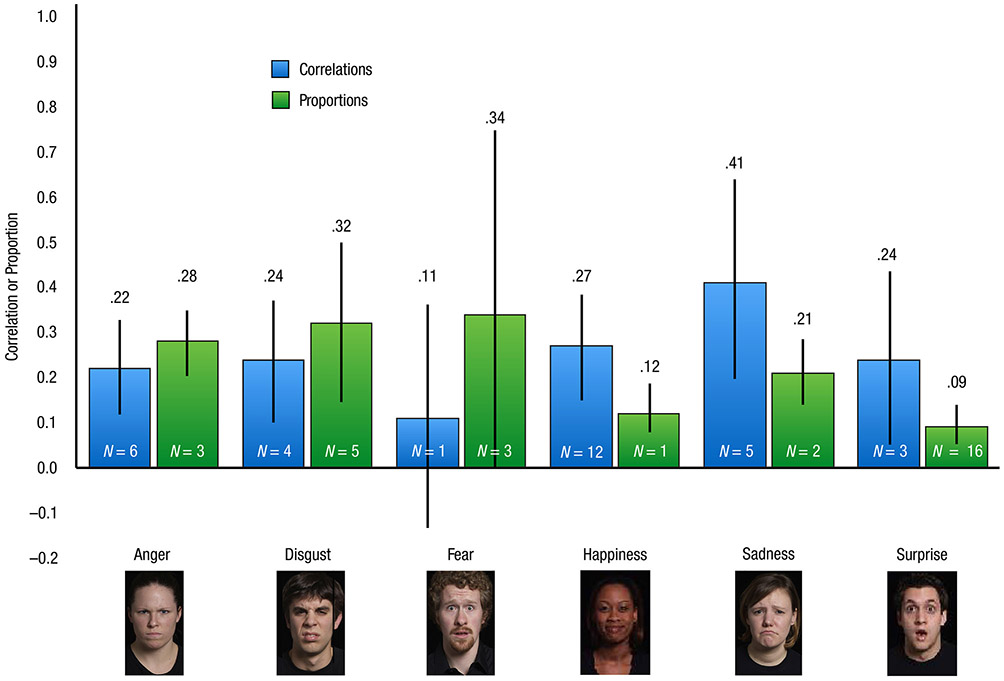
It is commonly assumed that a person's emotional state can be readily inferred from his or her facial movements, typically called emotional expressions or facial expressions. This assumption influences legal judgments, policy decisions, national security protocols, and educational practices; guides the diagnosis and treatment of psychiatric illness, as well as the development of commercial applications; and pervades everyday social interactions as well as research in other scientific fields such as artificial intelligence, neuroscience, and computer vision. In this article, we survey examples of this widespread assumption, which we refer to as the common view, and we then examine the scientific evidence that tests this view, focusing on the six most popular emotion categories used by consumers of emotion research: anger, disgust, fear, happiness, sadness, and surprise. The available scientific evidence suggests that people do sometimes smile when happy, frown when sad, scowl when angry, and so on, as proposed by the common view, more than what would be expected by chance. Yet how people communicate anger, disgust, fear, happiness, sadness, and surprise varies substantially across cultures, situations, and even across people within a single situation. Furthermore, similar configurations of facial movements variably express instances of more than one emotion category. In fact, a given configuration of facial movements, such as a scowl, often communicates something other than an emotional state. Scientists agree that facial movements convey a range of information and are important for social communication, emotional or otherwise. But our review suggests an urgent need for research that examines how people actually move their faces to express emotions and other social information in the variety of contexts that make up everyday life, as well as careful study of the mechanisms by which people perceive instances of emotion in one another. We make specific research recommendations that will yield a more valid picture of how people move their faces to express emotions and how they infer emotional meaning from facial movements in situations of everyday life. This research is crucial to provide consumers of emotion research with the translational information they require.
Keywords: emotion perception; emotion recognition; emotional expression.
Figures
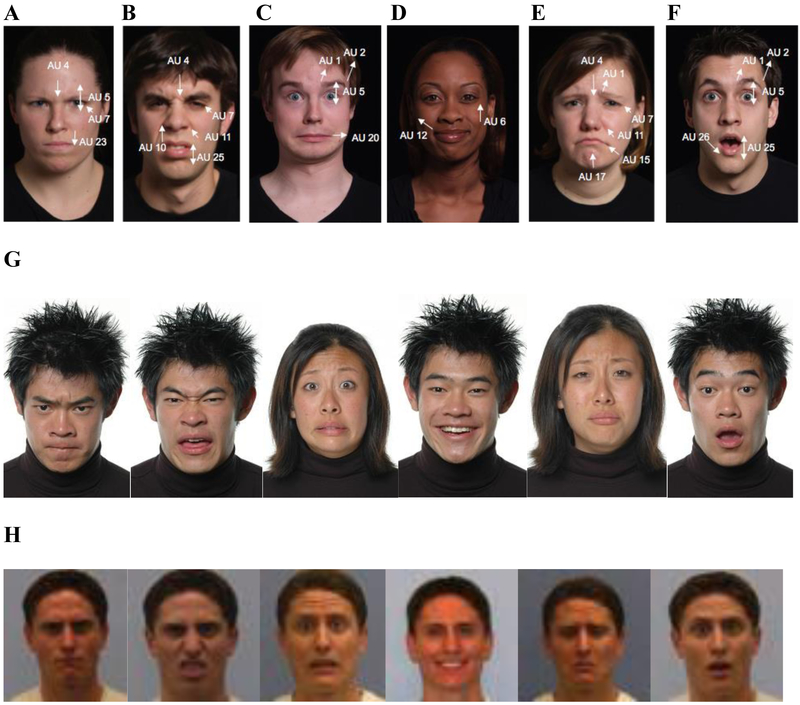
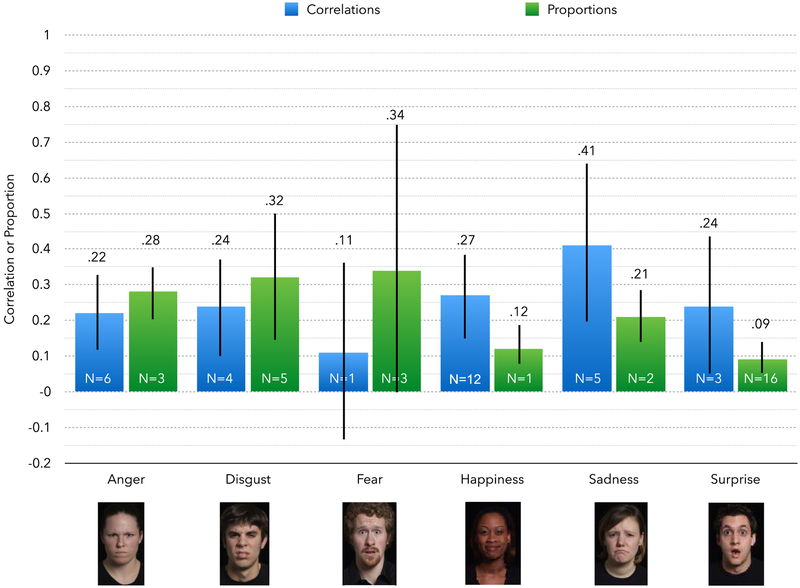
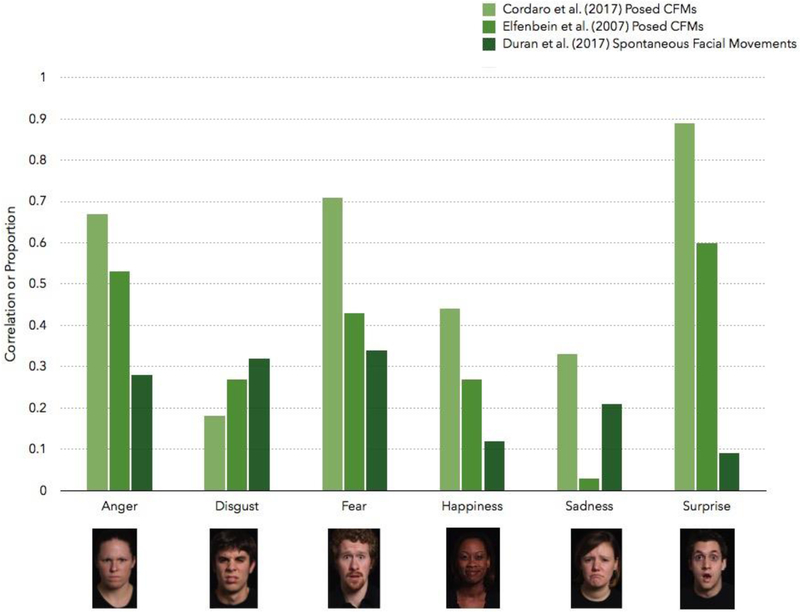
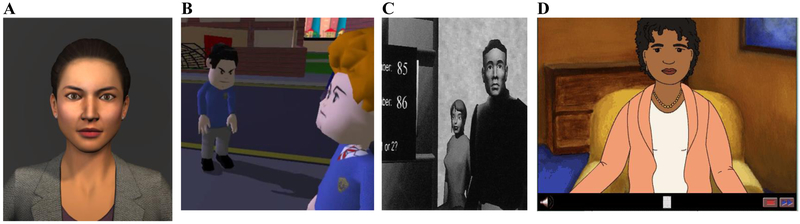

Comment in
-
Time to regulate AI that interprets human emotions.Nature. 2021 Apr;592(7853):167. doi: 10.1038/d41586-021-00868-5. Nature. 2021. PMID: 33824522 No abstract available.
References
-
- Adolphs R (2002). Neural mechanisms for recognizing emotions. Current Opinion in Neurobiology 12, 169–178. - PubMed
-
- Adolphs R, Tranel D, Damasio H, and Damasio A (1994). Impaired recognition of emotion in facial expressions following bilateral damage to the human amygdala. Nature, 372, 669–672. - PubMed
-
- Arya Ali, DiPaola Steve, and Parush Avi, “Perceptually Valid facial Expressions for Character-Based Applications,” International Journal of Computer Games Technology, vol. 2009, Article ID 462315, 13 pages, 2009.
-
- Ambadar Z, Schooler JW, & Cohn JF (2005). Deciphering the enigmatic face: The importance of facial dynamics in interpreting subtle facial expressions. Psychological Science, 16, 403–410. - PubMed
Publication types
MeSH terms
Grants and funding
LinkOut - more resources
Full Text Sources
Other Literature Sources
