


The French Pregnancy Cohort: Medication use during pregnancy in the French population
- PMID: 31314794
- PMCID: PMC6636733
- DOI: 10.1371/journal.pone.0219095
The French Pregnancy Cohort: Medication use during pregnancy in the French population
Abstract
Purpose: We described the medication use during pregnancy in the French population using the French Pregnancy Cohort (FPC).
Methods: The FPC was built with the sampling of all pregnant women included in the French Echantillon généraliste des bénéficiaires (EGB), which is a 1/97th representative sample of the population covered by the French health insurance. The EGB includes anonymized information on the socio-demographic and medical characteristics of beneficiaries, and the health care services they have received such as diagnoses and procedure codes as well as data on filled reimbursed medication; EGB also includes data on hospital stays in all public and private French health facilities. Each filled prescription record contains information on drug brand and generic names, date of prescription and date of dispensing, quantity dispensed, mode of administration, duration of prescription, dosage, and prescribing physician specialty. FPC includes data on all pregnancies of women in the EGB (2010-2013). Date of entry in the FPC is the first day of pregnancy regardless of pregnancy outcome (spontaneous abortions or planned abortions (with or without medical reasons), deliveries), and data on women are collected retrospectively for a period of one year before pregnancy, and prospectively during pregnancy, and up to one year after delivery. The prevalence of prescribed medications before, during and after pregnancy was compared; comparison was also done between trimesters. Pregnancy outcomes are described and include spontaneous and planned abortions, livebirths, and stillbirths.
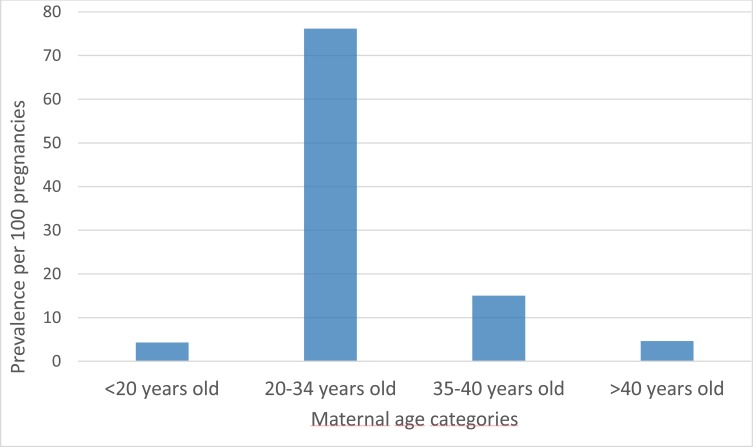
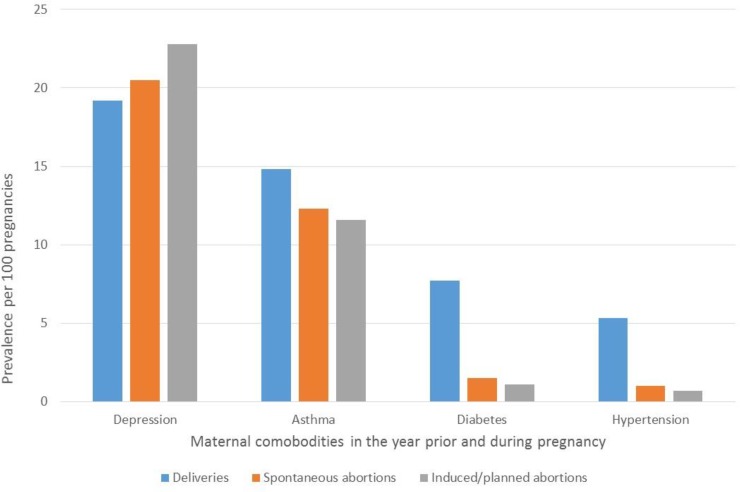
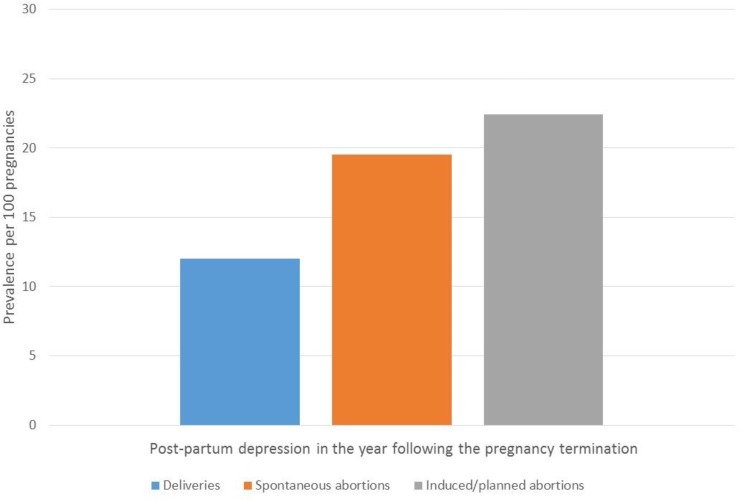
Results: FPC includes data on 36,065 pregnancies. Among them, 27,253 (75.6%) resulted in a delivery including 201 stillbirths (0.7%). The total number of spontaneous abortions was 6,718 (18.6%), and planned abortions 2,094 (5.8%). The prevalence of filled medication use was 91.1%, 89.9%, and 95.6% before, during and after pregnancy, respectively. Although there was a statistically significant decrease in the proportion of use once the pregnancy was diagnosed (first trimester exposure, 76.4% vs. exposure in the year prior to pregnancy, 91.1% (p < .01)), post-pregnancy medication use was above the pre-pregnancy level (95.6%). Maternal depression was the most prevalent comorbidity during pregnancy (20%), and post-partum depression was higher in those who delivered a stillborn infant (38.8%) as well as in those with a spontaneous (19.5%) or planned abortion (22.4%) compared to those with a liveborn (12.0%).
Conclusion: FPC is an excellent tool for the study of the risk and benefit of drug use during the perinatal period. FPC has the advantage of including a representative sample of French pregnant women, and study medications only available in France in addition to others available worldwide.
Conflict of interest statement
The authors have declared that no competing interests exist.
Figures




References
-
- Better news on population. Lancet. 1992;339:1600 10.1016/0140-6736(92)91856-4. - DOI
Publication types
MeSH terms
LinkOut - more resources
Full Text Sources
Medical
