. 2019 Jul 17;11(501):eaaw2607.
doi: 10.1126/scitranslmed.aaw2607.

A live-attenuated RhCMV/SIV vaccine shows long-term efficacy against heterologous SIV challenge

Affiliations

A live-attenuated RhCMV/SIV vaccine shows long-term efficacy against heterologous SIV challenge

Scott G Hansen et al. Sci Transl Med. .

Abstract

Previous studies have established that strain 68-1-derived rhesus cytomegalovirus (RhCMV) vectors expressing simian immunodeficiency virus (SIV) proteins (RhCMV/SIV) are able to elicit and maintain cellular immune responses that provide protection against mucosal challenge of highly pathogenic SIV in rhesus monkeys (RMs). However, these efficacious RhCMV/SIV vectors were replication and spread competent and therefore have the potential to cause disease in immunocompromised subjects. To develop a safer CMV-based vaccine for clinical use, we attenuated 68-1 RhCMV/SIV vectors by deletion of the Rh110 gene encoding the pp71 tegument protein (ΔRh110), allowing for suppression of lytic gene expression. ΔRh110 RhCMV/SIV vectors are highly spread deficient in vivo (~1000-fold compared to the parent vector) yet are still able to superinfect RhCMV+ RMs and generate high-frequency effector-memory-biased T cell responses. Here, we demonstrate that ΔRh110 68-1 RhCMV/SIV-expressing homologous or heterologous SIV antigens are highly efficacious against intravaginal (IVag) SIVmac239 challenge, providing control and progressive clearance of SIV infection in 59% of vaccinated RMs. Moreover, among 12 ΔRh110 RhCMV/SIV-vaccinated RMs that controlled and progressively cleared an initial SIV challenge, 9 were able to stringently control a second SIV challenge ~3 years after last vaccination, demonstrating the durability of this vaccine. Thus, ΔRh110 RhCMV/SIV vectors have a safety and efficacy profile that warrants adaptation and clinical evaluation of corresponding HCMV vectors as a prophylactic HIV/AIDS vaccine.


Conflict of interest statement

COMPETING INTERESTS: OHSU and LJP, EEM, SGH, and KF have a substantial financial interest in Vir Biotechnology, Inc., a company that may have a commercial interest in the results of this research and technology. LJP, SGH, and KF are also consultants to Vir and co-inventors of patent PCT/US2011/036657 “Recombinant RhCMV and HCMV vectors and uses thereof” licensed to Vir. JBS has received compensation for consulting for Vir. The potential individual and institutional conflicts of interest have been reviewed and managed by OHSU.

Figures

Figure 1:
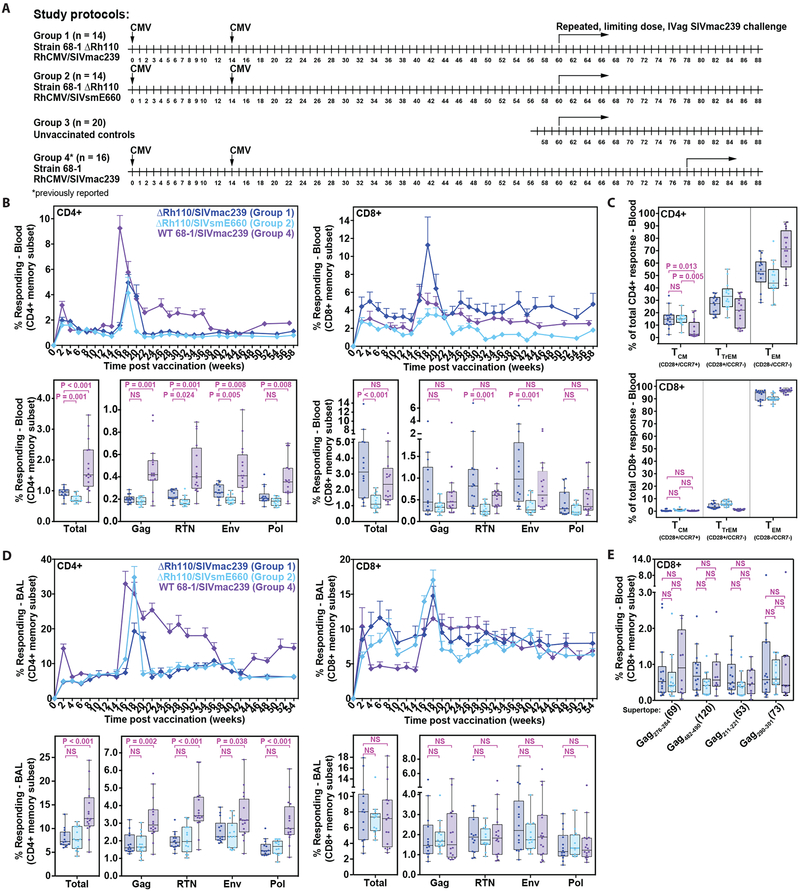
Figure 1:. Immunogenicity of ΔRh110 RhCMV/SIV vectors.
(A) Schematic of the RM groups analyzed in this study. (B) Longitudinal and plateau-phase analysis of the vaccine-elicited, SIV Gag, Rev/Tat/Nef (RTN), Pol, and Env insert-specific CD4+ and CD8+ T cell responses in peripheral blood. In the top panel, the background-subtracted frequencies of cells producing TNF and/or IFN-γ by flow cytometric ICS assay to peptide mixes comprising each of the SIV inserts (SIVmac239 sequence) within the memory CD4+ or CD8+ T cell subsets were summed for overall responses with the figure showing the mean (+ SEM) of these overall responses at each time point. In the bottom panel, boxplots compare the overall and individual SIV insert-specific CD4+ and CD8+ T cell response frequencies between the vaccine groups at the end of the vaccine phase (each data point is the mean of response frequencies in all samples from weeks 30–58 post-first vaccination). Two-sided Wilcoxon rank-sum tests were used to compare the significance of differences in plateau-phase response frequencies between Group 1 and Group 2 (SIVmac239 vs. SIVsmE660 inserts in ΔRh110 68–1 vectors), and between Group 1 and Group 4 (SIVmac239 inserts in WT 68–1 vs. ΔRh110 68–1 vectors). (C) Boxplots compare the memory differentiation of the vaccine-elicited CD4+ and CD8+ memory T cells in peripheral blood responding to SIV Gag peptide mix (SIVmac239 sequence) with TNF and/or IFN-γ production at the end of vaccine phase (week 54 for Groups 1 and 2; week 60 for Group 4). Memory differentiation state was based on CD28 and CCR7 expression, delineating central memory (TCM), transitional effector-memory (TTrEM), and effector-memory (TEM), as designated. Two-sided Wilcoxon rank-sum tests were used to compare the significance of differences in the fraction of responding cells with a TCM phenotype (reciprocal of fraction with effector differentiation - TTrEM + TEM). (D) Same analysis as in B, but for responses in lung airspace (BAL). Each data point for the boxplots is the mean of response frequencies in all samples from weeks 30–54 post-first vaccination (E) Boxplots show plateau-phase analysis (each point is the average of all samples between weeks 24–30 post-first vaccination) of the vaccine-elicited CD8+ T cell responses to SIV Gag supertopes (SIVmac239 sequence; Fig. S1B) in peripheral blood of Group 1, Group 2, and Group 4 RM by the same ICS assay described above. Gag276–284 (69) and Gag482–490 (120) are MHC-E-restricted supertopes; Gag211–222 (53) and Gag290–301 (73) are MHC-II-restricted supertopes (9,10). Statistical testing performed as described in B. In all panels, n = 14, 14, and 16 respectively for Groups 1, 2 and 4, except Group 4 in panel E where n = 10. Analyses were adjusted for multiple comparisons across inserts (B, D), epitopes (C), and supertopes (E) using the Holm method, and P-values ≤0.05 were considered significant. Analyses of total responses (B, D) were not adjusted.
Figure 2:
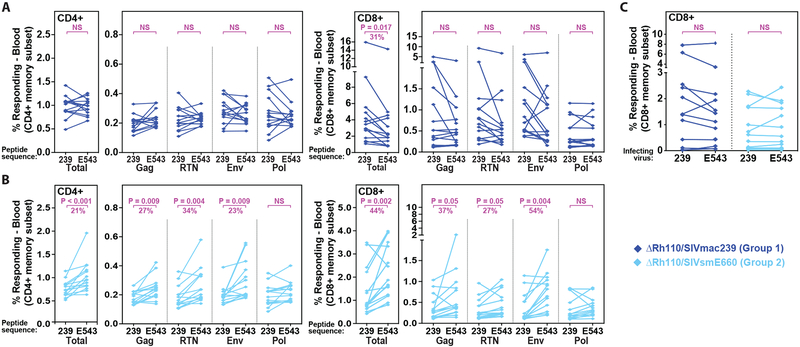
Figure 2:. Cross-recognition by ΔRh110 RhCMV/SIVmac239 and RhCMV/SIVsmE660 vector-elicited T cells.
(A,B) Flow cytometric ICS analysis of SIV-specific CD4+ and CD8+ T cell response frequencies (using TNF and/or IFN-γ readout in memory subset) in the blood of Group 1 (n = 14; SIVmac239 inserts) and Group 2 (n= 14; SIVsmE660 inserts) RM in plateau phase (week 44 after first vaccination) comparing recognition of matched vs. mis-matched peptide mixes (SIVmac239 vs. SIVsmE543; see Fig. S2), including overall (summed) responses and responses to each SIV insert. Two-sided paired Wilcoxon rank-sum tests were used to compare the significance of differences in matched vs. mismatched peptide mix recognition. Unadjusted (total responses) or Holm-adjusted (each insert-specific response) P-values ≤0.05 were considered significant. When significant differences were observed (reduction in response frequencies with mismatched peptide mixes), the median effect size (% reduction with mismatch) is shown. (C) ICS analysis of CD8+ T cell recognition of autologous CD4+ T cells infected with the SIVmac239 vs. SIVsmE543 viruses (after background subtraction of the response to mock-infected autologous CD4+ T cells) in plateau phase (between weeks 49–57 post-first vaccination). Statistical analysis performed as described above, with n = 12 and 13, for Groups 1 and 2, respectively.
Figure 3:
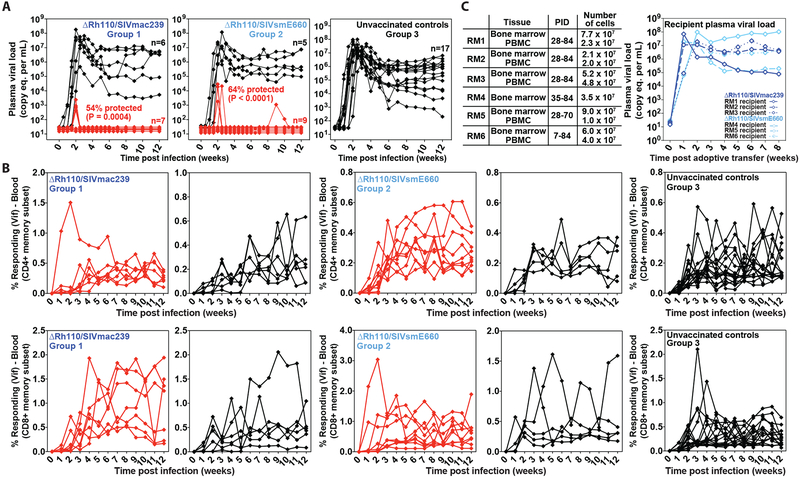
Figure 3:. Efficacy of ΔRh110 RhCMV/SIV vectors.
(A,B) Assessment of the outcome of effective challenge by longitudinal analysis of plasma viral load (A) and de novo development of SIV Vif-specific CD4+ (B, top panel) and CD8+ (B, bottom panel) T cell responses. RM were challenged until the onset of any above-threshold SIV Vif-specific T cell response, with the SIV dose administered 2 or 3 weeks prior to this response detection considered the infecting challenge (week 0). RM with sustained viremia were considered not protected (black); RM with no or transient viremia were considered protected (red) (8). The fraction of protected RM in the vaccinated groups (Groups 1 and 2, n = 13 and 14, respectively) were compared to that of the unvaccinated group (Group 3, n = 17) by Barnard’s exact test of binomial proportions, with the P-values shown in (A). (C) BM cells and PBMC were collected and cryopreserved from ΔRh110/SIVmac239/smE660 vaccine-protected RM without any detectable viremia (RM #1, RM #2, RM #3 from Group 1; RM #4, RM #5, RM #6 from Group 2) at the indicated time points post-effective challenge (left panel; PID – post-infection day). Cells were thawed and administered intravenously (left panel) to 6 SIV-naïve RM to assess the presence of replication-competent SIV with the plasma viral dynamics in recipient RM shown (right panel).
Figure 4:
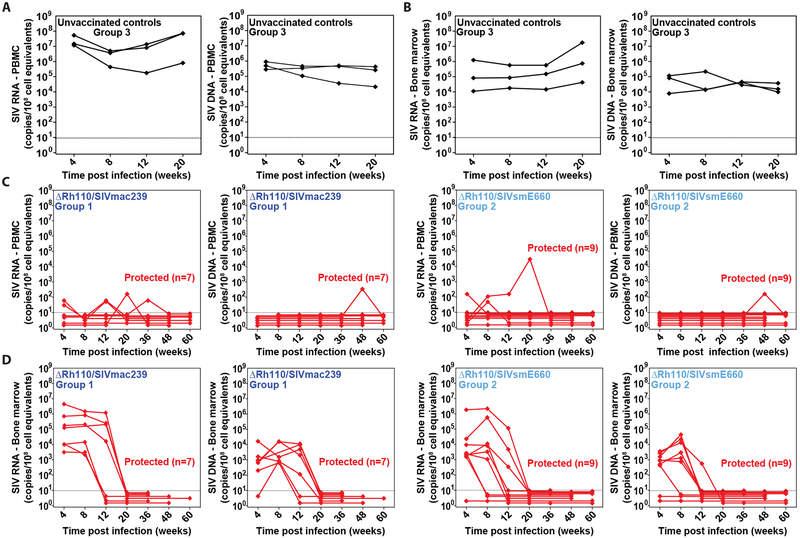
Figure 4:. Clearance of cell-associated SIV in the BM of ΔRh110 68–1 RhCMV/SIV vector-protected RM.
(AD) Longitudinal analysis of PBMC-associated (A,C) and BM cell-associated (B,D) SIV RNA (left panels) and DNA (right panels) from 3 randomly selected unvaccinated RM with progressive infection (A,B), and all 16 ΔRh110/SIVmac239/smE660 vector-protected RM in Groups 1 and 2 (C,D).
Figure 5:
Figure 5:. Loss of circulating SIV infection-induced, SIV Vif-specific T cells in ΔRh110 68–1 RhCMV/SIV vector-protected RM
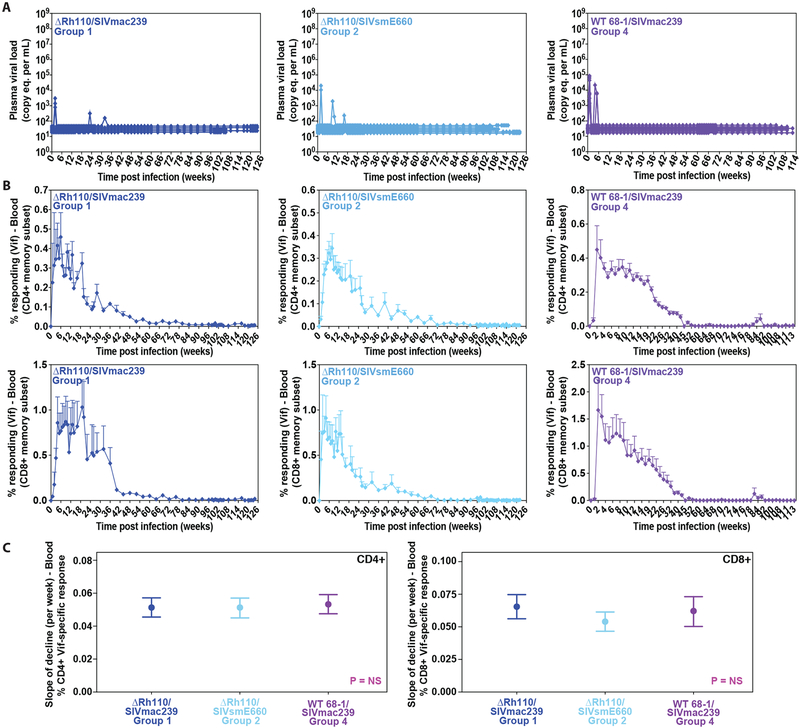
(A) Long-term longitudinal analysis of plasma viral load in ΔRh110/SIVmac239/smE660 vector-protected (left and middle panels for Groups 1 and 2, respectively) and WT 68–1/SIVmac239 vector-protected RM (Group 4, right panel, (8)). (B) Long-term longitudinal analysis of SIV Vif-specific CD4+ (top panels) and CD8+ (bottom panels) among the same groups of ΔRh110 and WT 68–1 RhCMV/SIV vector-protected RM with the figure showing the mean (+ SEM) of these SIV Vif-specific T cell response frequencies in the memory subset at each time point. (C) Wald tests comparing the slope (± 95% confidence intervals) of decline of log-transformed SIV Vif-specific CD4+ (left panel) and CD8+ (right panel) T cell response frequencies. Calculation of slopes is described in Materials and Methods. In all analyses, n = 7, 9, and 8 for Groups 1, 2 and 4, respectively.
Figure 6:
Figure 6:. Necropsy analysis of ΔRh110 68–1 RhCMV/SIV vector-protected RM.
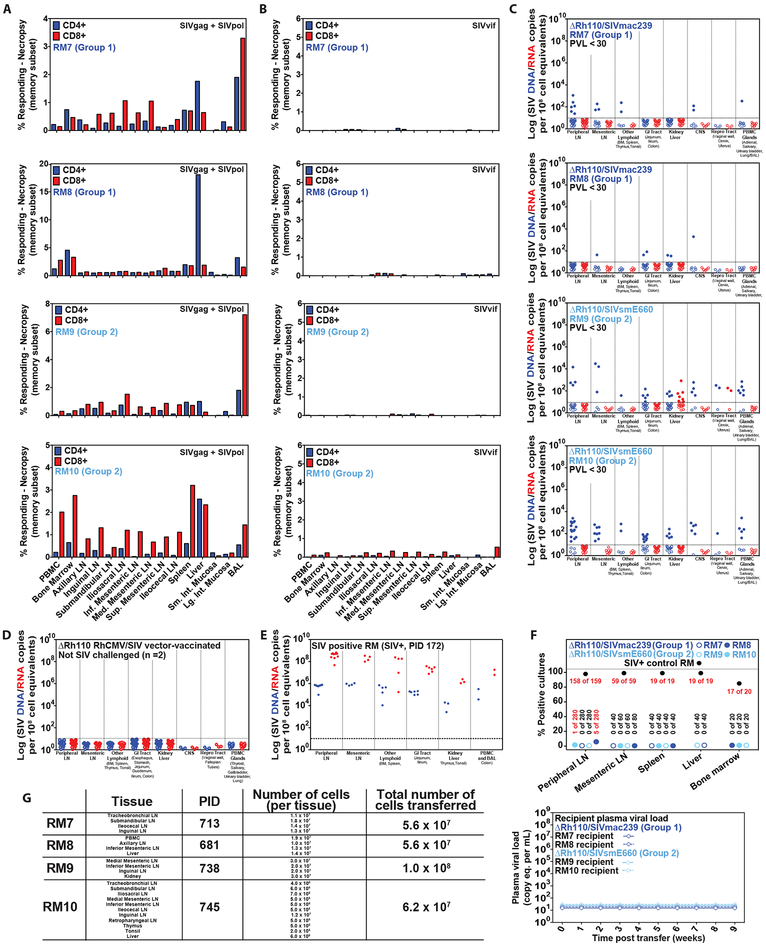
(AC) Analysis of SIV Gag+Pol-specific (A) and SIV Vif-specific (B) CD4+ and CD8+ T cell response frequencies by flow cytometric ICS (using SIVmac239 peptides mixes; see Fig. 1), and tissue-associated SIV DNA and RNA by nested qPCR/RT-PCR (C) in tissues of 4 ΔRh110/SIVmac239/smE660 vector-protected RM (RM #7 and RM #8 from Group 1; RM #9 and RM #10 from Group 2) taken to necropsy at 713 days (RM #7), 681 days (RM #8), 738 days (RM #9) and 745 days (RM #10) post-infection. (D,E) Analysis of tissue-associated SIV DNA and RNA in tissues of 2 ΔRh110 68–1 RhCMV/SIVgag (SIVmac239 sequence insert) vector-vaccinated RM that were taken to necropsy 531 and 763 days post-vaccination without SIV challenge (negative controls; D), and one SIVmac239-infected RM with progressive infection taken to necropsy 172 days post-infection (positive control; E). In CE, each data point indicates an independent tissue sample of the indicated tissue type and the dotted lines indicate the detection threshold. (F,G) Assessment of residual replication-competent SIV in cell suspensions obtained from the indicated tissue samples by in vitro co-culture analysis (F) and by adoptive transfer of cells into 4 SIV-naïve RM (G).
Figure 7:
Figure 7:. Loss of transferable SIV in long-term ΔRh110 68–1 RhCMV/SIV vector-protected RM.
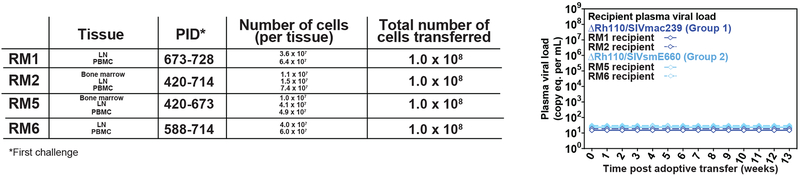
Second assessment of replication-competent SIV by adoptive transfer of cells from 4 long-term ΔRh110/SIVmac239/smE660 vector-protected RM (RM #1 and RM #2 from Group 1; RM #5 and RM #6 from Group 2) that were previously shown to harbor replication SIV by the same assay.
Figure 8:
Figure 8:. Resistance of ΔRh110 68–1 RhCMV/SIV vector-protected RM to repeat SIV challenge.
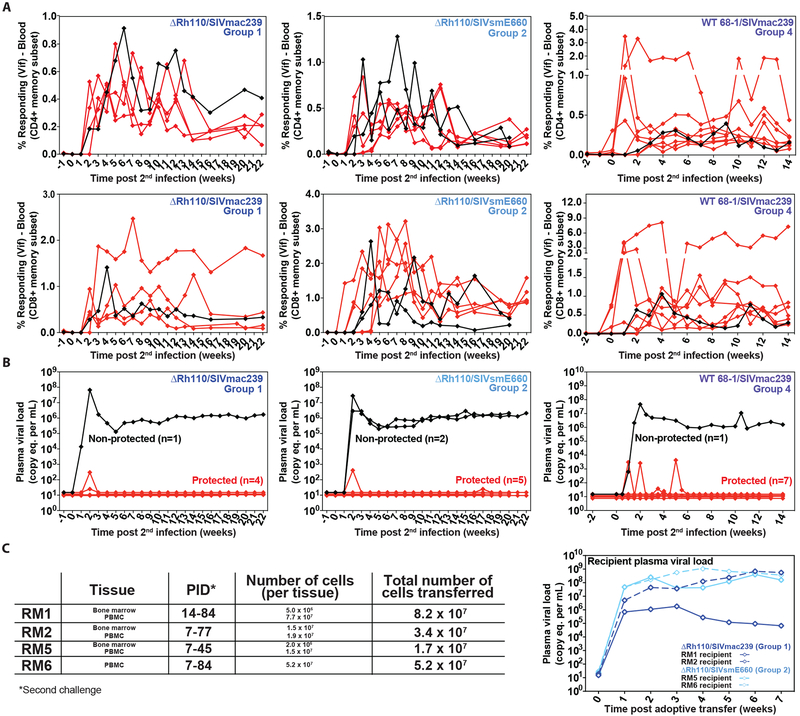
(A, B) Outcome of repeat SIVmac239 challenge of long-term 68–1 RhCMV/SIV vector-protected RM (n = 5, 7 and 8 for Groups 1, 2 and 4, respectively) by longitudinal analysis of de novo SIV Vif-specific CD4+ and CD8+ T cell responses (A) and plasma viral load (B) with protected and non-protected RM defined as described in Fig. 3. (C) Third assessment of replication-competent SIV by adoptive transfer of cells from RM #1, RM #2, RM #5 and RM #6 after effective re-challenge (re-induction of SIV Vif-specific T cell responses) with repeated aviremic protection.

References

    1. Harmon TM, Fisher KA, McGlynn MG, Stover J, Warren MJ, Teng Y, Naveke A, Exploring the Potential Health Impact and Cost-Effectiveness of AIDS Vaccine within a Comprehensive HIV/AIDS Response in Low- and Middle-Income Countries. PLoS One 11, e0146387 (2016). - PMC - PubMed
    1. Stover J, Hallett TB, Wu Z, Warren M, Gopalappa C, Pretorius C, Ghys PD, Montaner J, Schwartlander B, New G Prevention Technology Study, How can we get close to zero? The potential contribution of biomedical prevention and the investment framework towards an effective response to HIV. PLoS One 9, e111956 (2014). - PMC - PubMed
    1. Picker LJ, Hansen SG, Lifson JD, New paradigms for HIV/AIDS vaccine development. Annu Rev Med 63, 95–111 (2012). - PMC - PubMed
    1. Masopust D, Picker LJ, Hidden memories: frontline memory T cells and early pathogen interception. J Immunol 188, 5811–5817 (2012). - PMC - PubMed
    1. Jarvis MA, Hansen SG, Nelson JA, Picker LJ, Früh K, in Cytomegaloviruses: From Molecular Pathogenesis to Intervention Reddehase MJ, Ed. (Caister Academic Press, 2013), vol. 2, chap. 21.

Publication types

MeSH terms

LinkOut - more resources