. 2019 Jul 17;11(501):eaav4772.
doi: 10.1126/scitranslmed.aav4772.

A multimodality test to guide the management of patients with a pancreatic cyst

Simeon Springer  1   2 David L Masica  2   3   4 Marco Dal Molin  2   5 Christopher Douville  1   2   3   4 Christopher J Thoburn  1   2 Bahman Afsari  2   6 Lu Li  1   2 Joshua D Cohen  1   2   3 Elizabeth Thompson  2   5 Peter J Allen  7 David S Klimstra  8 Mark A Schattner  9 C Max Schmidt  10 Michele Yip-Schneider  10 Rachel E Simpson  10 Carlos Fernandez-Del Castillo  11 Mari Mino-Kenudson  12 William Brugge  13 Randall E Brand  14 Aatur D Singhi  15 Aldo Scarpa  16   17 Rita Lawlor  16   17 Roberto Salvia  18 Giuseppe Zamboni  19 Seung-Mo Hong  20 Dae Wook Hwang  21 Jin-Young Jang  22 Wooil Kwon  22 Niall Swan  23 Justin Geoghegan  24 Massimo Falconi  25 Stefano Crippa  25 Claudio Doglioni  26 Jorge Paulino  27 Richard D Schulick  28 Barish H Edil  28 Walter Park  29 Shinichi Yachida  30 Susumu Hijioka  31 Jeanin van Hooft  32 Jin He  33 Matthew J Weiss  33 Richard Burkhart  33 Martin Makary  33 Marcia I Canto  34 Michael G Goggins  2   5   6   34 Janine Ptak  1   2 Lisa Dobbyn  1   2 Joy Schaefer  1   2 Natalie Sillman  1   2 Maria Popoli  1   2 Alison P Klein  1   2   6 Cristian Tomasetti  35   36 Rachel Karchin  3   4   6   35 Nickolas Papadopoulos  1   2 Kenneth W Kinzler  1   2 Bert Vogelstein  37   2 Christopher L Wolfgang  35   6   33 Ralph H Hruban  2   5   6   37 Anne Marie Lennon  37   2   6   33   34   38
Affiliations

A multimodality test to guide the management of patients with a pancreatic cyst

Simeon Springer et al. Sci Transl Med. .

Abstract

Pancreatic cysts are common and often pose a management dilemma, because some cysts are precancerous, whereas others have little risk of developing into invasive cancers. We used supervised machine learning techniques to develop a comprehensive test, CompCyst, to guide the management of patients with pancreatic cysts. The test is based on selected clinical features, imaging characteristics, and cyst fluid genetic and biochemical markers. Using data from 436 patients with pancreatic cysts, we trained CompCyst to classify patients as those who required surgery, those who should be routinely monitored, and those who did not require further surveillance. We then tested CompCyst in an independent cohort of 426 patients, with histopathology used as the gold standard. We found that clinical management informed by the CompCyst test was more accurate than the management dictated by conventional clinical and imaging criteria alone. Application of the CompCyst test would have spared surgery in more than half of the patients who underwent unnecessary resection of their cysts. CompCyst therefore has the potential to reduce the patient morbidity and economic costs associated with current standard-of-care pancreatic cyst management practices.


Figures

Fig. 1.
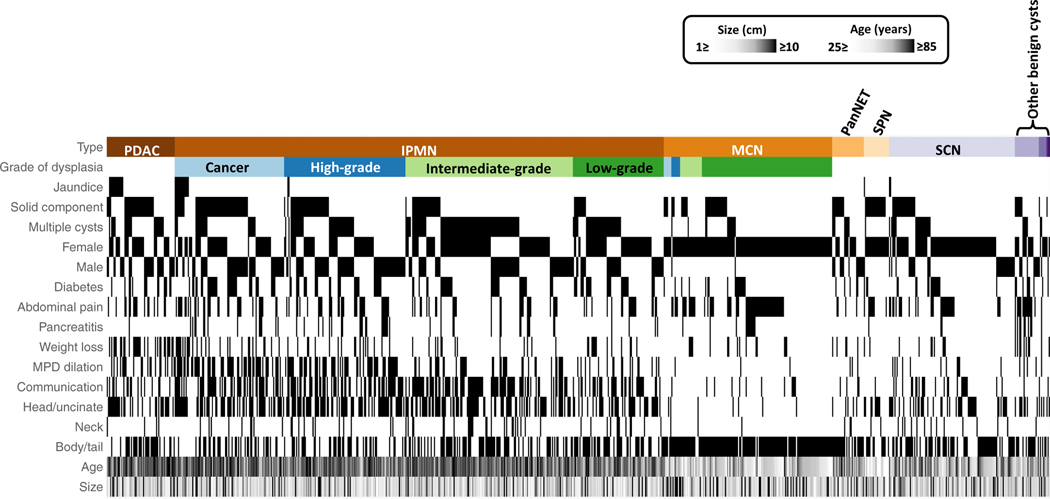
Fig. 1.. Clinical features of all of the patients with pancreatic cysts.
This heatmap shows the clinical features of the 862 patients with pancreatic cysts. Areas highlighted in black show the features present in the different types of cysts. For example, one can easily see that almost all the patients with MCNs were female, with cysts located in the body or tail of the pancreas. MPD, main pancreatic duct; PDAC, pancreatic ductal adenocarcinoma; MCN, mucinous cystic neoplasm; PanNET, pancreatic neuroendocrine tumor; SCN, serous cystic neoplasm; SPN, solid pseudopapillary neoplasm.
Fig. 2.
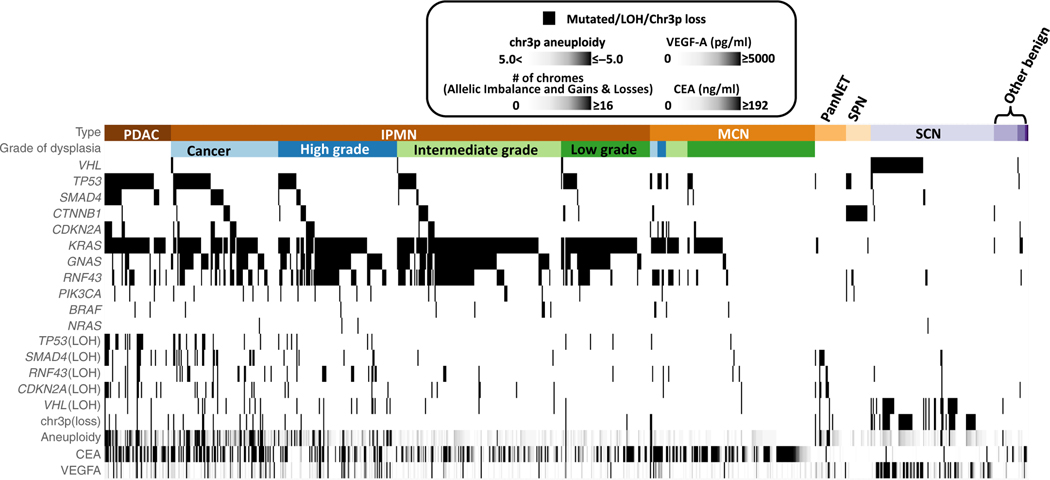
Fig. 2.. Molecular features of all of the pancreatic cysts.
This heatmap shows the molecular features of the 862 patients with pancreatic cysts. Areas highlighted in black show the features present in the different types of cysts. For example, one can see that GNAS mutations occur almost exclusively in patients with IPMN and PDAC and that they occur in cysts with all grades of dysplasia. In contrast, SMAD4 mutations occur far more commonly in patients with PDAC or IPMNs with cancer or high-grade dysplasia than in patients with low- or intermediate-grade dysplasia.
Fig. 3.
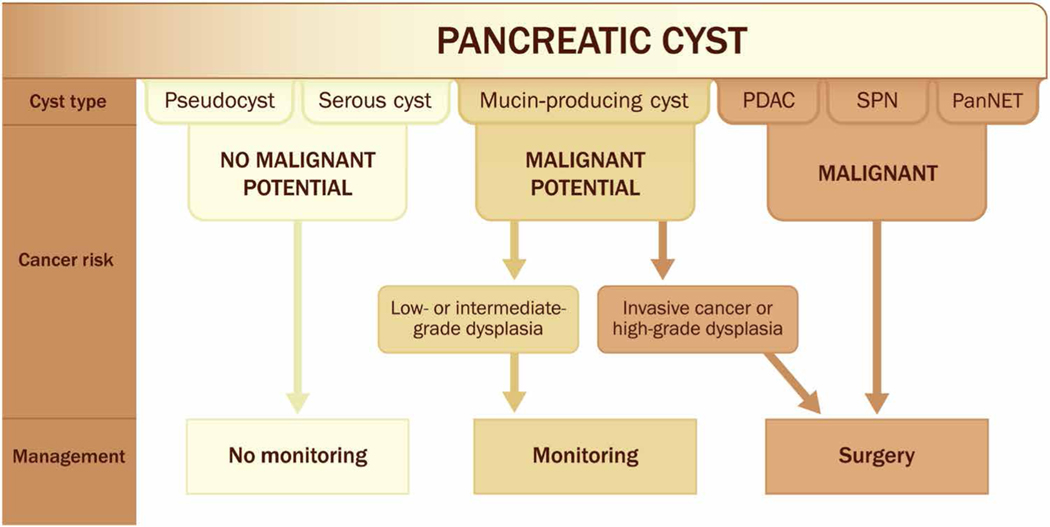
Fig. 3.. Clinical management of patients with pancreatic cysts.
This figure shows how the type of pancreatic cyst determines the risk of the cyst developing cancer, which in turn dictates clinical management. Serous cystic neoplasms and pseudocysts have essentially no malignant potential and therefore require no monitoring. In contrast, cystic degeneration of a PDAC, PanNET, or solid pseudopapillary neoplasm are, or have a high risk for becoming, malignant, and therefore should undergo surgical resection. IPMNs and MCNs are mucin-producing cysts. A small number of these harbor high-grade dysplasia or cancer and should be surgically resected, while the remaining mucin-producing cysts simply need surveillance.
Fig. 4.
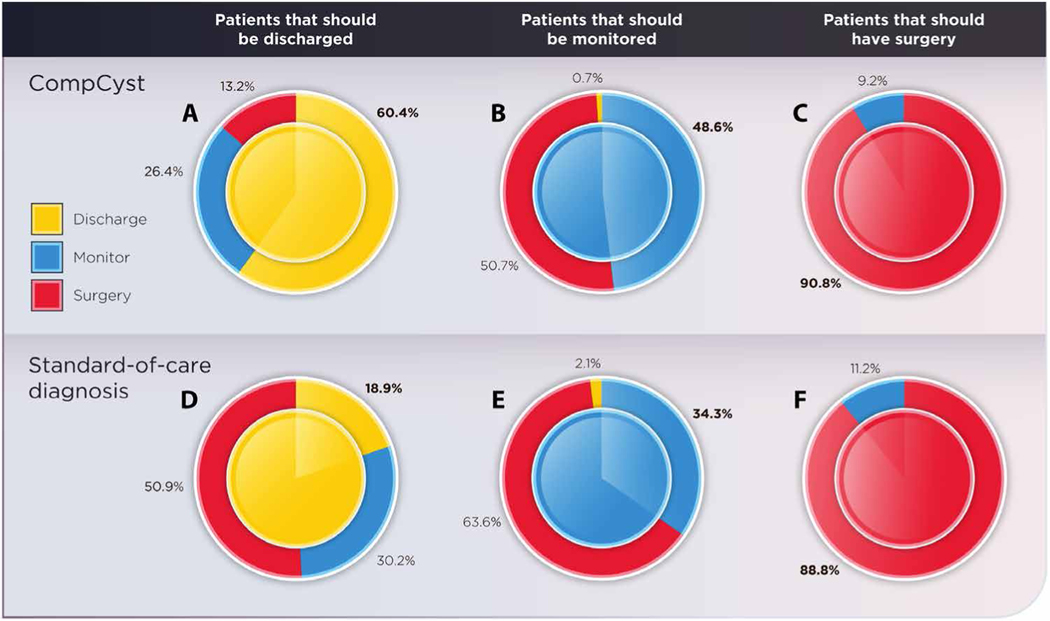
Fig. 4.. Management of pancreatic cysts.
These donut charts show the management recommendations based on CompCyst and standard of care compared with the gold standard, pathology. The center of the circle indicates the management recommendation based on the final surgical pathology classification. A fully solid circle—one where the inner and outer circles are fully the same color—would indicate 100% accuracy. The performance of CompCyst compared with surgical pathology for cysts in whom the correct management was discharge, monitoring, or surgery is shown in (A), (B), or (C), respectively. The performance of standard of care compared with surgical pathology is shown in (D), (E), or (F), respectively.
Fig. 5.
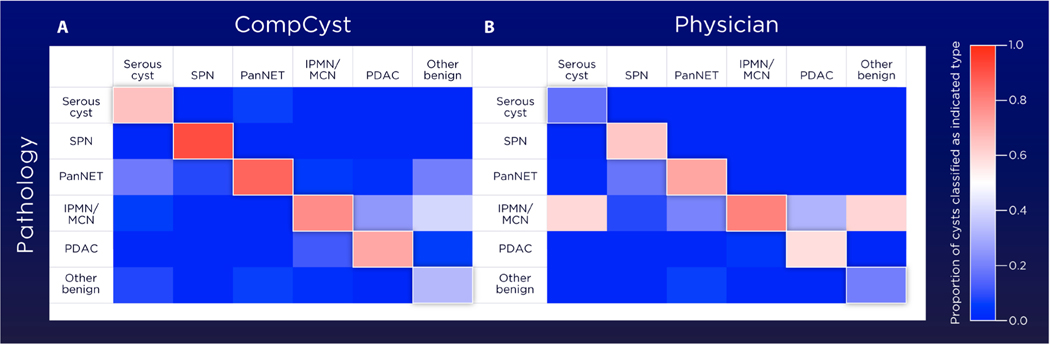
Fig. 5.. Classification of the type of pancreatic cyst.
These two heatmaps compare the CompCyst classification (A) and physician’s preoperative diagnosis based on clinical and imaging features (B) with surgical pathology for classifying the type of pancreatic cyst. The fraction of cysts classified to be of the indicated type is shown in the color bar.

Comment in

  • Guiding pancreatic cyst management.
    Bradley CA. Bradley CA. Nat Rev Gastroenterol Hepatol. 2019 Oct;16(10):582-583. doi: 10.1038/s41575-019-0198-7. Nat Rev Gastroenterol Hepatol. 2019. PMID: 31409907 No abstract available.

References

    1. Lee KS, Sekhar A, Rofsky NM, Pedrosa I, Prevalence of incidental pancreatic cysts in the adult population on MR imaging. Am. J. Gastroenterol 105, 2079–2084 (2010). - PubMed
    1. Laffan TA, Horton KM, Klein AP, Berlanstein B, Siegelman SS, Kawamoto S, Johnson PT, Fishman EK, Hruban RH, Prevalence of unsuspected pancreatic cysts on MDCT. Am. J. Roentgenol 191, 802–807 (2008). - PMC - PubMed
    1. Lennon AM, Wolfgang CL, Canto MI, Klein AP, Herman JM, Goggins M,Fishman EK, Kamel I, Weiss MJ, Diaz LA, Papadopoulos N, Kinzler KW,Vogelstein B, Hruban RH, The early detection of pancreatic cancer: What will it take to diagnose and treat curable pancreatic neoplasia? Cancer Res. 74,3381–3389 (2014). - PMC - PubMed
    1. Tanaka M, Fernández-del Castillo C, Kamisawa T, Jang JY, Levy P, Ohtsuka T, Salvia R,Shimizu Y, Tada M, Wolfgang CL, Revisions of international consensus Fukuoka guidelines for the management of IPMN of the pancreas. Pancreatology 17, 738–753 (2017). - PubMed
    1. Del Chiaro M, Verbeke C, Salvia R, Klöppel G, Werner J, McKay C, Friess H, Manfredi R,Van Cutsem E, Löhr M, Segersvärd R; European Study Group on Cystic Tumours of the Pancreas, European experts consensus statement on cystic tumours of the pancreas. Dig. Liver Dis 45, 703–711 (2013). - PubMed

Publication types

LinkOut - more resources