


Mechanism of injury based classification of proximal tibia fractures
- PMID: 31316255
- PMCID: PMC6611915
- DOI: 10.1016/j.jcot.2018.08.012
Mechanism of injury based classification of proximal tibia fractures
Erratum in
-
Erratum regarding previously published articles.J Clin Orthop Trauma. 2020 Nov-Dec;11(6):1169-1171. doi: 10.1016/j.jcot.2020.09.032. Epub 2020 Sep 26. J Clin Orthop Trauma. 2020. PMID: 33013141 Free PMC article.
-
Erratum regarding missing Declaration of Competing Interest statements in previously published articles.J Clin Orthop Trauma. 2020 Nov-Dec;11(6):1177. doi: 10.1016/j.jcot.2020.10.025. Epub 2020 Oct 15. J Clin Orthop Trauma. 2020. PMID: 33078051 Free PMC article.
-
Erratum regarding previously published articles.J Clin Orthop Trauma. 2020 Nov-Dec;11(6):1172-1174. doi: 10.1016/j.jcot.2020.10.044. Epub 2020 Oct 23. J Clin Orthop Trauma. 2020. PMID: 33192025 Free PMC article.
Abstract
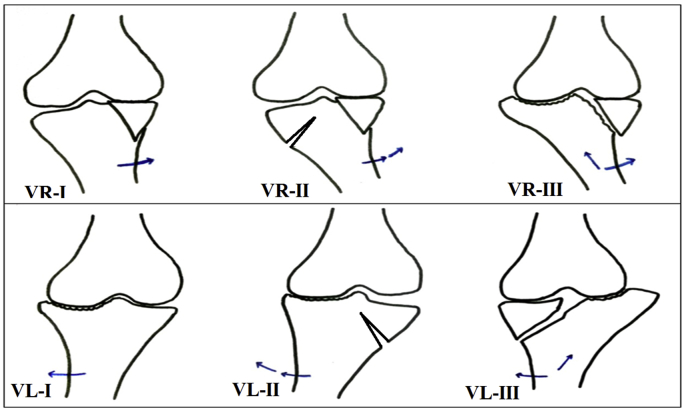
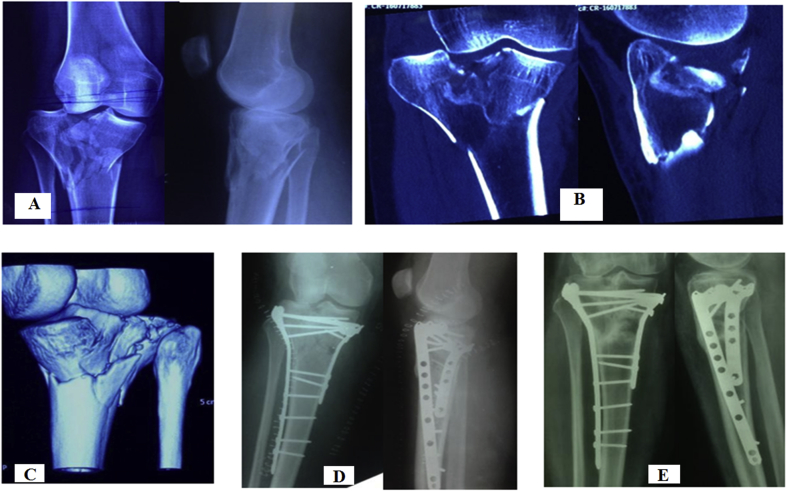
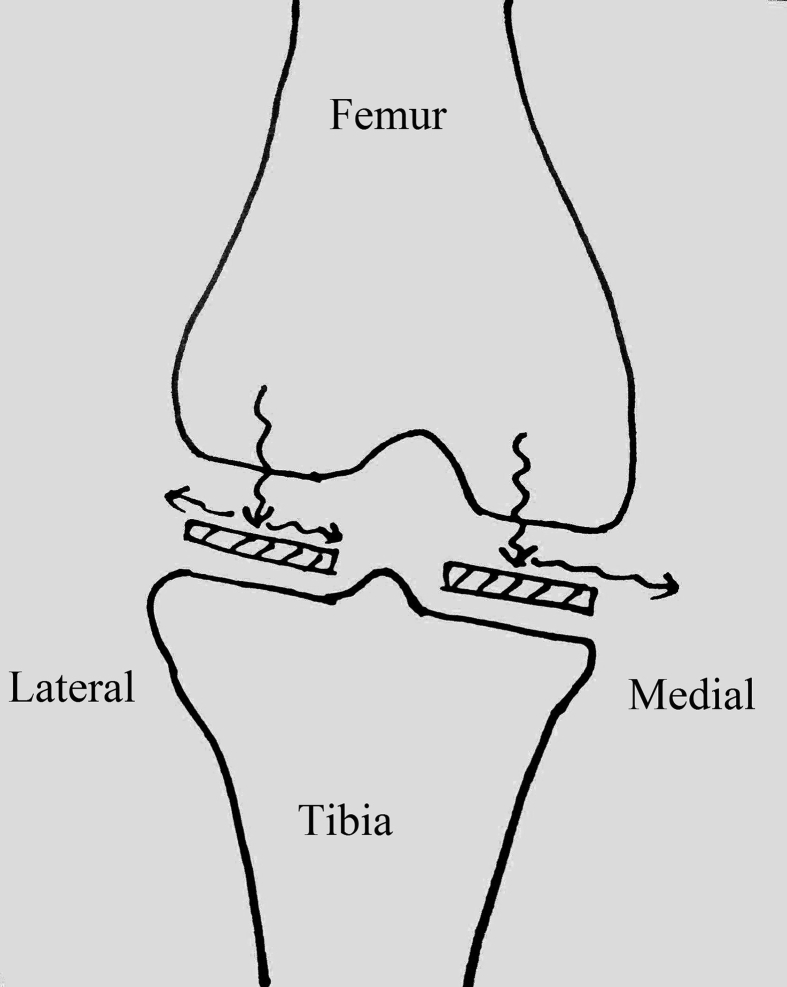
Introduction: We treated proximal tibia fractures according to our own CT based classification in which we divided these fractures into different varus and valgus fractures. We also provide a guide for reduction of these fractures and the sequence in which different fractured fragments of proximal tibia should be fixed.
Materials and methods: Patients were identified from the hospital records, treated according to classification based upon mechanism of injury, from August 2014 to December 2016. Patients were called for follow up in outpatient department for evaluation. Functional evaluation was done according to Rasmussen functional grading score.
Results: Twenty one patients of proximal tibia fracture were treated between august 2014 to December 2016 according to our method. There were 17 male and 4 female. Age ranged from 20 year to 65 year (average 35.19 year). 17 patients were turned up for latest follow up who were analysed for Rasmusssen functional grading score. 14 patients had excellent and 3 patients had good function according to Rasmussen functional grading score.
Conclusions: Our classification system provides a guide for reduction of proximal tibia fractures and also tells us the sequence of different fracture fragments.
Keywords: Classification; Condyle; Fracture; Mechanism; Proximal tibia.
Figures
References
-
- Molenaars R.J., Mellema J.J., Doornberg J.N., Kloen P. Tibial plateau fracture characteristics: computed tomography mapping of lateral, medial, and bicondylar fractures. J. Bone Joint Surg. Am. 2015;97(18):1512–1520. - PubMed
-
- Yang G., Zhai Q., Zhu Y., Sun H., Putnis S., Luo C. The incidence of posterior tibial plateau fracture: an investigation of 525 fractures by using a CT-based classification system. Arch Orthop Trauma Surg. 2013;133(7):929–934. - PubMed
-
- Krause M., Preiss A., Müller G. Intra-articular tibial plateau fracture characteristics according to the “Ten segment classification”. Injury. 2016;47(11):2551–2557. - PubMed
-
- Rasmussen P.S. Tibial condylar fractures. Impairment of knee joint stability as an indication for surgical treatment. J. Bone Joint Surg. Am. 1973;55(7):1331–1350. - PubMed
-
- Freeman M.A., Pinskerova V. The movement of the normal tibio-femoral joint. J Biomech. 2005;38(2):197–208. - PubMed
LinkOut - more resources
Full Text Sources
