


Constitutive and induced insect resistance in RNAi-mediated ultra-low gossypol cottonseed cotton
- PMID: 31319793
- PMCID: PMC6639952
- DOI: 10.1186/s12870-019-1921-9
Constitutive and induced insect resistance in RNAi-mediated ultra-low gossypol cottonseed cotton
Abstract
Background: Besides fibers, cotton plants also produce a large amount of seeds with a high oil and protein content. The use of these seeds is restricted by their high contents of the terpenoid gossypol, which is harmful to humans and livestock. Using a genetic engineering approach, "Ultra-low gossypol cottonseed" (ULGCS) plants were produced by knocking down an enzyme that catalyzes the formation of a precursor of gossypol. This was accomplished via RNAi-mediated silencing of the target gene using a seed-specific α-globulin promotor. Since gossypol is also a crucial defense mechanism against leaf-feeding herbivores, ULGCS plants might possess lower herbivore resistance than non-engineered plants. Therefore, we tested the constitutive and inducible direct insect resistance of two ULGCS cotton lines against the African cotton leafworm, Spodoptera littoralis.
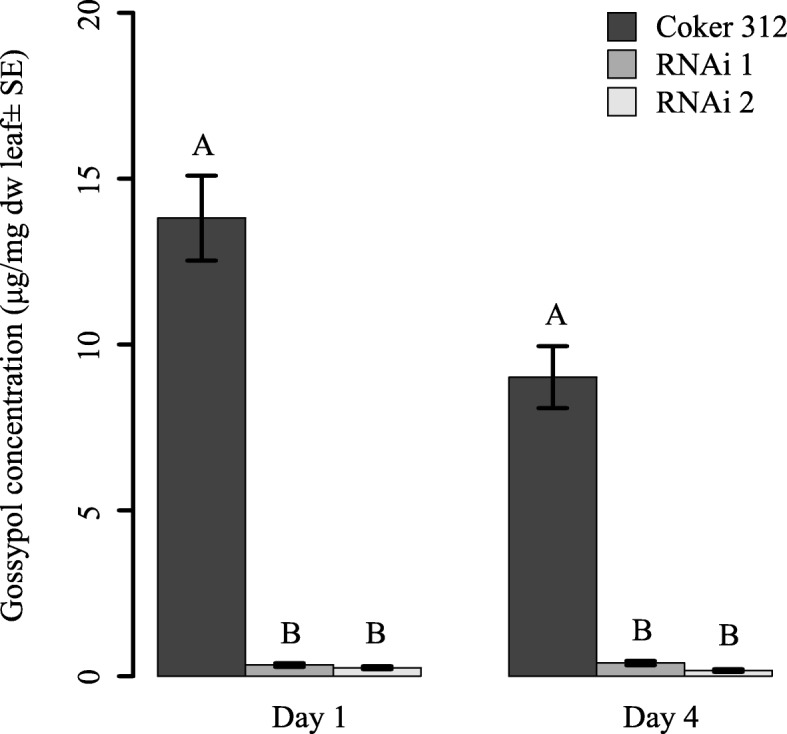
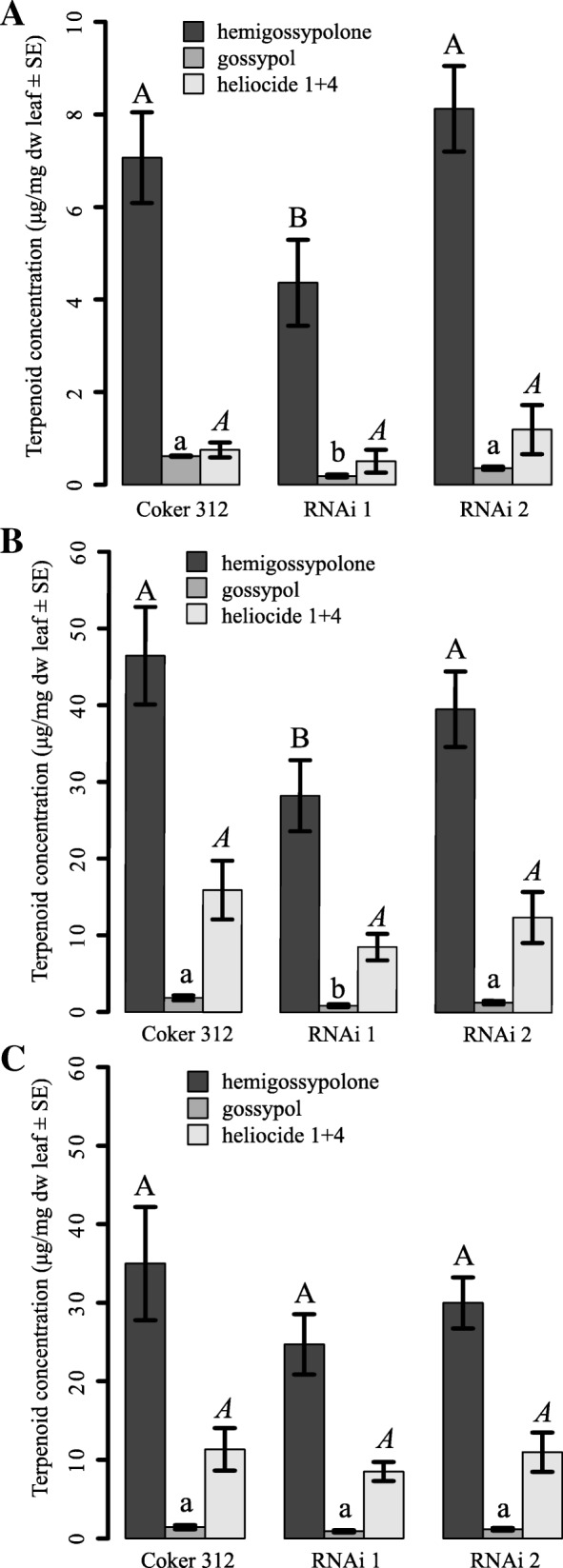
Result: The herbivore was equally affected by both ULGCS lines and the control (Coker 312) line when feeding on fully expanded true leaves from undamaged plants and plants induced by jasmonic acid. When plants were induced by caterpillar-damage, however, S. littoralis larvae performed better on the ULGCS plants. Terpenoid analyses revealed that the ULGCS lines were equally inducible as the control plants. Levels of terpenoids were always lower in one of the two lines. In the case of cotyledons, caterpillars performed better on ULGCS cotton than on conventional cotton. This was likely caused by reduced levels of gossypol in ULGCS cotyledons.
Conclusion: Despite those effects, the insect resistance of ULGSC cotton can be considered as largely intact and the plants may, therefore, be an interesting alternative to conventional cotton varieties.
Keywords: Genetically modified crops; Glandless cotton; Gossypium hirsutum; Gossypol; Spodoptera littoralis; TAM66274; ULGCS.
Conflict of interest statement
SH, ME, MM, JR declare that they have no competing interests. KR is inventor on U.S. patents 7999148, 8987554, 10273495 related to ULGCS technology and U.S. patent application no. 16030593 (Publication no. 20190008113 A1) related to TAM66274.
Figures
References
-
- Cai Y, Xie Y, Li J. Glandless seed and glanded plant research in cotton. A review. Agron Sustain Dev. 2010;30:181–190. doi: 10.1051/agro/2008024. - DOI
-
- Watkins SE, Waldroup PW. Utilization of high protein cottonseed meal in broiler diets. J Appl Poult Res. 1995;4:310–331. doi: 10.1093/japr/4.3.310. - DOI
-
- Risco CA, Chase CC., Jr . Gossypol. In: D’Mello JPF, editor. Handbook of plant and fungal toxicants. Boca Raton, FL: CRC Press; 1997. pp. 87–98.
MeSH terms
Substances
Grants and funding
LinkOut - more resources
Full Text Sources
Other Literature Sources
