


Prevalence and patterns of dietary supplement use in elite Spanish athletes
- PMID: 31319850
- PMCID: PMC6639916
- DOI: 10.1186/s12970-019-0296-5
Prevalence and patterns of dietary supplement use in elite Spanish athletes
Abstract
Background: Dietary supplementation is a common strategy to achieve a specific health status or performance benefit. Several investigations have focused on the prevalence of dietary supplement use by athletes. However, information on how athletes manage the use and purchase of dietary supplements is scarce.
Methods: Five hundred and twenty-seven high-performance athletes (346 males and 181 females), participating in individual and team sports, completed a validated questionnaire about use and purchase patterns of dietary supplements. The dietary supplements were categorized according to the International Olympic Committee (IOC) consensus.
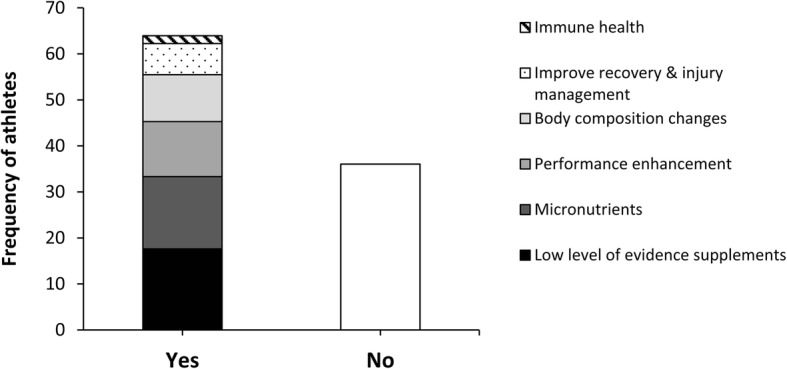
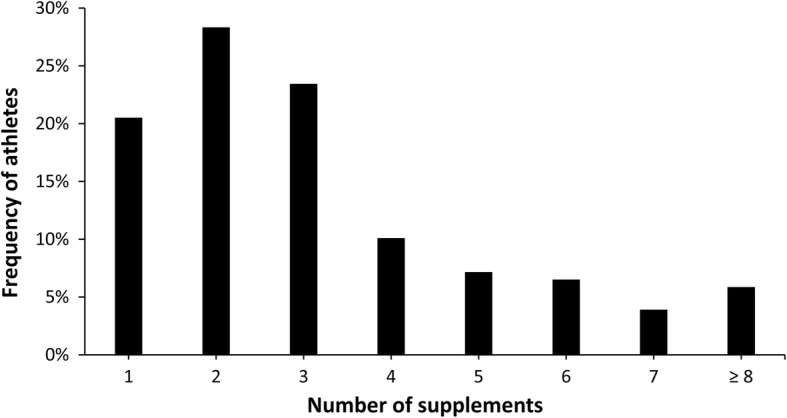
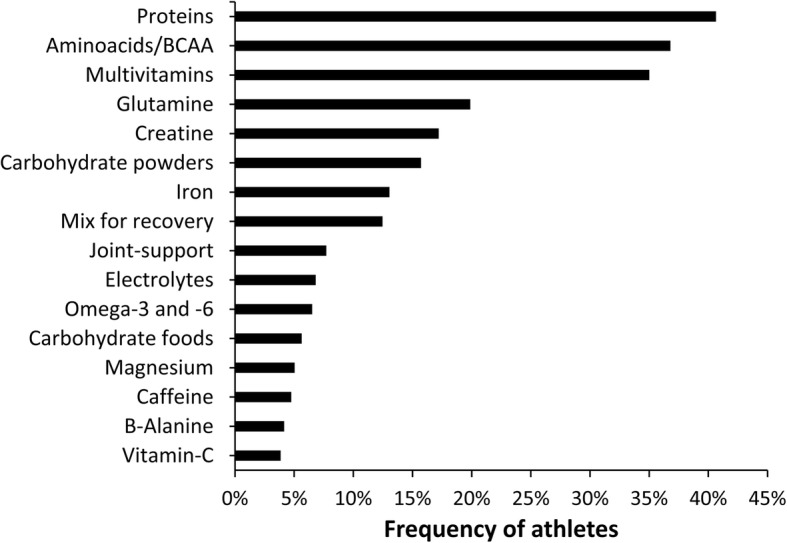
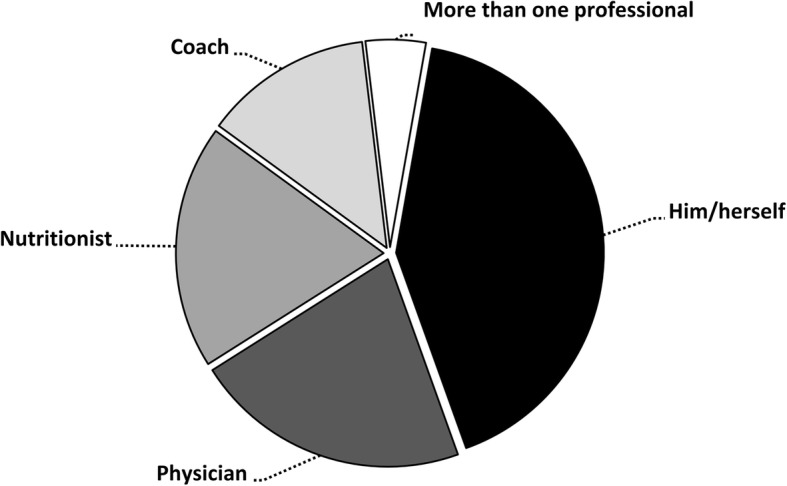
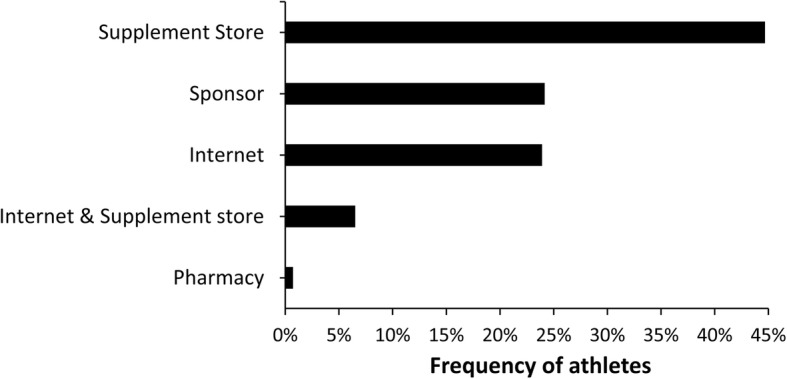
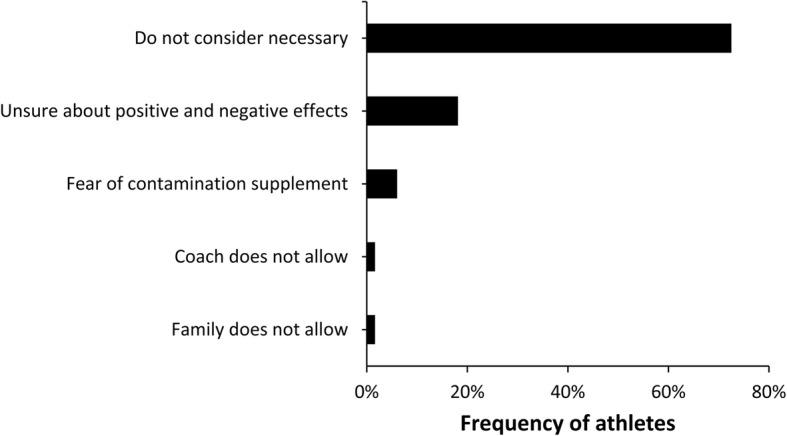
Results: Sixty four percent of the athletes (n = 337) used dietary supplements (median = 3; range 1 to 12). Age, sex, type of sport, level of competition, and professionalism influenced the prevalence of dietary supplement use (all p < 0.05). The most prevalent dietary supplement consumed was proteins (41%; n = 137), followed by amino acids/BCAA-based supplements (37%; n = 124). Additionally, as per group of supplements according to IOC consensus, 18% of the supplements were rated as having a low level of scientific evidence (e.g., glutamine, HMB, L-carnitine, etc). Most athletes (45%, n = 152) purchased dietary supplements in a store and 24% (n = 81) obtained them from a sponsor. Most athletes also (42%, n = 141) reported a self-organization of supplementation and did not consult with any professional. Last, 81% (n = 273) of athletes consuming supplements did not know any platform to check supplement safety/quality. For those who do not use dietary supplements (36% of the total sample, n = 190), most reported that they do not consider supplements necessary (72%, n = 137).
Conclusion: Dietary supplementation appears to be widely used in sport with a considerable proportion of athletes consuming supplements with low level of scientific evidence. Additionally, athletes seem to rely on inadequate sources of information and may be largely unaware of sources to detect supplement contamination.
Keywords: Athletic performance; Dietary supplement; Elite athlete; Ergogenic aid.
Conflict of interest statement
The authors declare that they have no competing interests.
Figures
References
MeSH terms
LinkOut - more resources
Full Text Sources
Medical
