


Machine Learning Prediction Models for In-Hospital Mortality After Transcatheter Aortic Valve Replacement
- PMID: 31320027
- PMCID: PMC6650265
- DOI: 10.1016/j.jcin.2019.06.013
Machine Learning Prediction Models for In-Hospital Mortality After Transcatheter Aortic Valve Replacement
Abstract
Objectives: This study sought to develop and compare an array of machine learning methods to predict in-hospital mortality after transcatheter aortic valve replacement (TAVR) in the United States.
Background: Existing risk prediction tools for in-hospital complications in patients undergoing TAVR have been designed using statistical modeling approaches and have certain limitations.
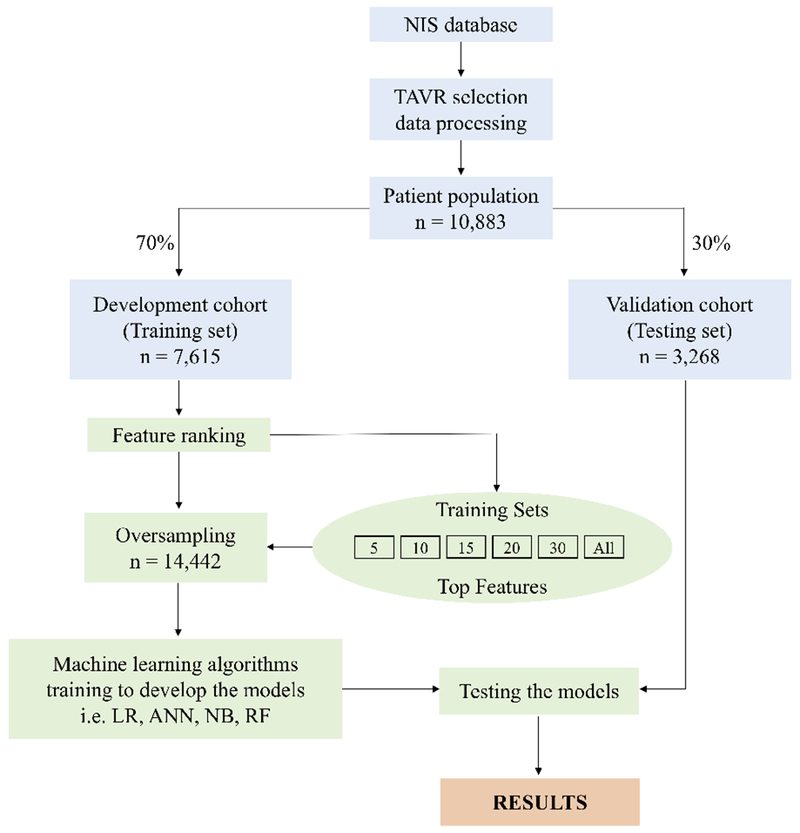
Methods: Patient data were obtained from the National Inpatient Sample database from 2012 to 2015. The data were randomly divided into a development cohort (n = 7,615) and a validation cohort (n = 3,268). Logistic regression, artificial neural network, naive Bayes, and random forest machine learning algorithms were applied to obtain in-hospital mortality prediction models.
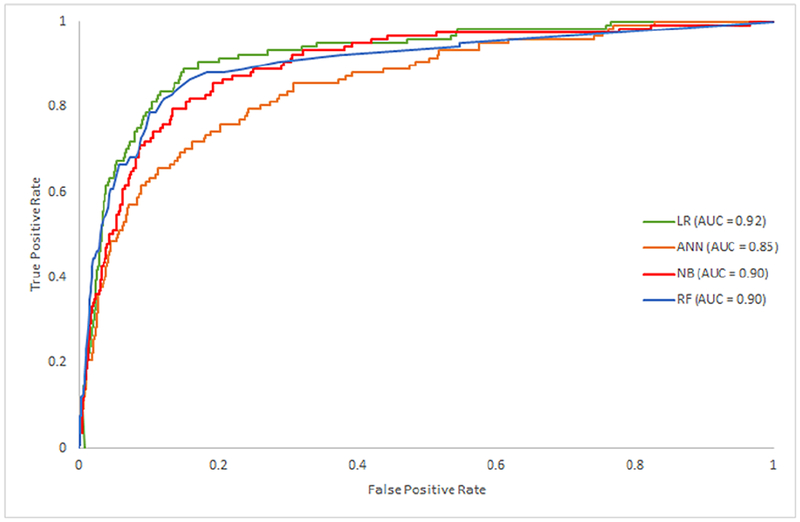
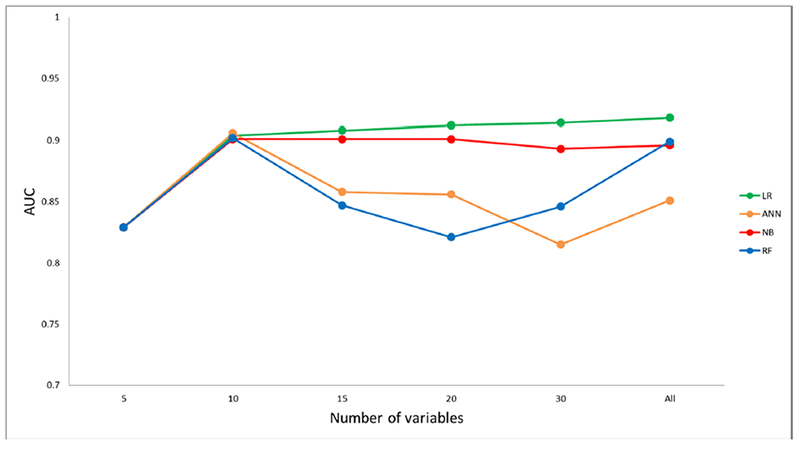
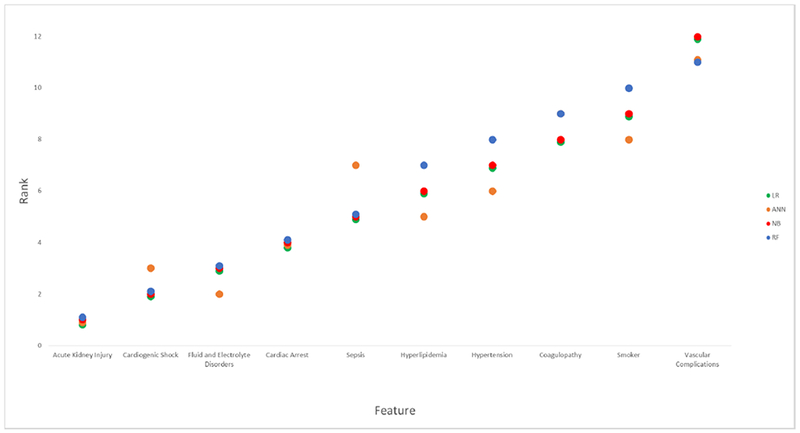
Results: A total of 10,883 TAVRs were analyzed in our study. The overall in-hospital mortality was 3.6%. Overall, prediction models' performance measured by area under the curve were good (>0.80). The best model was obtained by logistic regression (area under the curve: 0.92; 95% confidence interval: 0.89 to 0.95). Most obtained models plateaued after introducing 10 variables. Acute kidney injury was the main predictor of in-hospital mortality ranked with the highest mean importance in all the models. The National Inpatient Sample TAVR score showed the best discrimination among available TAVR prediction scores.
Conclusions: Machine learning methods can generate robust models to predict in-hospital mortality for TAVR. The National Inpatient Sample TAVR score should be considered for prognosis and shared decision making in TAVR patients.
Keywords: machine learning; mortality; transcatheter aortic valve replacement.
Copyright © 2019 American College of Cardiology Foundation. Published by Elsevier Inc. All rights reserved.
Figures
Comment in
-
Machine Learning Is No Magic: A Plea for Critical Appraisal During Periods of Hype.JACC Cardiovasc Interv. 2019 Jul 22;12(14):1339-1341. doi: 10.1016/j.jcin.2019.06.004. JACC Cardiovasc Interv. 2019. PMID: 31320028 No abstract available.
-
Machine Learning for Making Aortic Valve Interventions Complementary and Not Competitive.JACC Cardiovasc Interv. 2019 Oct 28;12(20):2112. doi: 10.1016/j.jcin.2019.08.016. JACC Cardiovasc Interv. 2019. PMID: 31648768 No abstract available.
-
Machine Learning Is No Magic: Put a Rabbit Into the Hat Before Pulling it Out.JACC Cardiovasc Interv. 2019 Oct 28;12(20):2112-2113. doi: 10.1016/j.jcin.2019.08.018. JACC Cardiovasc Interv. 2019. PMID: 31648769 No abstract available.
-
Reply: Leveraging Machine Learning to Generate Prediction Models for Structural Valve Interventions.JACC Cardiovasc Interv. 2019 Oct 28;12(20):2113-2114. doi: 10.1016/j.jcin.2019.09.001. JACC Cardiovasc Interv. 2019. PMID: 31648770 Free PMC article. No abstract available.
References
-
- Nishimura RA, Otto CM, Bonow RO, et al. 2017 AHA/ACC Focused Update of the 2014 AHA/ACC Guideline for the Management of Patients With Valvular Heart Disease: A Report of the American College of Cardiology/American Heart Association Task Force on Clinical Practice Guidelines. J Am Coll Cardiol. 2017;70(2):252–289. - PubMed
-
- Chamandi C, Puri R, Rodriguez-Gabella T, Rodés-Cabau J. Latest generation transcatheter aortic valve replacement devices and procedures. Can J Cardiol 2017;33:1082–90. - PubMed
-
- Mack MJ, Leon MB, Thourani VH, et al. Transcatheter Aortic-Valve Replacement with a Balloon-Expandable Valve in Low-Risk Patients. N Engl J Med 2019;380:1695–1705. - PubMed
-
- TAVR In-Hospital Mortality Risk Calculator. https://tools.acc.org/tavrrisk/#!/content/evaluate/. Accessed February 28, 2018.
-
- Edwards FH, Cohen DJ, O’Brien SM, et al. Development and Validation of a Risk Prediction Model for In-Hospital Mortality After Transcatheter Aortic Valve Replacement. JAMA Cardiol 2016;1(1):46–52. - PubMed
Publication types
MeSH terms
Grants and funding
LinkOut - more resources
Full Text Sources
Other Literature Sources
