Review
. 2019 Aug 30;47(4):1005-1012.
doi: 10.1042/BST20180252. Epub 2019 Jul 18.

Answers to naysayers regarding microbial extracellular vesicles

Affiliations
Review

Answers to naysayers regarding microbial extracellular vesicles

Carolina Coelho et al. Biochem Soc Trans. .

Abstract

It is now over 30 years since the discovery of extracellular vesicles (EVs) in Gram-negative bacteria. However, for cell-walled microbes such as fungi, mycobacteria and Gram-positive bacteria it was thought that EV release would be impossible, since such structures were not believed to cross the thick cell wall. This notion was disproven 10 years ago with the discovery of EVs in fungi, mycobacteria, and gram-positive bacteria. Today, EVs have been described in practically every species tested, ranging from Fungi through Bacteria and Archaea, suggesting that EVs are a feature of every living cell. However, there continues to be skepticism in some quarters regarding EV release and their biological significance. In this review, we list doubts that have been verbalized to us and provide answers to counter them. In our opinion, there is no doubt as to existence and physiological function of EVs and we take this opportunity to highlight the most pressing topics in our understanding of the biological processes underlying these structures.

Keywords: EVs; OMV; exosomes; extracellular vesicles; nanovesicles; outer membrane vesicles.


Conflict of interest statement

Competing Interests

The Authors declare that there are no competing interests associated with the manuscript.

Figures
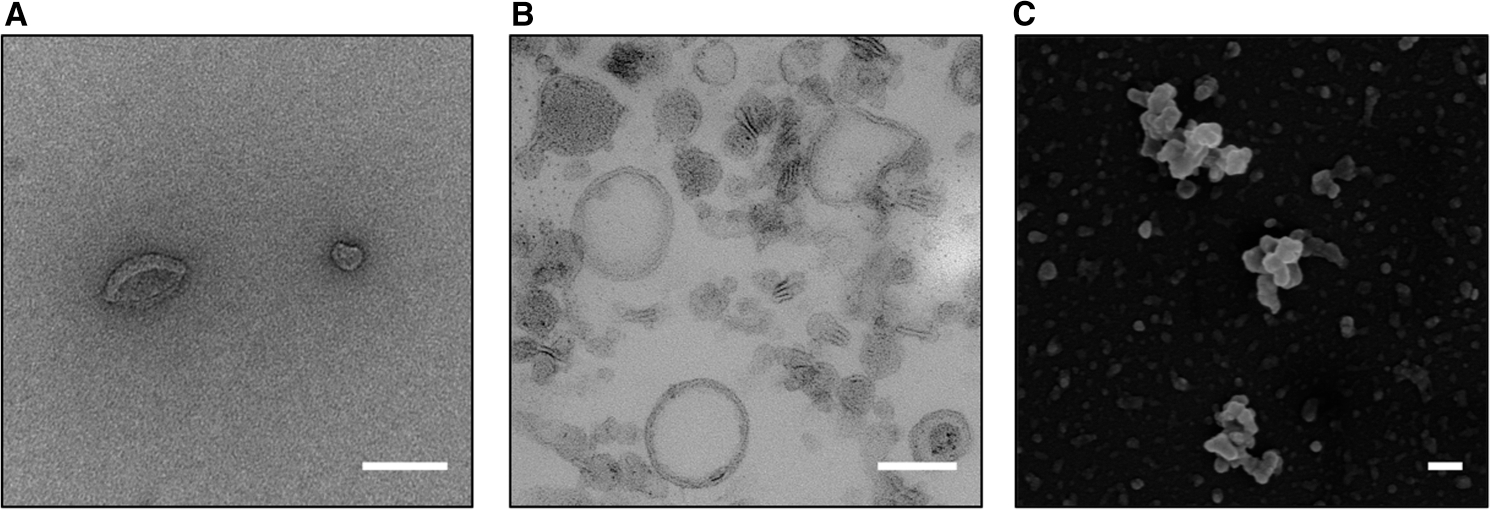
Figure 1.
Figure 1.. EVs from Gram + bacteria and fungi.
(A) Negative Staining electron micrograph of L. monocytogenes EVs after Optiprep gradient separation (as prepared in [30]). (B) Transmission electron micrograph of EVs from C. neoformans (as prepared in [58]). (C) Scanning electron micrograph of EVs from C. neoformans (as prepared in [58]). Scale bars 100 nm. Images courtesy of Carolina Coelho and Raghav Vij (A), and Julie M. Wolf (B and C).
Figure 2.
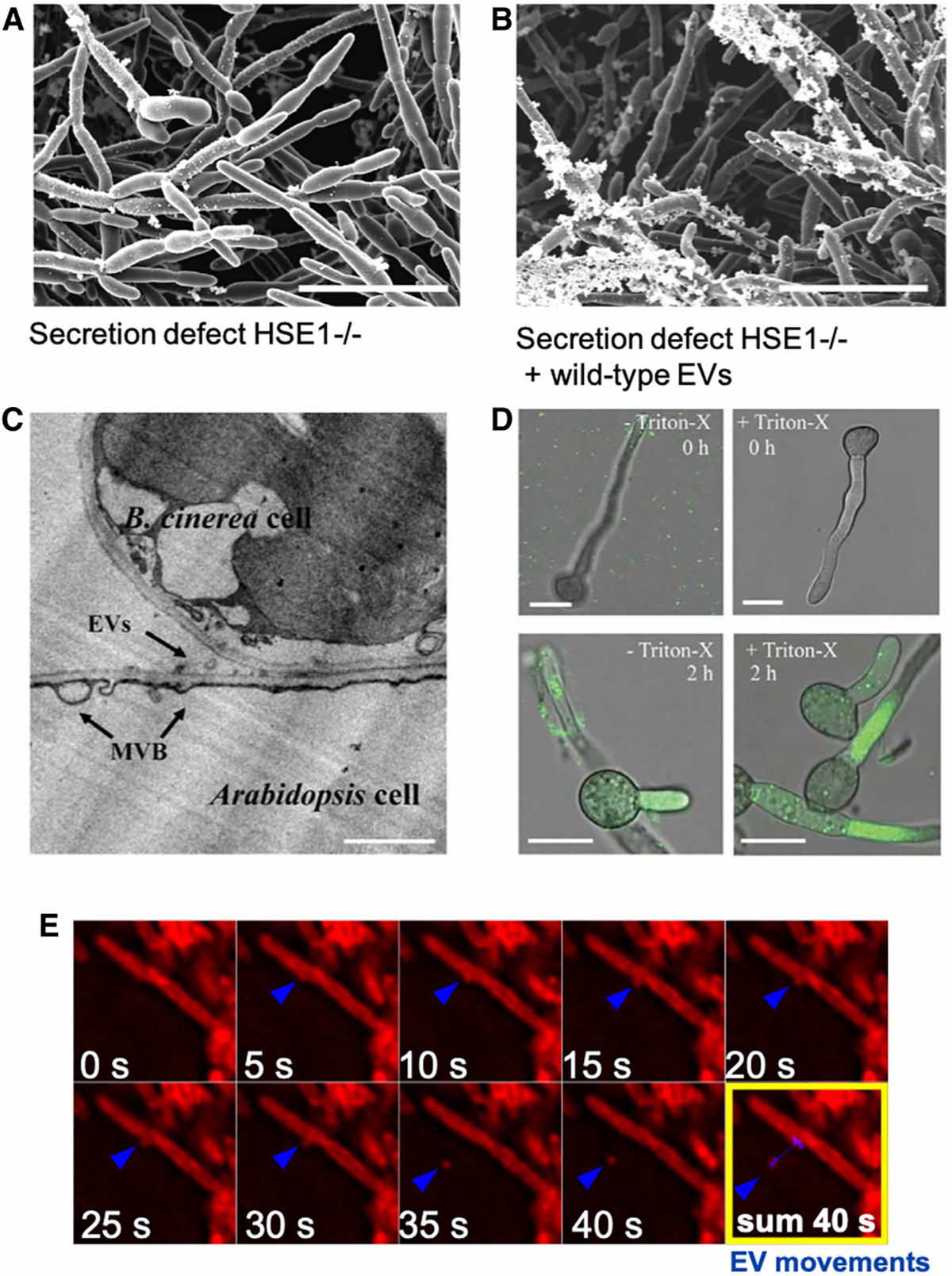
Figure 2.. EVs serve as delivery devices in intraspecies and interspecies interactions.
(A) C. albicans deleted for ESCRT subunit HSE1 is defective in biofilm and extracellular matrix. (B) Biofilm and extracellular matrix formation were rescued when wild-type EVs were. Added to HSE1−/− strains. Scale bars 11 μm. (C) EVs from the plant Arabidopsis near the pathogen B. cinerea infection sites. Scale bars, 1 μm. (D) Isolated Tetraspanin8 –GFP-labeled Arabidopsis EVs were taken up by B. cinerea within 2 h of co-incubation. Scale bars 10 μm. (E) L. monocytogenes release EVs when infecting a mammalian host. Bacterial phospholipids were previously loaded with fluorescent dye Bodipy-C12 fatty acid which is incorporated and released in EVs. Images courtesy of Zarnowski et al. [11] (A and B), Cai et al. [47] (C and D), and Coelho et al. [30] (E).

References

    1. Théry C, Witwer KW, Aikawa E, Alcaraz MJ, Anderson JD, Andriantsitohaina R et al. (2018) Minimal information for studies of extracellular vesicles 2018 (MISEV2018): a position statement of the International Society for Extracellular Vesicles and update of the MISEV2014 guidelines. J. Extracell. Vesicles 7, 1535750 10.1080/20013078.2018.1535750 - DOI - PMC - PubMed
    1. Dorward DW and Garon CF (1990) DNA is packaged within membrane-derived vesicles of gram-negative but not gram-positive bacteria. Appl. Environ. Microbiol. 56, 1960–1962 - PMC - PubMed
    1. Marsollier L, Brodin P, Jackson M, Korduláková J, Tafelmeyer P, Carbonnelle E et al. (2007) Impact of Mycobacterium ulcerans biofilm on transmissibility to ecological niches and Buruli ulcer pathogenesis. PLoS Pathog. 3, e62 10.1371/journal.ppat.0030062 - DOI - PMC - PubMed
    1. Rodrigues ML, Nakayasu ES, Oliveira DL, Nimrichter L, Nosanchuk JD, Almeida IC et al. (2008) Extracellular vesicles produced by Cryptococcus neoformans contain protein components associated with virulence. Eukaryot. Cell 7, 58–67 10.1128/EC.00370-07 - DOI - PMC - PubMed
    1. Lee E-Y, Choi D-Y, Kim D-K, Kim J-W, Park JO, Kim S et al. (2009) Gram-positive bacteria produce membrane vesicles: proteomics-based characterization of Staphylococcus aureus-derived membrane vesicles. Proteomics 9, 5425–5436 10.1002/pmic.200900338 - DOI - PubMed

Publication types

MeSH terms