


Goal setting improves retention in youth mental health: a cross-sectional analysis
- PMID: 31320924
- PMCID: PMC6615268
- DOI: 10.1186/s13034-019-0288-x
Goal setting improves retention in youth mental health: a cross-sectional analysis
Abstract
Background: This study explored if a youth-specific mental health service routinely set goals with young people during initial intake/assessment and if goal setting and goal quality in this service was associated with patient retention.
Methods: Consecutive initial assessments (n = 283) and administrative service data from two youth-specific health services in Australia were audited for evidence of goal setting, content and quality of the goal and number of therapy services provided after the intake/assessment process. Logistic regression was used to determine if goal setting was associated with disengagement after the assessment session, controlling for drug use, unemployment, age, gender, mental health diagnosis and service site. A consecutive sub-sample of 166 goals (74 participants), was analysed for goal quality. Each goal was assessed against three components of the SMART (specific, measurable, acceptable/achievable, realistic and timed goals) criteria; specific, measurable and timed; and assigned a goal quality score 1-3. A multiple regression explored whether goal quality was predictive of the number of sessions attended, controlling for the same variables as the logistic regression.
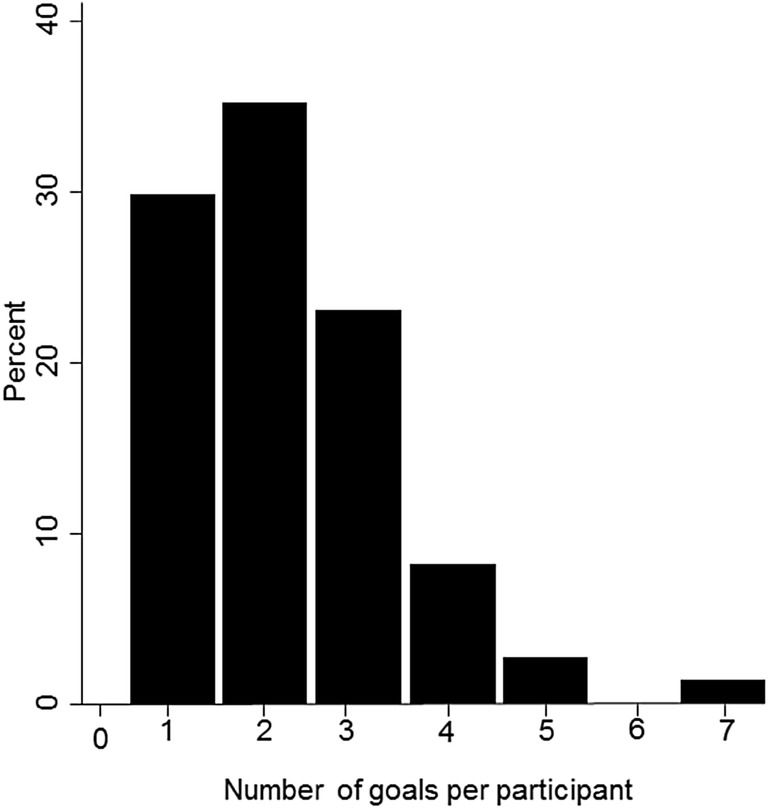
Results: Goal setting was evident in the records of 187 participants (66%). Although most goals were for emotional management, 24% addressed improvements in function. Of the 166 goals analysed in depth, 95 were specific, 23 measurable, but none were timed. Not setting goals during initial assessments correlated with service disengagement (OR 0.30, p > 0.001). Goal setting was positively associated with more therapy sessions attended, regardless of goal quality rating.
Conclusions: Engagement and retention of young people within mental health services can be challenging. Clinical tools such as goal setting may keep young people engaged in services longer, potentially improving clinical outcomes. Further research exploring the effectiveness of current youth service models on client-specific goal based outcomes is recommended.
Keywords: Disengagement; Goal setting; Retention; SMART; Youth mental health.
Conflict of interest statement
Competing interestsThe authors declare that they have no competing interests.
Figures
References
-
- Lloyd C, King R, Bassett H. A survey of Australian mental health occupational therapists. Br J Occup Ther. 2002;65(2):88–96. doi: 10.1177/030802260206500207. - DOI
LinkOut - more resources
Full Text Sources
