


Lysophosphatidic Acid and Autotaxin-associated Effects on the Initiation and Progression of Colorectal Cancer
- PMID: 31323936
- PMCID: PMC6678549
- DOI: 10.3390/cancers11070958
Lysophosphatidic Acid and Autotaxin-associated Effects on the Initiation and Progression of Colorectal Cancer
Abstract
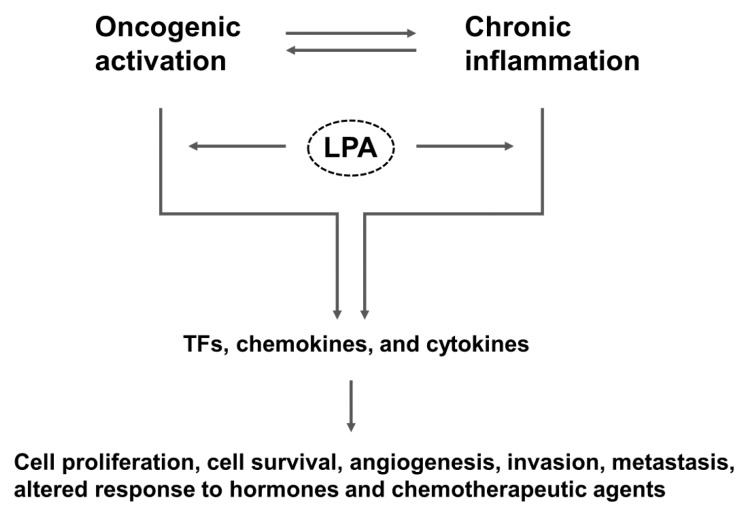
The intestinal epithelium interacts dynamically with the immune system to maintain its barrier function to protect the host, while performing the physiological roles in absorption of nutrients, electrolytes, water and minerals. The importance of lysophosphatidic acid (LPA) and its receptors in the gut has been progressively appreciated. LPA signaling modulates cell proliferation, invasion, adhesion, angiogenesis, and survival that can promote cancer growth and metastasis. These effects are equally important for the maintenance of the epithelial barrier in the gut, which forms the first line of defense against the milieu of potentially pathogenic stimuli. This review focuses on the LPA-mediated signaling that potentially contributes to inflammation and tumor formation in the gastrointestinal tract.
Keywords: colorectal cancer; inflammation; intestine; lysophosphatidic acid.
Conflict of interest statement
The author declares no conflict of interest.
Figures
References
Publication types
Grants and funding
LinkOut - more resources
Full Text Sources
Other Literature Sources
Miscellaneous
