


Strategies to Tune Electrospun Scaffold Porosity for Effective Cell Response in Tissue Engineering
- PMID: 31324062
- PMCID: PMC6787600
- DOI: 10.3390/jfb10030030
Strategies to Tune Electrospun Scaffold Porosity for Effective Cell Response in Tissue Engineering
Abstract
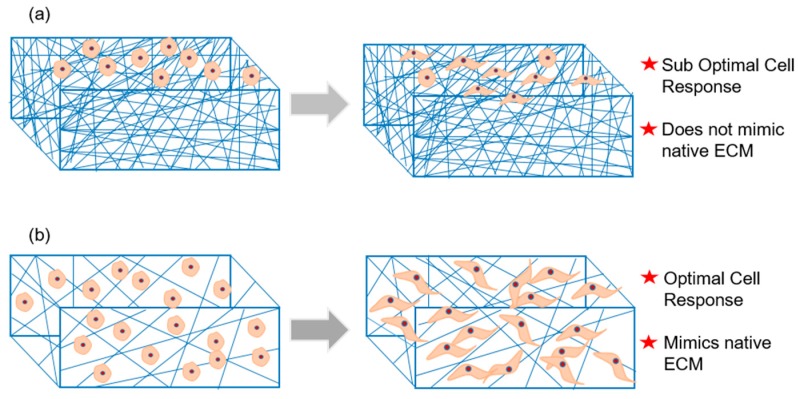
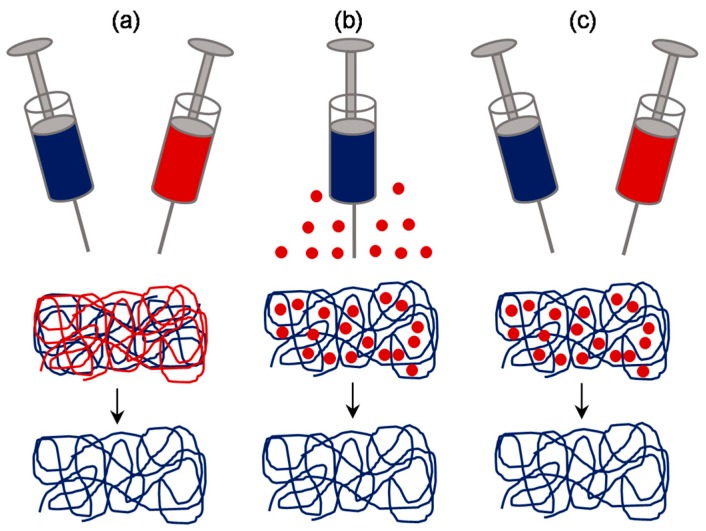
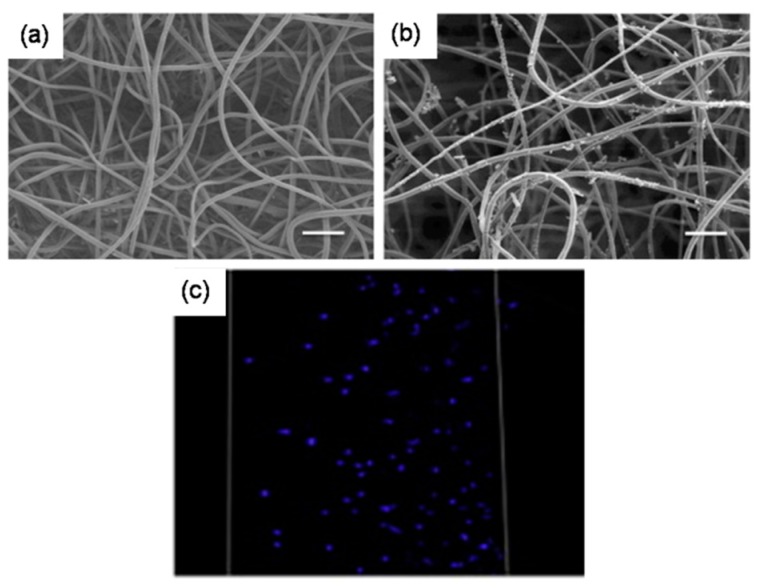
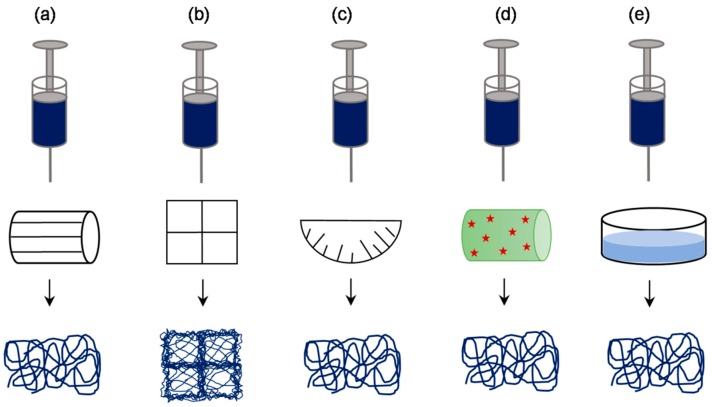
Tissue engineering aims to develop artificial human tissues by culturing cells on a scaffold in the presence of biochemical cues. Properties of scaffold such as architecture and composition highly influence the overall cell response. Electrospinning has emerged as one of the most affordable, versatile, and successful approaches to develop nonwoven nano/microscale fibrous scaffolds whose structural features resemble that of the native extracellular matrix. However, dense packing of the fibers leads to small-sized pores which obstruct cell infiltration and therefore is a major limitation for their use in tissue engineering applications. To this end, a variety of approaches have been investigated to enhance the pore properties of the electrospun scaffolds. In this review, we collect state-of-the-art modification methods and summarize them into six classes as follows: approaches focused on optimization of packing density by (a) conventional setup, (b) sequential or co-electrospinning setups, (c) involving sacrificial elements, (d) using special collectors, (e) post-production processing, and (f) other specialized methods. Overall, this review covers historical as well as latest methodologies in the field and therefore acts as a quick reference for those interested in electrospinning matrices for tissue engineering and beyond.
Keywords: 3D printing; air impedance; anisotropic pores; electrospray; gas foaming; laser ablation; liquid bath collector; sacrificial fibers; salt leaching; ultrasonication.
Conflict of interest statement
The authors declare no conflict of interest. The funders had no role in the design of the study; in the collection, analyses, or interpretation of data; in the writing of the manuscript, or in the decision to publish the results.
Figures
References
-
- Almetwally A.A., El-Sakhawy M., Elshakankery M.H., Kasem M.H. Technology of nano-fibers: Production techniques and properties—Critical review. J. Text. Assoc. 2017;78:5–14.
-
- Kleivaite V., Milasius R. Electrospinning—100 Years of Investigations and Still Open Questions of Web Structure Estimination. Autex Res. J. 2018;18:398–404. doi: 10.1515/aut-2018-0021. - DOI
-
- Anton F. Process and Apparatus for Preparing Artificial Threads. 1,975,504. U.S. Patent. 1934 Oct 2;
-
- Anton F. Production of Artificial Fibers from Fiber Forming Liquids. 2,323,025. U.S. Patent. 1943 Jun 29;
Publication types
Grants and funding
LinkOut - more resources
Full Text Sources
