


DNA damage in aging, the stem cell perspective
- PMID: 31324975
- PMCID: PMC6980431
- DOI: 10.1007/s00439-019-02047-z
DNA damage in aging, the stem cell perspective
Abstract
DNA damage is one of the most consistent cellular process proposed to contribute to aging. The maintenance of genomic and epigenomic integrity is critical for proper function of cells and tissues throughout life, and this homeostasis is under constant strain from both extrinsic and intrinsic insults. Considering the relationship between lifespan and genotoxic burden, it is plausible that the longest-lived cellular populations would face an accumulation of DNA damage over time. Tissue-specific stem cells are multipotent populations residing in localized niches and are responsible for maintaining all lineages of their resident tissue/system throughout life. However, many of these stem cells are impacted by genotoxic stress. Several factors may dictate the specific stem cell population response to DNA damage, including the niche location, life history, and fate decisions after damage accrual. This leads to differential handling of DNA damage in different stem cell compartments. Given the importance of adult stem cells in preserving normal tissue function during an individual's lifetime, DNA damage sensitivity and accumulation in these compartments could have crucial implications for aging. Despite this, more support for direct functional effects driven by accumulated DNA damage in adult stem cell compartments is needed. This review will present current evidence for the accumulation and potential influence of DNA damage in adult tissue-specific stem cells and propose inquiry directions that could benefit individual healthspan.
Conflict of interest statement
On behalf of all authors, the corresponding author states that there is no conflict of interest.
Figures
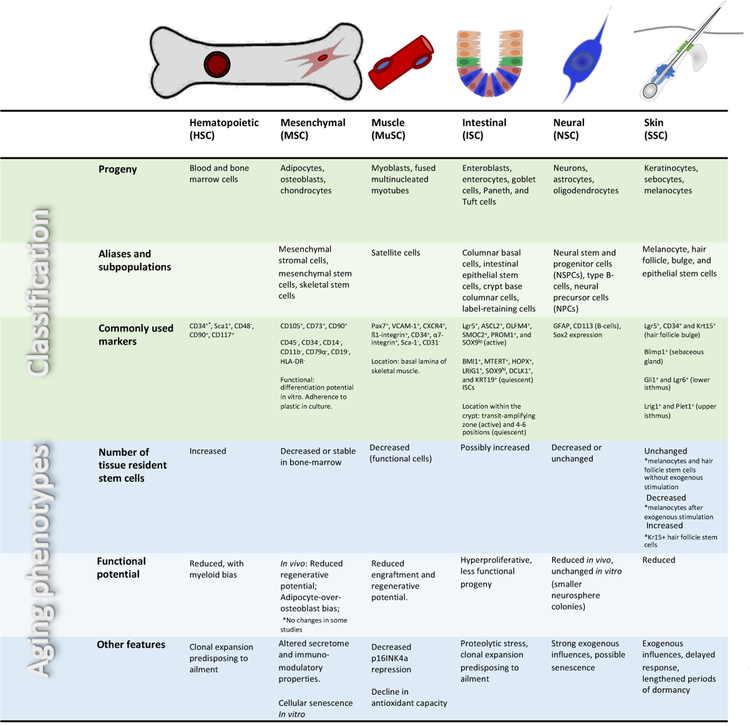
References
-
- Acharya MM, Lan ML, Kan VH, Patel NH, Giedzinski E, Tseng BP, and Limoli CL. 2010. ‘Consequences of ionizing radiation-induced damage in human neural stem cells’, Free Radic Biol Med, 49: 1846–55. - PubMed
-
- Ahlqvist KJ, Hamalainen RH, Yatsuga S, Uutela M, Terzioglu M, Gotz A, Forsstrom S, Salven P, Angers-Loustau A, Kopra OH, Tyynismaa H, Larsson NG, Wartiovaara K, Prolla T, Trifunovic A, and Suomalainen A. 2012. ‘Somatic progenitor cell vulnerability to mitochondrial DNA mutagenesis underlies progeroid phenotypes in Polg mutator mice’, Cell Metab, 15: 100–9. - PubMed
-
- Ahmed EA, van der Vaart A, Barten A, Kal HB, Chen J, Lou Z, Minter-Dykhouse K, Bartkova J, Bartek J, de Boer P, and de Rooij DG. 2007. ‘Differences in DNA double strand breaks repair in male germ cell types: lessons learned from a differential expression of Mdc1 and 53BP1’, DNA Repair (Amst), 6: 1243–54. - PubMed
Publication types
MeSH terms
Grants and funding
LinkOut - more resources
Full Text Sources
Other Literature Sources
Medical
