


Sleep in Huntington's disease: a systematic review and meta-analysis of polysomongraphic findings
- PMID: 31328779
- PMCID: PMC6783889
- DOI: 10.1093/sleep/zsz154
Sleep in Huntington's disease: a systematic review and meta-analysis of polysomongraphic findings
Abstract
Study objectives: Disturbed overnight sleep is a prominent feature of advanced stage Huntington's disease (HD). Several polysomnography (PSG) studies have reported significant changes of sleep in HD patients, but the findings are not unequivocal. To date, no meta-analysis has investigated the PSG changes in HD patients. The present study meta-analyzed results from studies examining the PSG changes in HD patients compared with controls.
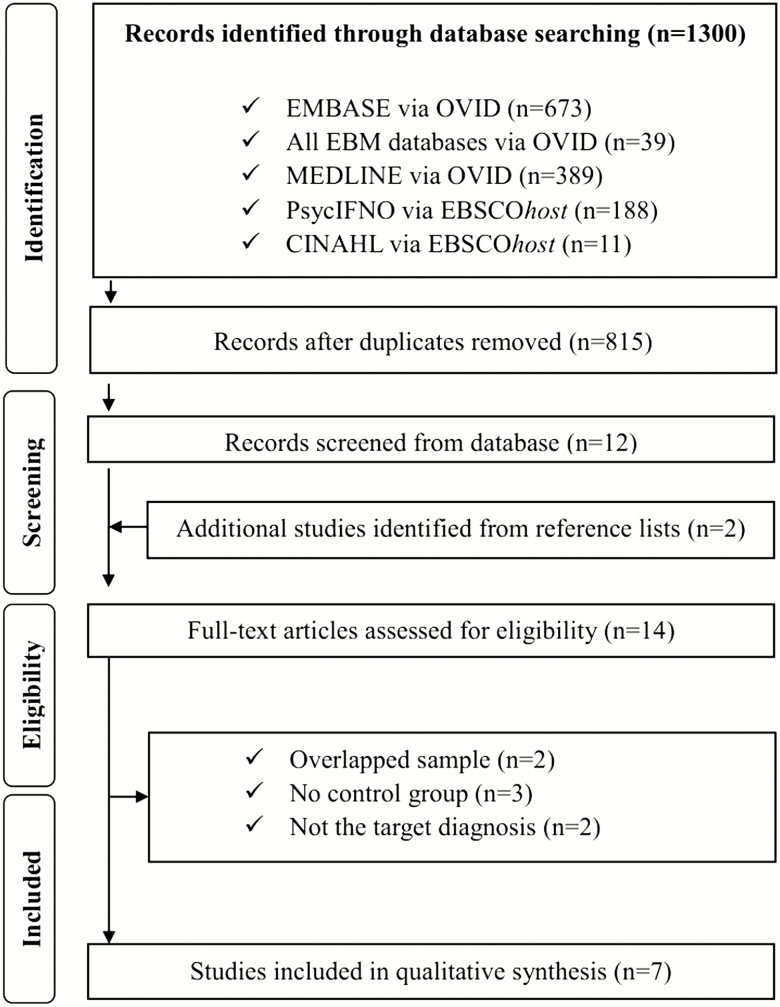
Methods: A literature search performed in MEDLINE, EMBASE, All EBM databases, PsycINFO, and CINAHL databases identified seven studies involving 152 HD patients and 144 controls which were included in our meta-analysis.
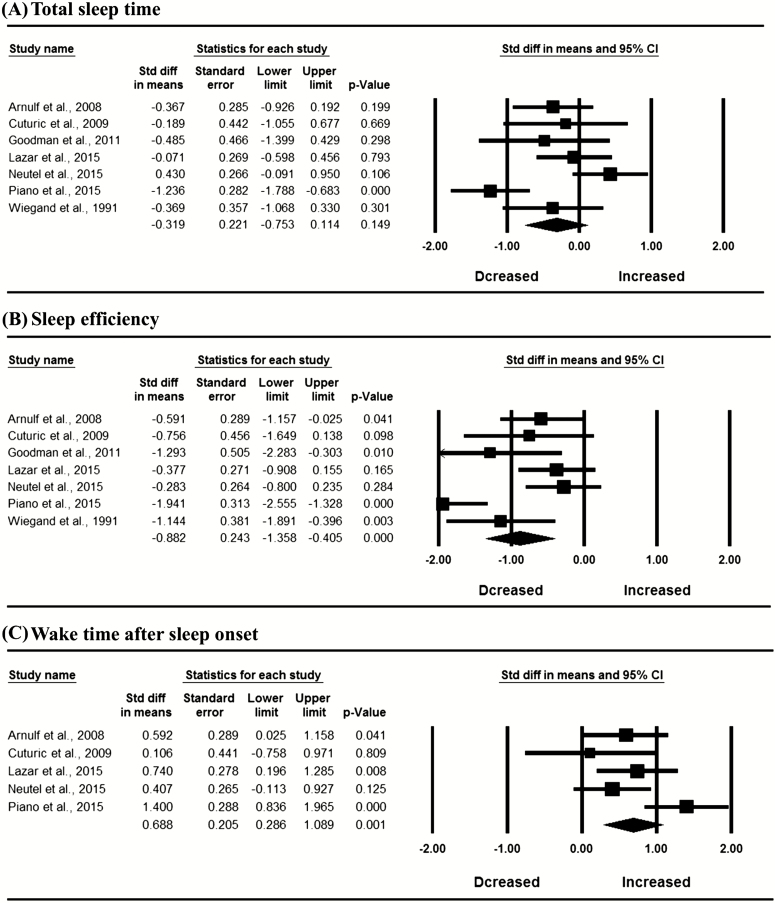
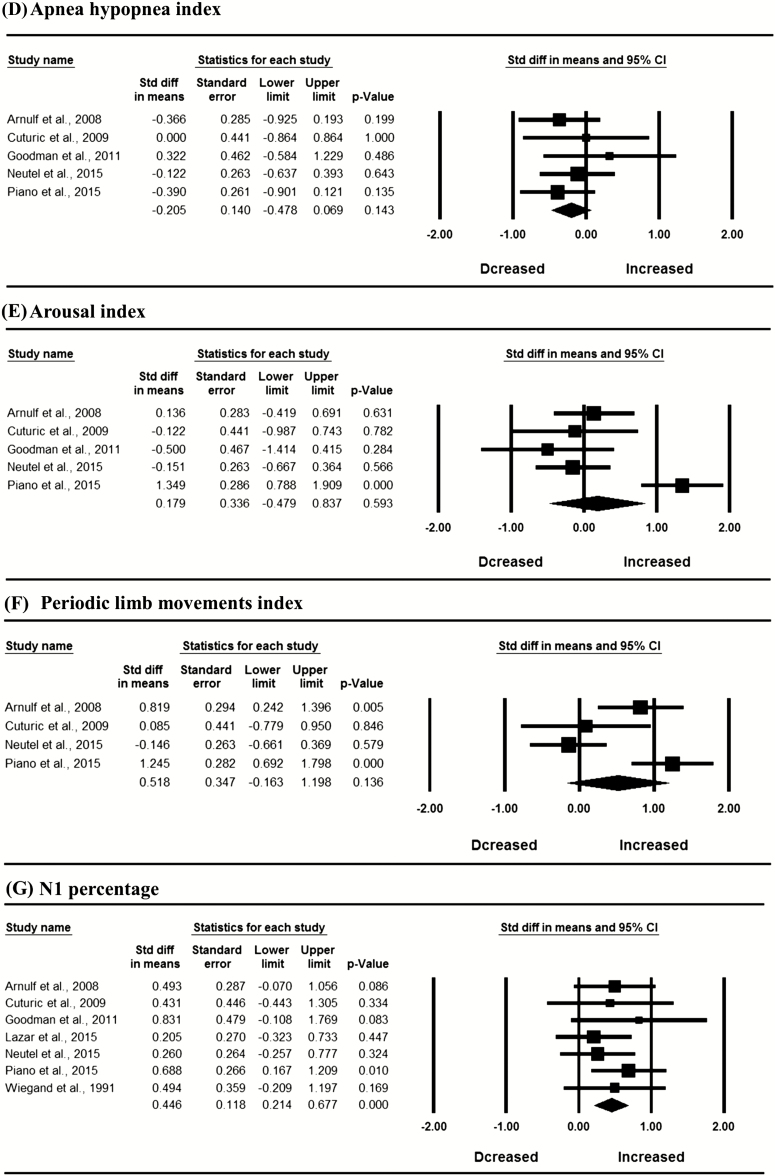
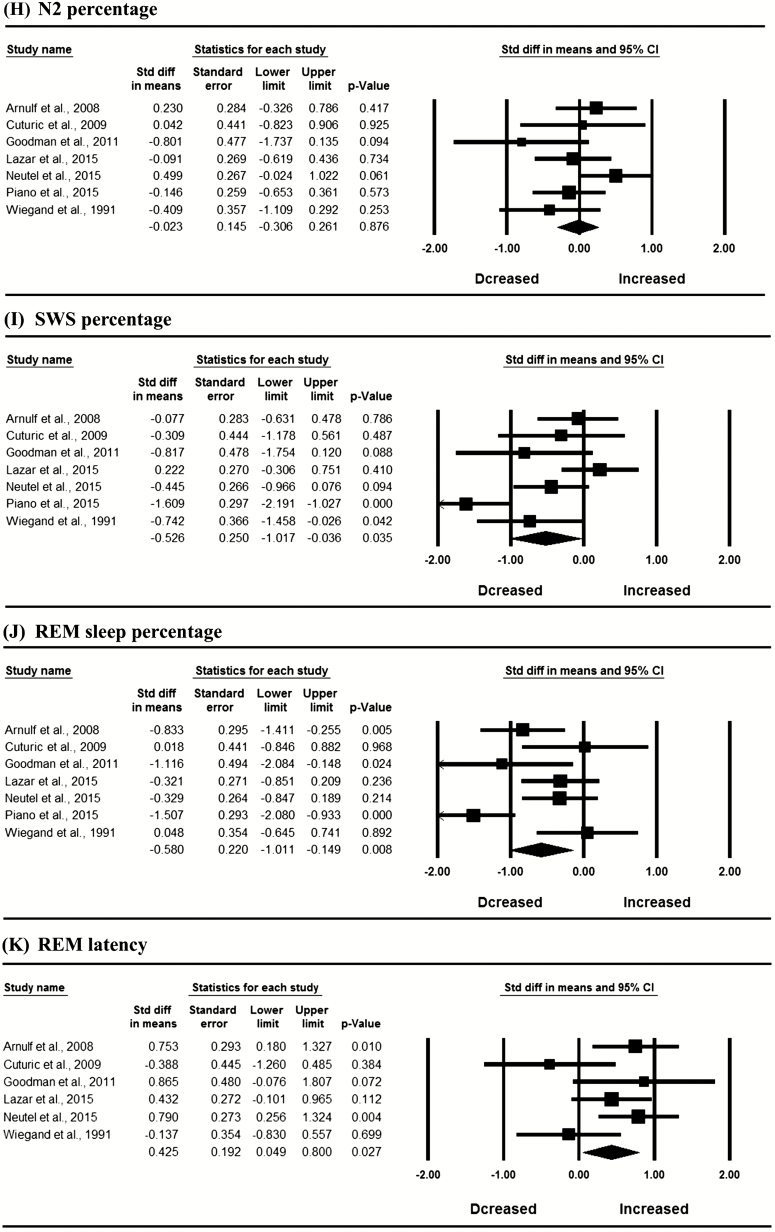
Results: Pooled results indicated decreased sleep efficiency, percentage of slow wave sleep and rapid eye movement sleep, and increased percentage of N1 sleep, wake time after sleep onset, and rapid eye movement sleep latency in HD patients compared with controls. We found high heterogeneity in the effect sizes and no indication of systematic publication biases across studies. Meta-regression analyses showed that some of the heterogeneity was explained by age, body mass index (BMI), CAG repeat length, and disease severity of HD patients.
Conclusions: Our study showed that polysomnographic abnormalities are present in HD. Our findings also underscore the need for a comprehensive PSG assessment of sleep changes in patients with HD. Furthermore, the effects of age, BMI and CAG repeat length on sleep changes should be carefully considered and closely monitored in the management of HD.
Keywords: Huntington’s disease; meta-analysis; polysomongraphy.
© Sleep Research Society 2019. Published by Oxford University Press on behalf of the Sleep Research Society. All rights reserved. For permissions, please e-mail journals.permissions@oup.com.
Figures
References
-
- A novel gene containing a trinucleotide repeat that is expanded and unstable on Huntington’s disease chromosomes. The Huntington’s Disease Collaborative Research Group. Cell. 1993;72(6):971–983. - PubMed
-
- Harper PS. The epidemiology of Huntington’s disease. Hum Genet. 1992;89(4):365–376. - PubMed
-
- Aziz NA, et al. Sleep and circadian rhythm alterations correlate with depression and cognitive impairment in Huntington’s disease. Parkinsonism Relat Disord. 2010;16(5):345–350. - PubMed
-
- Goodman AO, et al. How vital is sleep in Huntington’s disease? J Neurol. 2010;257(6):882–897. - PubMed
-
- Goodman AO, et al. Asymptomatic sleep abnormalities are a common early feature in patients with Huntington’s disease. Curr Neurol Neurosci Rep. 2011;11(2):211–217. - PubMed
Publication types
MeSH terms
Grants and funding
LinkOut - more resources
Full Text Sources
Medical
