


Antihypertensive Indigenous Lebanese Plants: Ethnopharmacology and a Clinical Trial
- PMID: 31330767
- PMCID: PMC6681041
- DOI: 10.3390/biom9070292
Antihypertensive Indigenous Lebanese Plants: Ethnopharmacology and a Clinical Trial
Abstract
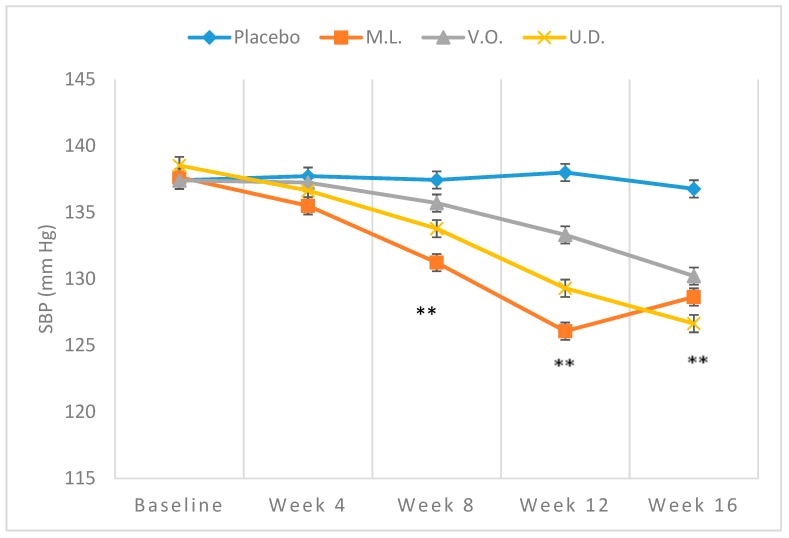
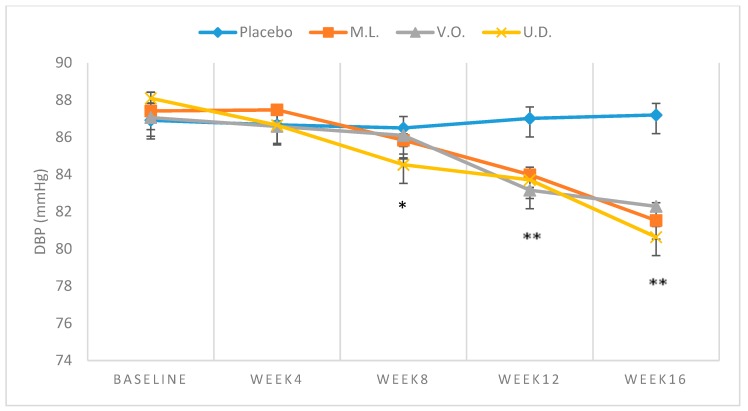
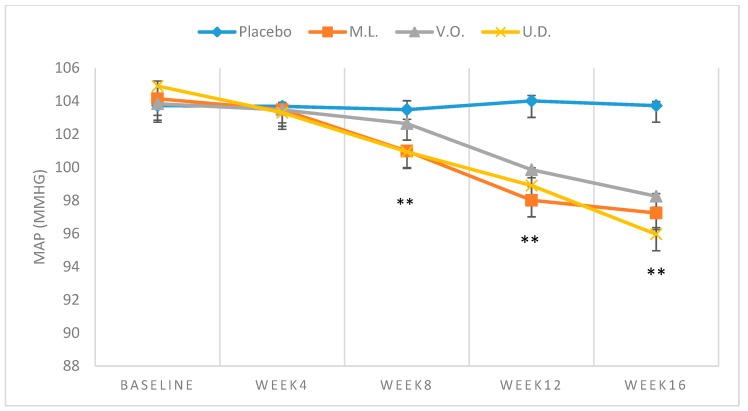
Hypertension is highly prevalent among the Lebanese adult population and is indeed the major cause of mortality in Lebanon. Traditional use of antihypertensive medicinal plants has long been practiced. The aim of this study is to document this traditional knowledge and clinically test the antihypertensive capacity of three of the most commonly used wild plant species Mentha longifolia, Viola odorata and Urtica dioica. Ethno-pharmacological data was collected by personal interviews with herbalists and traditional healers using a semi structured survey questionnaire and assessing relative frequency of citation (RFC). The clinical study was conducted by a randomized, blind, placebo-controlled trial in 29 subjects with mild hypertension distributed in four groups, three plant extract treatments and one placebo. Systolic (SBP) and diastolic blood pressures (DBP) as well as mean arterial blood pressures (MAP) were monitored at weeks 4, 8, 12 and 16 during the treatment with 300 mL/day of plant extract. Results showed that M. longifolia, U. dioica and V. odorata exhibited the highest values of RCF (0.95) followed by Allium ampeloprasum (0.94), Apium graveolens (0.92) and Crataegus azarolus (0.90). The clinical trial revealed dose- and duration-dependent significant reductions in SBP, DBP and MAP of subjects treated with M. longifolia, U. dioica or V. odorata. Our findings indicate that extracts of these plants present an effective, safe and promising potential as a phyto-therapuetical approach for the treatment of mild hypertension. More research on the phytochemistry, pharmacological effects and the underlying mechanisms is necessary.
Keywords: Mentha longifolia; Urtica dioica; Viola odorata; herbal medicine; hypertension.
Conflict of interest statement
The authors declare no conflicts of interest.
Figures
References
-
- Forouzanfar M.H., Liu P., Roth G.A., Ng M., Biryukov S., Marczak L., Alexander L., Estep K., Hassen Abate K., Akinyemiju T.F., et al. Global Burden of Hypertension and Systolic Blood Pressure of at Least 110 to 115 mm Hg, 1990–2015. JAMA. 2017;317:165–182. doi: 10.1001/jama.2016.19043. - DOI - PubMed
-
- Salem H., Hasan D.M., Eameash A., Abd El-Mageed H., Hasan S., Ali R. Worldwide Prevalence of Hypertension: A Pooled Meta-Analysis of 1670 Studies in 71 Countries with 29.5 Million Participants. J. Am. Coll. Cardiol. 2018;71:1819. doi: 10.1016/S0735-1097(18)32360-X. - DOI
Publication types
MeSH terms
Substances
LinkOut - more resources
Full Text Sources
Medical
