


Fatty Acid Profile and Cardiometabolic Markers in Relation with Diet Type and Omega-3 Supplementation in Spanish Vegetarians
- PMID: 31330792
- PMCID: PMC6683283
- DOI: 10.3390/nu11071659
Fatty Acid Profile and Cardiometabolic Markers in Relation with Diet Type and Omega-3 Supplementation in Spanish Vegetarians
Abstract
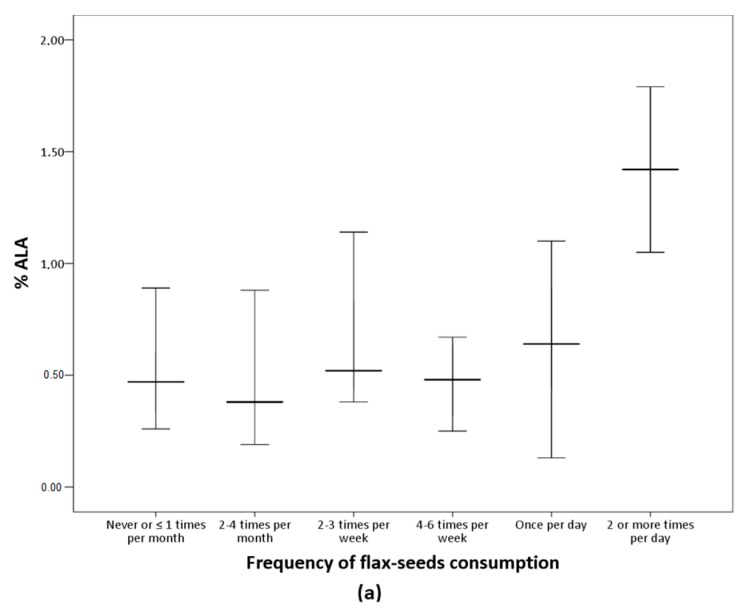
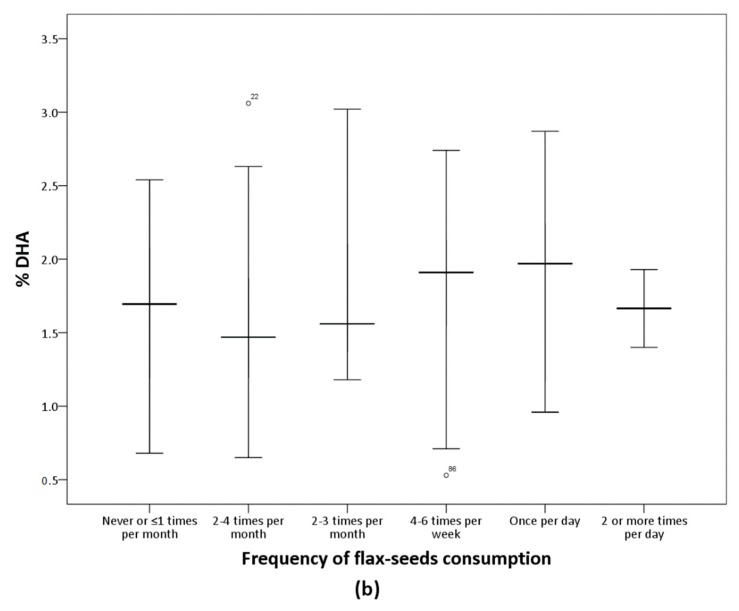
Plant-based diets are becoming increasingly popular, and scientific information concerning the nutritional status in this population is needed. This study determined the fatty acid profile of Spanish lacto-ovo vegetarians (LO-vegetarians) and vegans. Participants were 104 healthy adults, LO-vegetarians (n = 49) and vegans (n = 55). Lifestyle habits and consumption of food and omega-3 supplements were estimated by questionnaires. BMI, blood pressure, and abdominal and body fat were determined. Serum was collected to analyze fatty acids, glucose, lipids, homocysteine, insulin, and leptin. Volunteers were classified according to serum omega-6 to omega-3 (n-6/n-3) ratio into three groups: n-6/n-3 < 10, n-6/n-3 ≥ 10 to 20, and n-6/n-3 > 20. Results showed low cardiovascular risk and high insulin sensitivity with negligible differences between diet types. Linoleic acid (C18:2n-6) was the major serum fatty acid, followed by oleic (C18:1n-9) and palmitic (C16:0) acids. In contrast, serum eicosapentaenoic acid (EPA, C20:5n-3) and docosahexaenoic acid (DHA, C22:6n-3) were (median, interquartile range) 0.27, 0.18% and 1.59, and 0.93%, respectively. Users of n-3 supplements (<10% of total vegetarians) had significantly higher EPA than non-users, while frequent consumption of flax-seeds was associated with increased α-linolenic acid (C18:3n-3). However, neither n-3 supplementation nor food consumption affected DHA levels in this vegetarian population.
Keywords: alpha-linolenic acid; cardiometabolic markers; docosahexaenoic acid; homocysteine; n-6/n-3 ratio; oleic acid; omega-3 fatty acids; supplementation; vegan; vegetarian.
Conflict of interest statement
Authors declare the absence of conflicts of interest. The funders had no role in the design of the study; in the collection, analyses, or interpretation of data; in the writing of the manuscript, or in the decision to publish the results.
Figures
References
MeSH terms
Substances
Grants and funding
LinkOut - more resources
Full Text Sources
Medical
Research Materials
