


A high density SLAF-seq SNP genetic map and QTL for seed size, oil and protein content in upland cotton
- PMID: 31331266
- PMCID: PMC6647295
- DOI: 10.1186/s12864-019-5819-6
A high density SLAF-seq SNP genetic map and QTL for seed size, oil and protein content in upland cotton
Abstract
Background: Cotton is a leading natural fiber crop. Beyond its fiber, cottonseed is a valuable source of plant protein and oil. Due to the much higher value of cotton fiber, there is less consideration of cottonseed quality despite its potential value. Though some QTL controlling cottonseed quality have been identified, few of them that warrant further study are known. Identifying stable QTL controlling seed size, oil and protein content is necessary for improvement of cottonseed quality.
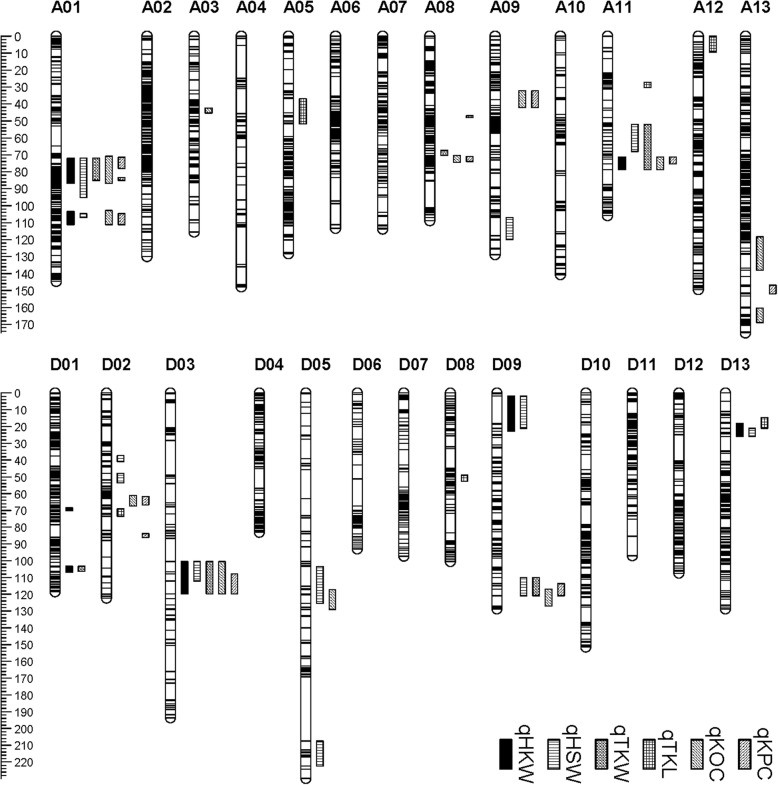
Results: In this study, a recombinant inbred line (RIL) population was developed from a cross between upland cotton cultivars/lines Yumian 1 and M11. Specific locus amplified fragment sequencing (SLAF-seq) technology was used to construct a genetic map that covered 3353.15 cM with an average distance between consecutive markers of 0.48 cM. The seed index, together with kernel size, oil and protein content were further used to identify QTL. In total, 58 QTL associated with six traits were detected, including 13 stable QTL detected in all three environments and 11 in two environments.
Conclusion: A high resolution genetic map including 7033 SNP loci was constructed through specific locus amplified fragment sequencing technology. A total of 13 stable QTL associated with six cottonseed quality traits were detected. These stable QTL have the potential for fine mapping, identifying candidate genes, elaborating molecular mechanisms of cottonseed development, and application in cotton breeding programs.
Keywords: Oil; Protein; QTL; SLAF-seq; Seed size; Upland cotton.
Conflict of interest statement
The authors declare that they have no competing interests.
Figures
References
-
- Zhang K, Zhang J, Ma J, Tang S, Liu D, Teng Z, Liu D, Zhang Z. Genetic mapping and quantitative trait locus analysis of fiber quality traits using a three-parent composite population in upland cotton (Gossypium hirsutum L.) Mol Breed. 2011;29(2):335–348. doi: 10.1007/s11032-011-9549-y. - DOI
-
- Sawan ZM, Elfarra AA, Ellatif SA. Cottonseed, protein and oil yields, and oil properties as affected by nitrogen and phosphorus fertilization and growth-regulators. J Agron Crop Sci. 1988;161(1):50–56. doi: 10.1111/j.1439-037X.1988.tb00643.x. - DOI
-
- Ahmad S, Anwar F, Hussain AI, Ashraf M, Awan AR. Does soil salinity affect yield and composition of cottonseed oil? J Am Oil Chem Soc. 2007;84(9):845–851. doi: 10.1007/s11746-007-1115-8. - DOI
-
- Pahlavani M., Miri A., Kazemi G. Response of oil and protein content to seed size in cotton(Gossypium hirsutum L., cv. Sahel) Plant Breeding and Seed Science. 2009;59(1):53–64. doi: 10.2478/v10129-009-0004-8. - DOI
-
- Kothari N, Campbell BT, Dever JK, Hinze LL. Combining ability and performance of cotton germplasm with diverse seed oil content. Crop Sci. 2016;56(1):19–29. doi: 10.2135/cropsci2015.03.0166. - DOI
MeSH terms
Substances
Grants and funding
LinkOut - more resources
Full Text Sources
Other Literature Sources
Molecular Biology Databases
