


Growth pattern of uterine leiomyoma along pregnancy
- PMID: 31331317
- PMCID: PMC6647306
- DOI: 10.1186/s12905-019-0803-5
Growth pattern of uterine leiomyoma along pregnancy
Abstract
Background: Uterine leiomyomas are often discovered during early pregnancy and in most cases will have no effect on pregnancy outcomes. However, in rare cases uterine leiomyomas may lead to obstetric complications. The aim of the study was to evaluate rate of uterine leiomyoma growth in the 3 trimesters of pregnancy.
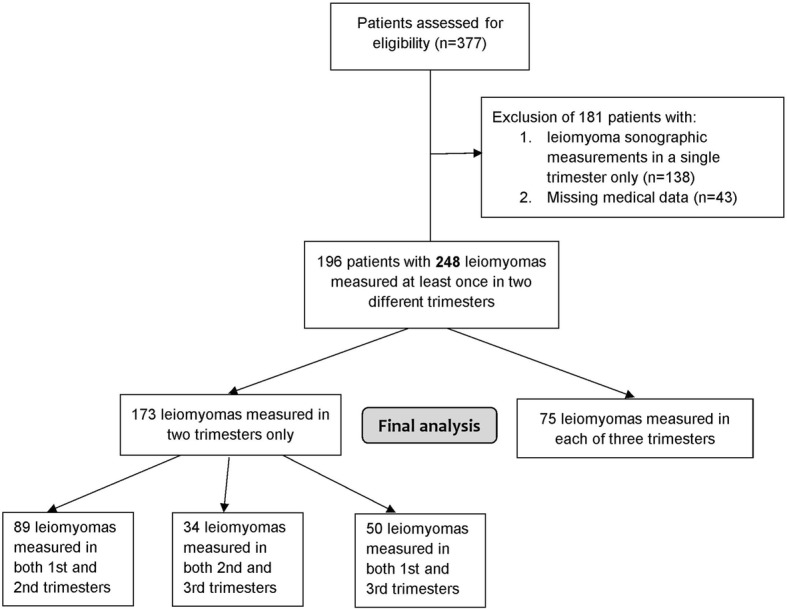
Methods: We conducted a retrospective cohort study. Included were women who were diagnosed with uterine leiomyoma during pregnancy and had at least two sonographic measurements in different trimesters. Data regarding leiomyoma growth, recorded by ultrasound examination, during 1st 2nd and 3rd trimesters were collected from electronic patient records.
Results: Two-hundred forty-eight uterine leiomyomas were included in the study. Leiomyoma area increased substantially in size between the 1st and 2nd trimesters (54.5% ± 75.9%, p = .007) and to a lesser degree between the 2nd and 3rd trimesters (17.9% ± 59.7%, NS). Evaluation of the change in size throughout the pregnancy - between 1st and 3rd trimesters revealed a significant increase of 95.9% ± 191.3% (p < .001). There was no significant growth of the leiomyomas between the 2nd and 3rd trimesters.
Conclusions: Uterine leiomyomas tend to grow substantially during the 1st trimester of pregnancy. This trend is attenuated later with minimal growth towards the end of gestation.
Keywords: Complicated pregnancy; Pregnancy; Ultrasound; Uterine fibroid; Uterine leiomyoma.
Conflict of interest statement
The authors declare that they have no competing interests.
Figures
References
MeSH terms
LinkOut - more resources
Full Text Sources
Medical
Miscellaneous
