Review
. 2019 Jul 22;14(1):229.
doi: 10.1186/s13018-019-1266-y.

Open versus minimally invasive TLIF: literature review and meta-analysis

Affiliations
Review

Open versus minimally invasive TLIF: literature review and meta-analysis

Ahmed Hammad et al. J Orthop Surg Res. .

Abstract

Study design: This study is a comparative, literature review.

Objective: The aim of this study is to provide a comparative analysis of open vs. minimally invasive TLIF using a literature review and a meta-analysis. Lumbar interbody fusion is a well-established surgical procedure for treating several spinal disorders. Transforaminal lumbar interbody fusion (TLIF) was initially introduced in the early 1980s. To reduce approach-related morbidity associated with traditional open TLIF (OTLIF), minimally invasive TLIF (MITLIF) was developed. We aimed to provide a comparative analysis of open vs. minimally invasive TLIF using a literature review.

Methods: We searched the online database PubMed (2005-2017), which yielded an initial 194 studies. We first searched the articles' abstracts. Based on our inclusion criteria, we excluded 162 studies and included 32 studies: 18 prospective, 13 retrospective, and a single randomized controlled trial. Operative time, blood loss, length of hospital stay, radiation exposure time, complication rate, and pain scores (visual analogue scale, Oswestry Disability Index) for both techniques were recorded and presented as means. We then performed a meta-analysis.

Results: The meta-analysis for all outcomes showed reduced blood loss (P < 0.00001) and length of hospital stay (P < 0.00001) for MITLIF compared with OTLIF, but with increased radiation exposure time with MITLIF (P < 0.00001). There was no significant difference in operative time between techniques (P = 0.78). The complication rate was lower with MITLIF (11.3%) vs. OTLIF (14.2%), but not statistically significantly different (P = 0.05). No significant differences were found in visual analogue scores (back and leg) and Oswestry Disability Index scores between techniques, at the final follow-up.

Conclusion: MITLIF and OTLIF provide equivalent long-term clinical outcomes. MITLIF had less tissue injury, blood loss, and length of hospital stay. MITLIF is also a safe alternative in obese patients and, in experienced hands, can also be used safely in select cases of spondylodiscitis even with epidural abscess. MITLIF is also a cost-saving procedure associated with reduced hospital and social costs. Long-term studies are required to better evaluate controversial items such as operative time.

Keywords: Interbody fusion; Lumbar; Minimally invasive; Open; Transforaminal.


Conflict of interest statement

The authors declare that they have no competing interests. No funding was utilized for this report.

Figures

Fig. 1
Fig. 1
Flow diagram of the search strategy and study selection process
Fig. 2
Fig. 2
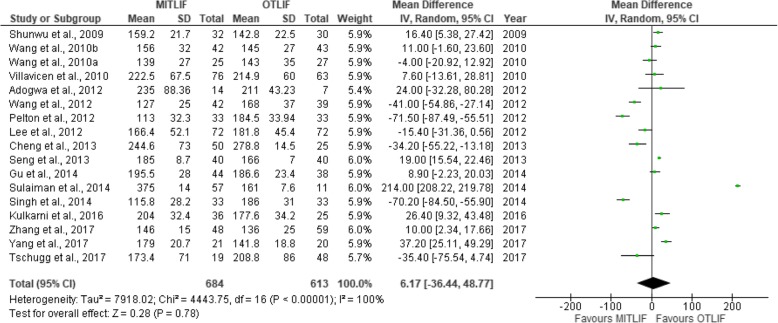
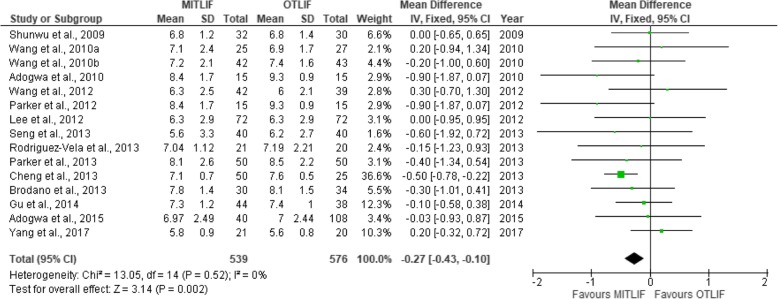
Forest plot of the study comparisons: comparison between MITLIF and OTLIF outcomes for operative time
Fig. 3
Fig. 3
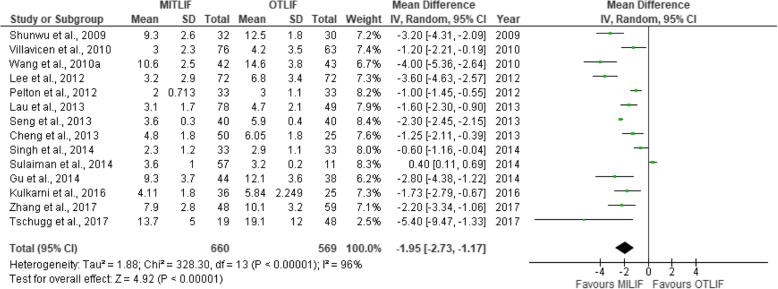
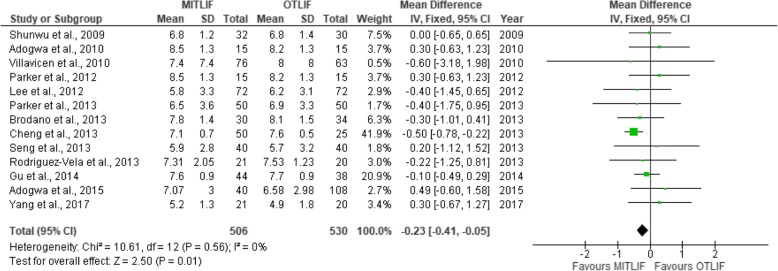
Forest plot of the study comparisons: comparison between MITLIF and OTLIF outcomes for blood loss
Fig. 4
Fig. 4
Forest plot of the study comparisons: comparison between MITLIF and OTLIF outcomes for length of hospital stay
Fig. 5
Fig. 5
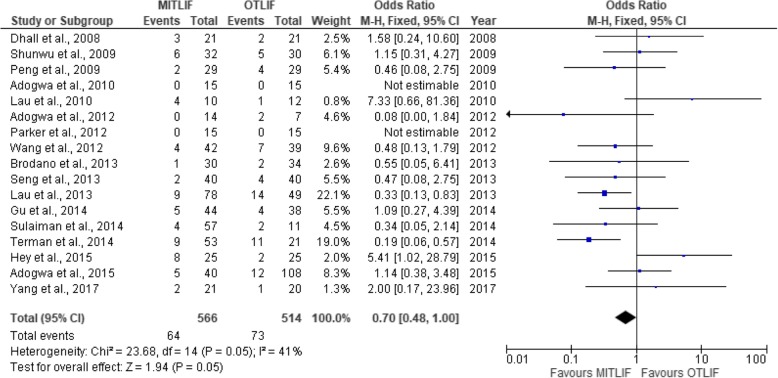
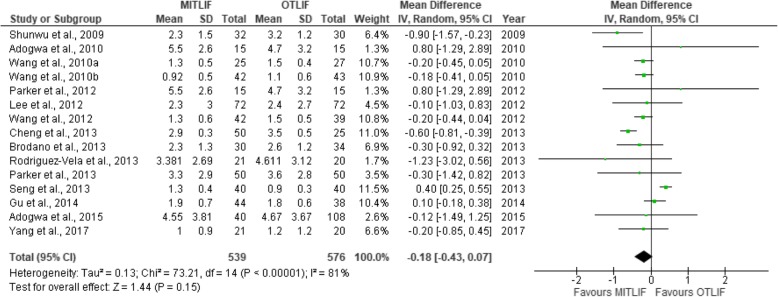
Forest plot of the study comparisons: comparison between MITLIF and OTLIF outcomes for: complications
Fig. 6
Fig. 6
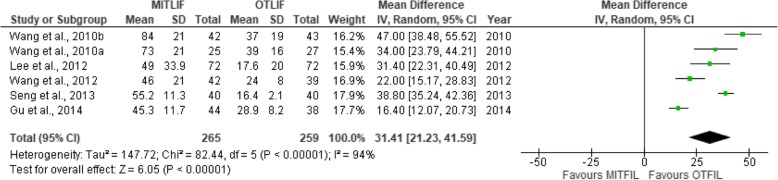
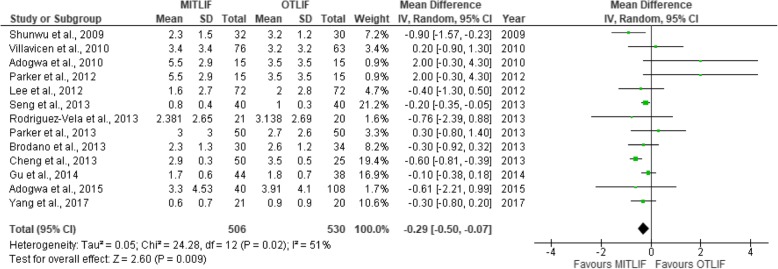
Forest plot of the study comparisons: comparison between MITLIF and OTLIF outcomes for radiation exposure time
Fig. 7
Fig. 7
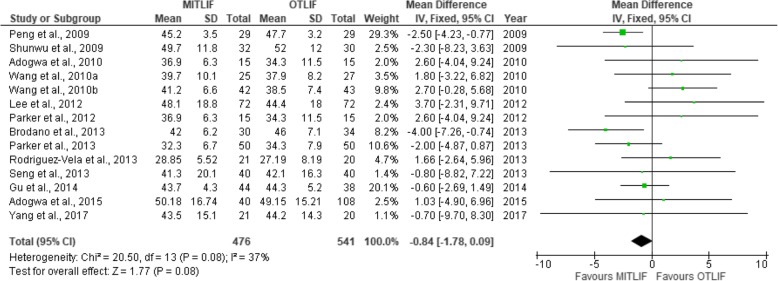
Forest plot of the study comparisons: comparison between MITLIF and OTLIF outcomes for preoperative visual analog scale scores for back pain
Fig. 8
Fig. 8
Forest plot of the study comparisons: comparison between MITLIF and OTLIF outcomes for preoperative visual analog scale scores for leg pain
Fig. 9
Fig. 9
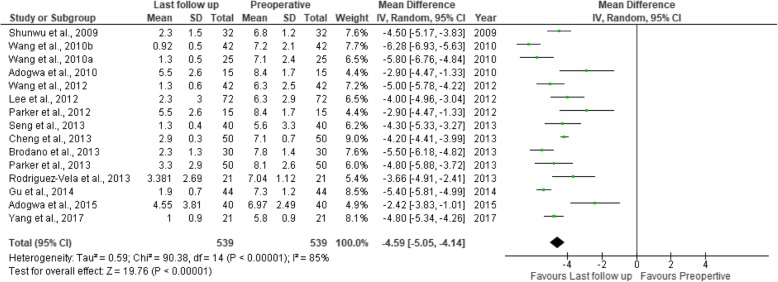
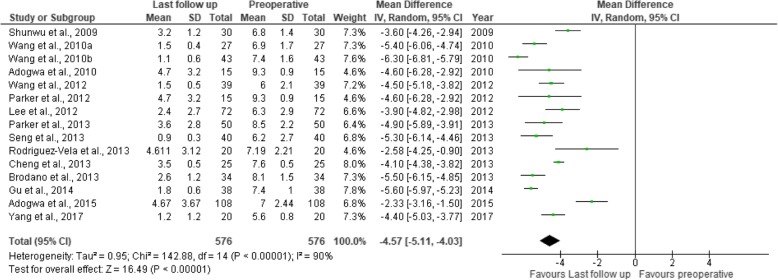
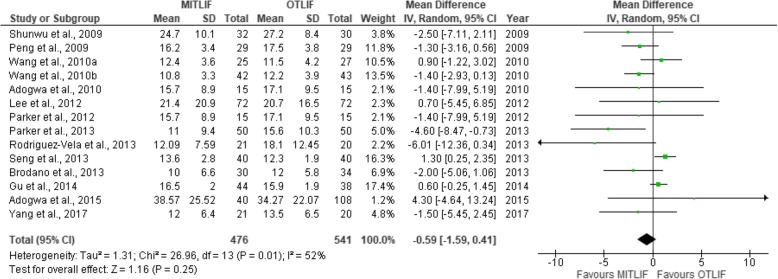
Forest plot of the study comparisons: comparison between MITLIF and OTLIF outcomes for visual analog scale scores for back pain at final follow-up
Fig. 10
Fig. 10
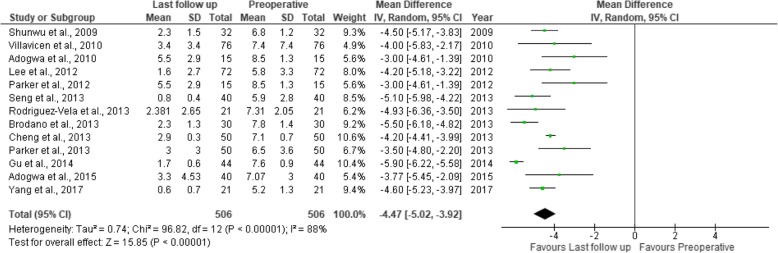
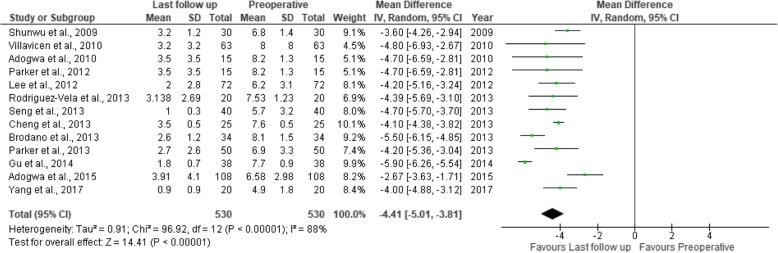
Forest plot of study comparisons: comparison between MITLIF and OTLIF outcomes for visual analog scale scores for leg pain at last follow-up
Fig. 11
Fig. 11
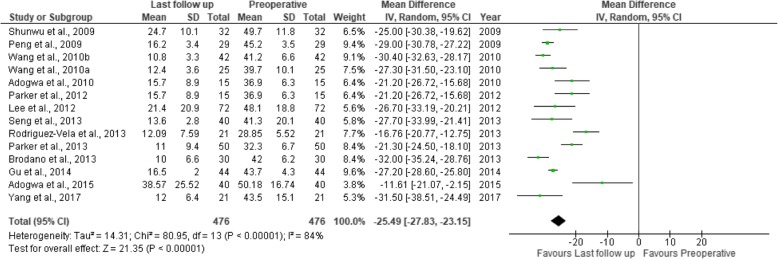
Forest plot of study comparisons: comparison between preoperative and last follow-up visual analog scale scores for back pain within the MITLIF group
Fig. 12
Fig. 12
Forest plot of study comparisons: comparison between preoperative and last follow-up visual analog scale scores for leg pain within the MITLIF group
Fig. 13
Fig. 13
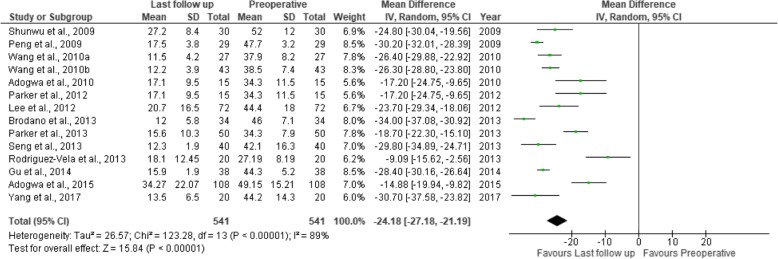
Forest plot of the study comparisons: comparison between preoperative and last follow-up visual analog scale scores for back pain within the OTLIF group
Fig. 14
Fig. 14
Forest plot of the study comparisons: comparison between preoperative and last follow-up visual analog scale scores for leg pain within the OTLIF group
Fig. 15
Fig. 15
Forest plot of the study comparisons: comparison between MITLIF and OTLIF outcomes for preoperative Oswestry disability index (%)
Fig. 16
Fig. 16
Forest plot of the study comparisons: comparison between MITLIF and OTLIF outcomes for Oswestry disability index (%) at last follow-up
Fig. 17
Fig. 17
Forest plot of the study comparisons: comparison between preoperative and last follow-up Oswestry disability index (%) within the MITLIF group
Fig. 18
Fig. 18
Forest plot of the study comparisons: comparison between preoperative and last follow-up Oswestry disability index (%) within the OTLIF group

References

    1. Resnick DK, Choudhri TF, Dailey AT, et al. Guidelines for the performance of fusion procedures for degenerative disease of the lumbar spine. Part 7: intractable low-back pain without stenosis or spondylolisthesis. J Neurosurg Spine. 2005;2:670–672. doi: 10.3171/spi.2005.2.6.0670. - DOI - PubMed
    1. Talia AJ, Wong ML, Lau HC, et al. Comparison of the different surgical approaches for lumbar interbody fusion. J Clin Neurosci. 2015;22:243–251. doi: 10.1016/j.jocn.2014.08.008. - DOI - PubMed
    1. Harms J, Rolinger H. A one-stager procedure in operative treatment of spondylolisthesis: dorsal traction-reposition and anterior fusion. Z Orthop Ihre Grenzgeb. 1982;120:343–347. doi: 10.1055/s-2008-1051624. - DOI - PubMed
    1. Harms J, Jeszenszky D. The unilateral transforaminal approach for posterior lumbar interbody fusion. Orthop Traumatol. 1998;6:88–99.
    1. Foley KT, Holly LT, Schwender JD. Minimally invasive lumbar fusion. Spine (Phila Pa 1976) 2003;15:S26–S35. - PubMed

MeSH terms