Effects of Single Cage Housing on Stress, Cognitive, and Seizure Parameters in the Rat and Mouse Pilocarpine Models of Epilepsy
- PMID: 31331937
- PMCID: PMC6709207
- DOI: 10.1523/ENEURO.0179-18.2019
Effects of Single Cage Housing on Stress, Cognitive, and Seizure Parameters in the Rat and Mouse Pilocarpine Models of Epilepsy
Abstract
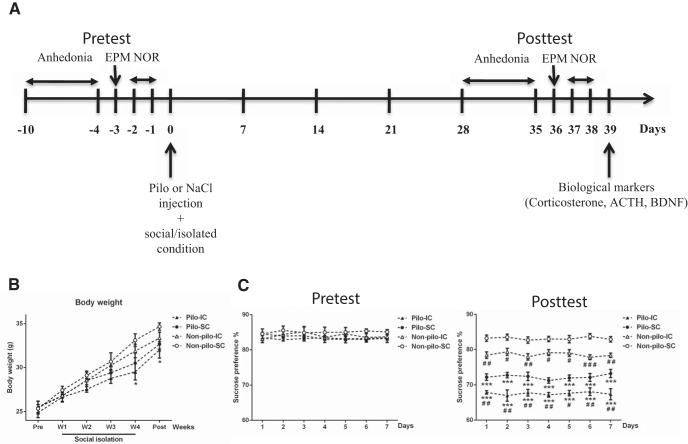
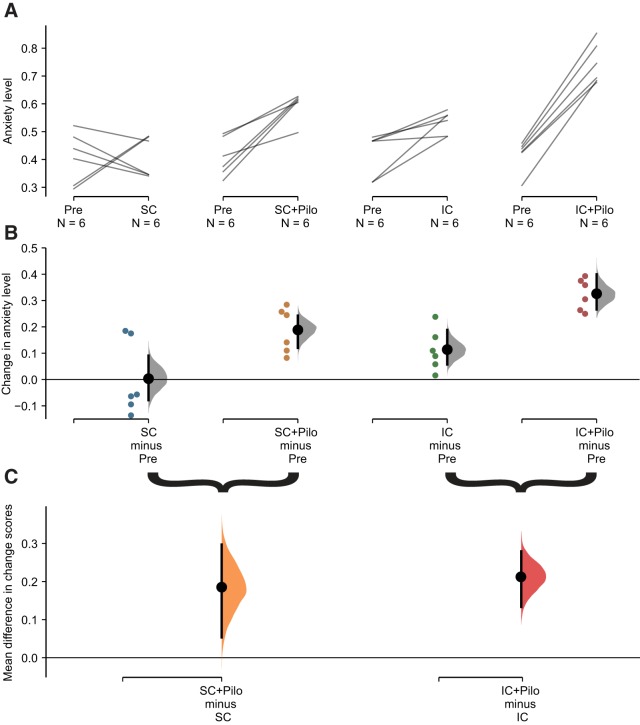
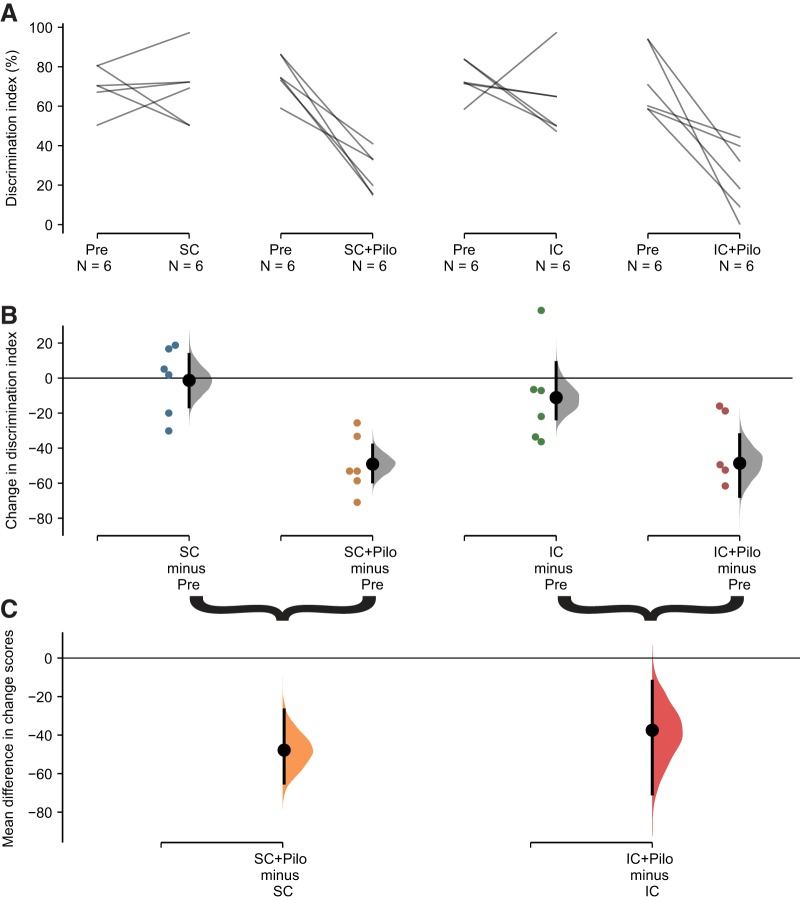
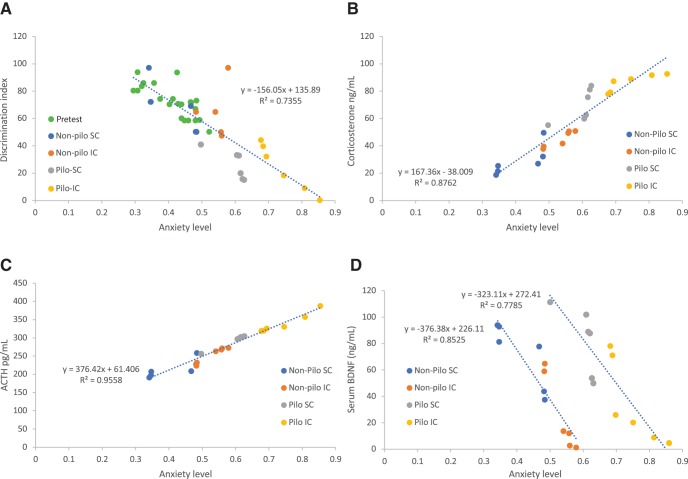
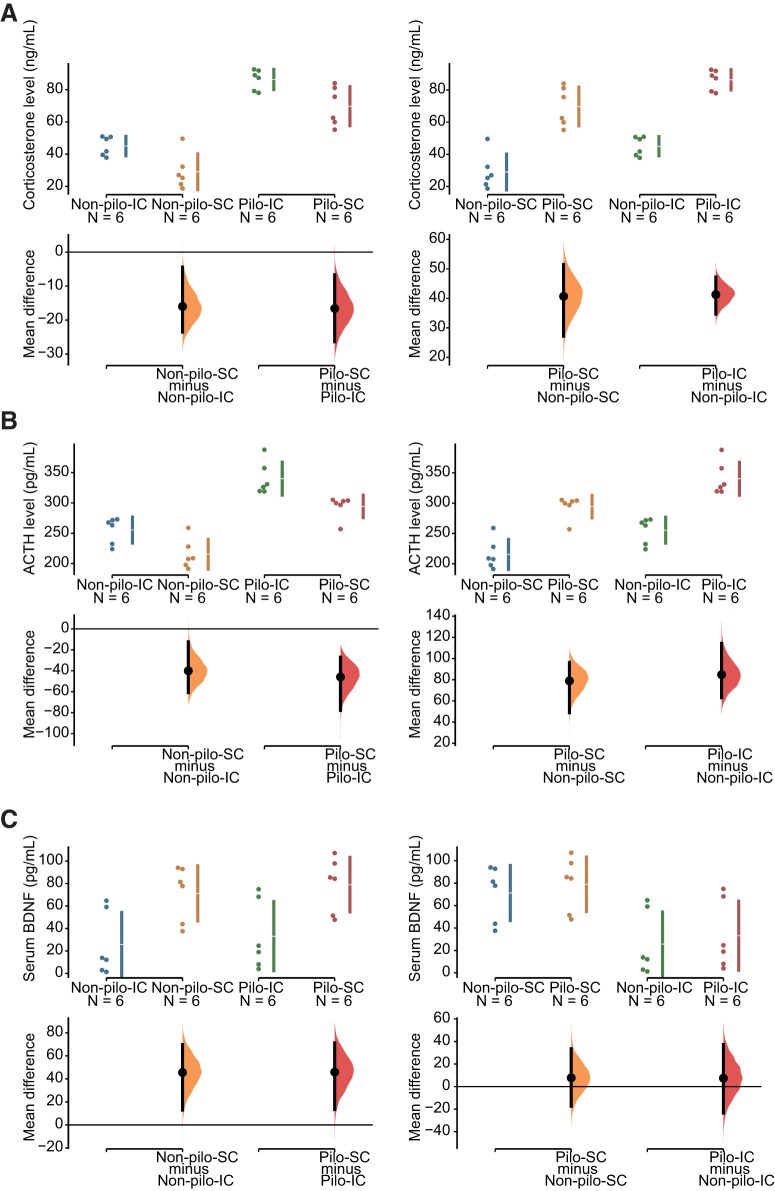
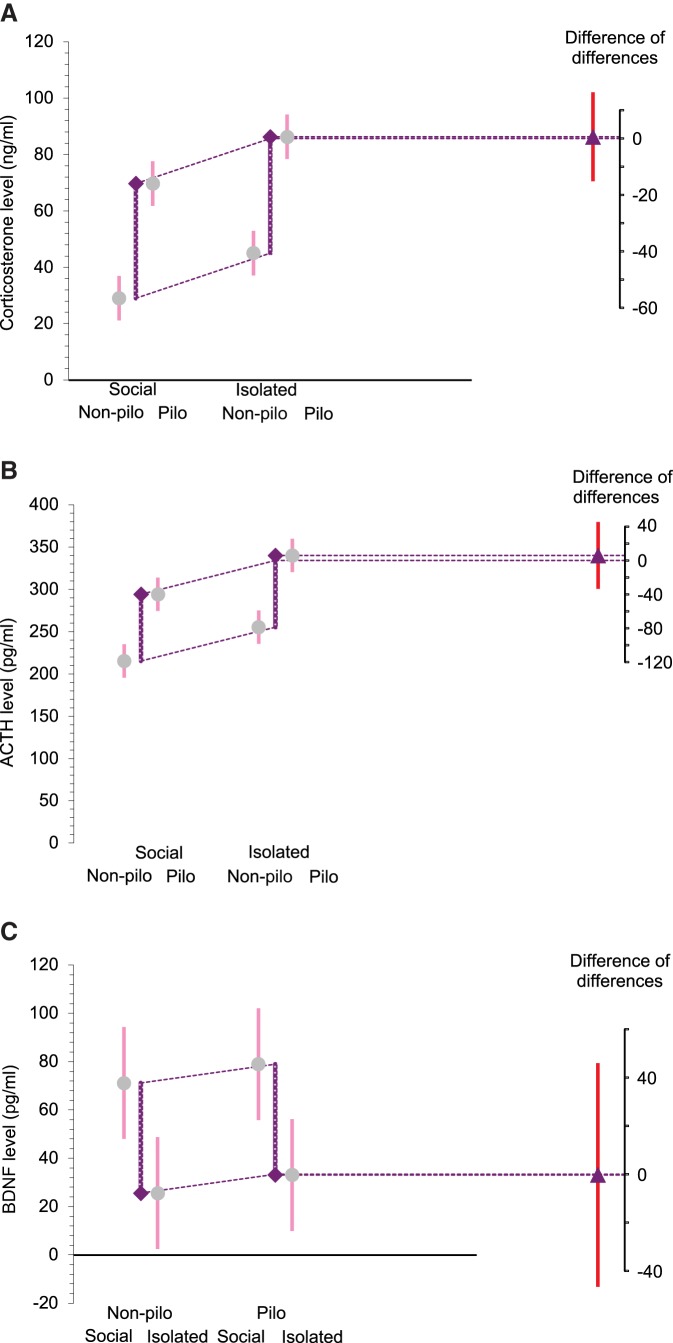
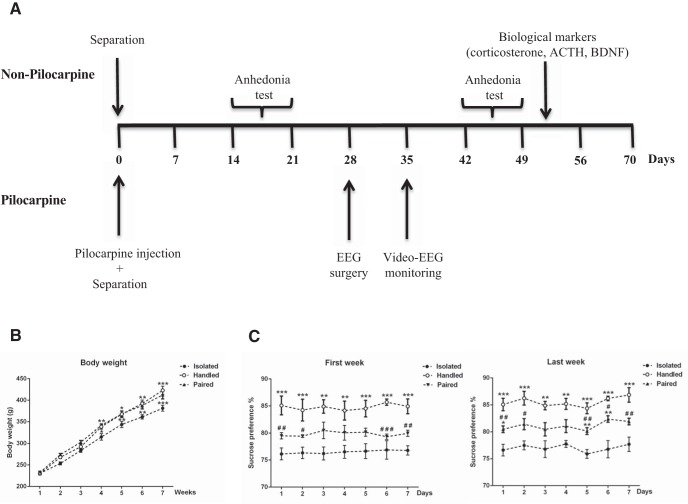
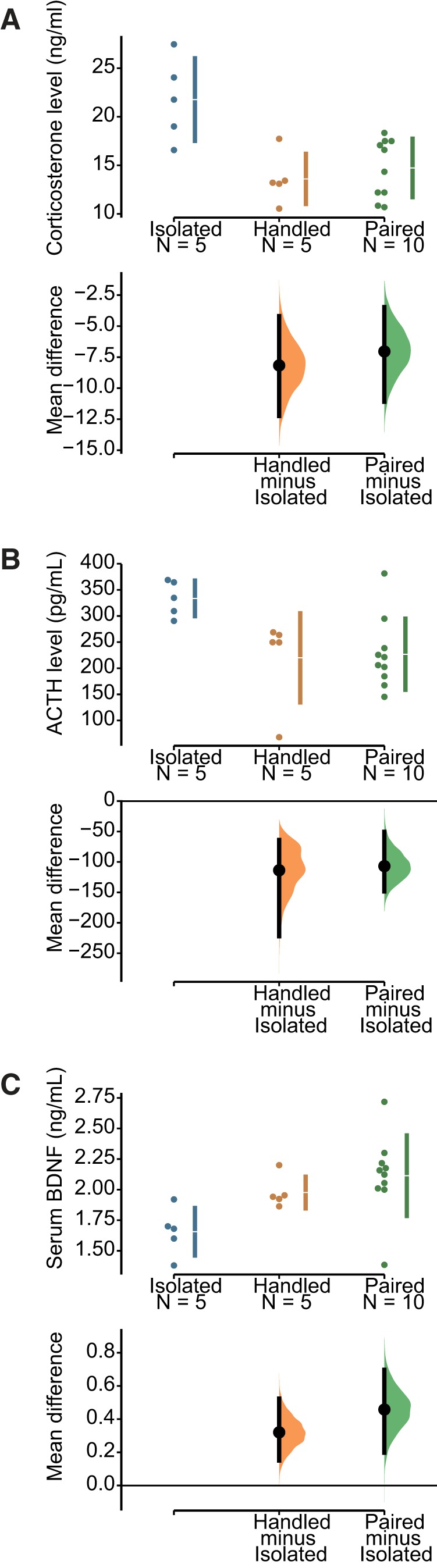
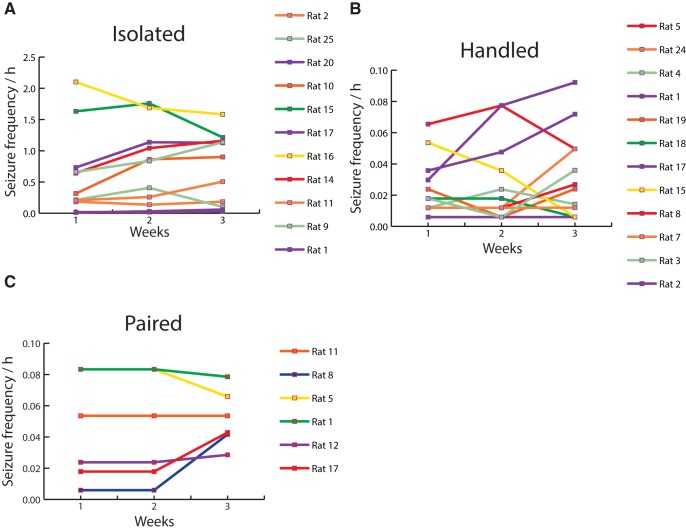
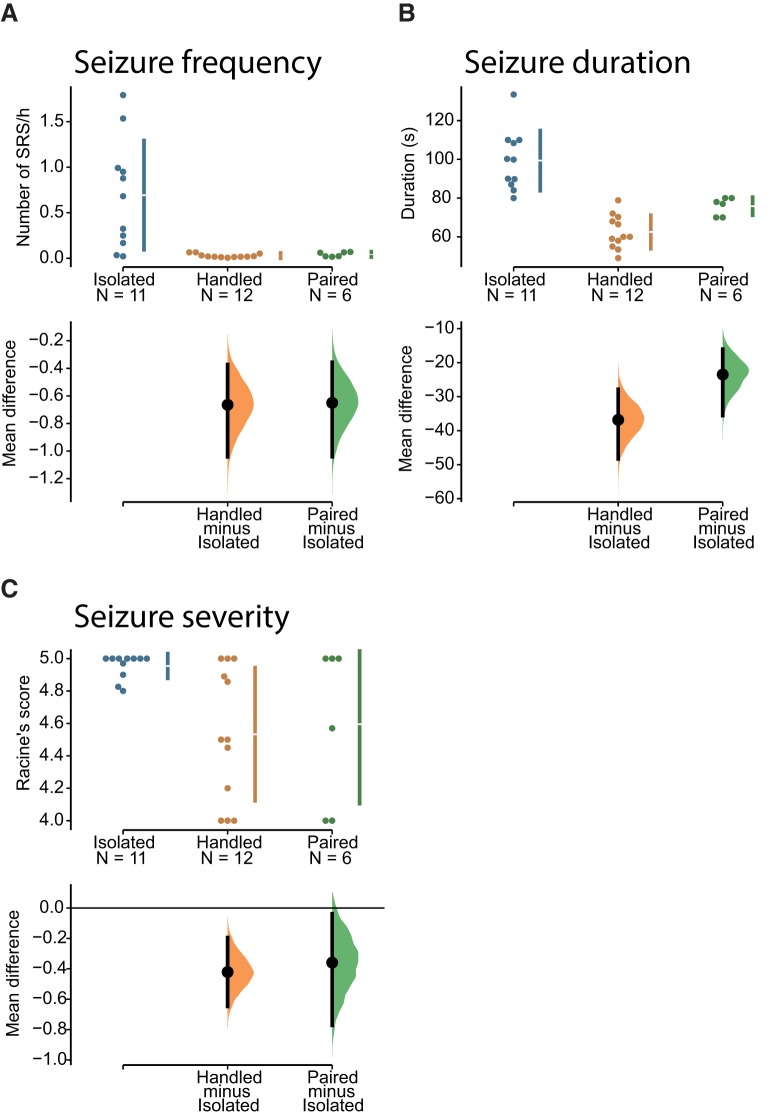
Many experimental approaches require housing rodents in individual cages, including in epilepsy research. However, rats and mice are social animals; and individual housing constitutes a stressful situation. The goal of the present study was to determine the effects of individual housing as compared to conditions maintaining social contact on stress markers and epilepsy. Control male mice socially housed during pretest and then transferred to individual cages for six weeks displayed anhedonia, increased anxiety and biological markers of stress as compared to pretest values or mice kept socially housed during six weeks. Pilocarpine (pilo)-treated mice housed together showed increased levels of anhedonia, anxiety and stress markers as well as decreased cognitive performance as compared to the control group. The differences were more significant in pilo-treated mice housed individually. Anxiety correlated linearly with cognitive performance and stress markers independently of the experimental conditions. In the male rat pilo model, seizures were sixteen times more frequent in singly housed animals as compared to animals kept in pairs. Daily interactions with an experimenter in otherwise singly housed animals was sufficient to produce results identical to those found in animals kept in pairs. We propose that social isolation produces a severe phenotype in terms of stress and seizure frequency as compared to animals maintaining social contact (at least in these two models), a factor that needs to be taken into account for data interpretation, in particular for preclinical studies.
Keywords: epilepsy; single housing; social isolation; stress.
Copyright © 2019 Manouze et al.
Figures
Comment in
-
Changing the Way We Report, Interpret, and Discuss Our Results to Rebuild Trust in Our Research.eNeuro. 2019 Aug 1;6(4):ENEURO.0259-19.2019. doi: 10.1523/ENEURO.0259-19.2019. eCollection 2019 Jul-Aug. eNeuro. 2019. PMID: 31453315 Free PMC article.
-
Estimation for Better Inference in Neuroscience.eNeuro. 2019 Aug 1;6(4):ENEURO.0205-19.2019. doi: 10.1523/ENEURO.0205-19.2019. eCollection 2019 Jul-Aug. eNeuro. 2019. PMID: 31453316 Free PMC article.
References
-
- Amiri S, Haj-Mirzaian A, Amini-Khoei H, Razmi A, Shirzadian A, Rahimi-Balaei M, Olson CO, Mohsenzadeh A, Rastegar M, Zarrindast MR, Ghazi-Khansari M (2017) Protective effects of gabapentin against the seizure susceptibility and comorbid behavioral abnormalities in the early socially isolated mice. Eur J Pharmacol 797:106–114. 10.1016/j.ejphar.2017.01.024 - DOI - PubMed
-
- Bajorat R, Porath K, Kuhn J, Goßla E, Goerss D, Sellmann T, Köhling R, Kirschstein T (2018) Oral administration of the casein kinase 2 inhibitor TBB leads to persistent KCa2.2 channel up-regulation in the epileptic CA1 area and cortex, but lacks anti-seizure efficacy in the pilocarpine epilepsy model. Epilepsy Res 147:42–50. 10.1016/j.eplepsyres.2018.08.012 - DOI - PubMed
Publication types
MeSH terms
Substances
LinkOut - more resources
Full Text Sources
Medical