


Microbial metagenomes and metatranscriptomes during a coastal phytoplankton bloom
- PMID: 31332186
- PMCID: PMC6646334
- DOI: 10.1038/s41597-019-0132-4
Microbial metagenomes and metatranscriptomes during a coastal phytoplankton bloom
Abstract
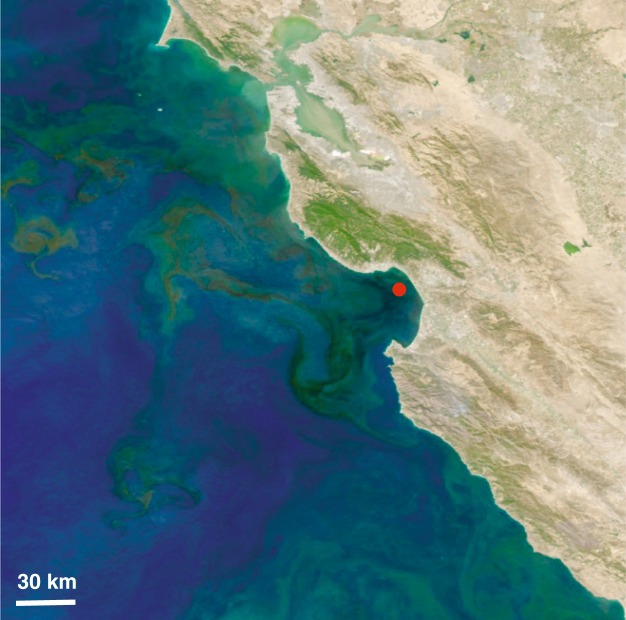
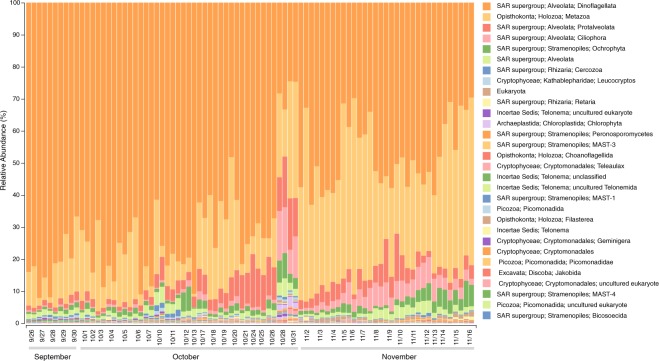
Metagenomic and metatranscriptomic time-series data covering a 52-day period in the fall of 2016 provide an inventory of bacterial and archaeal community genes, transcripts, and taxonomy during an intense dinoflagellate bloom in Monterey Bay, CA, USA. The dataset comprises 84 metagenomes (0.8 terabases), 82 metatranscriptomes (1.1 terabases), and 88 16S rRNA amplicon libraries from samples collected on 41 dates. The dataset also includes 88 18S rRNA amplicon libraries, characterizing the taxonomy of the eukaryotic community during the bloom. Accompanying the sequence data are chemical and biological measurements associated with each sample. These datasets will facilitate studies of the structure and function of marine bacterial communities during episodic phytoplankton blooms.
Conflict of interest statement
The authors declare no competing interests.
Figures

References
-
- Azam F, et al. The ecological role of water-column microbes in the sea. Mar Ecol Prog Ser. 1983;10:257–263. doi: 10.3354/meps010257. - DOI
-
- Williams P. Microbial contribution to overall marine plankton metabolism-direct measurements of respiration. Ocean Acta. 1981;4:359–364.
-
- Pennington JT, Chavez FP. Seasonal fluctuations of temperature, salinity, nitrate, chlorophyll and primary production at station H3/M1 over 1989–1996 in Monterey Bay, California. Deep Sea Res Part II: Top Stud Oceanogr. 2000;47:947–973. doi: 10.1016/S0967-0645(99)00132-0. - DOI
-
- Ryan JP, et al. Influences of upwelling and downwelling winds on red tide bloom dynamics in Monterey Bay, California. Cont Shelf Res. 2009;29:785–795. doi: 10.1016/j.csr.2008.11.006. - DOI
Publication types
MeSH terms
Grants and funding
LinkOut - more resources
Full Text Sources
Molecular Biology Databases
