


Chronic Traumatic Encephalopathy: A Brief Overview
- PMID: 31333567
- PMCID: PMC6616127
- DOI: 10.3389/fneur.2019.00713
Chronic Traumatic Encephalopathy: A Brief Overview
Abstract
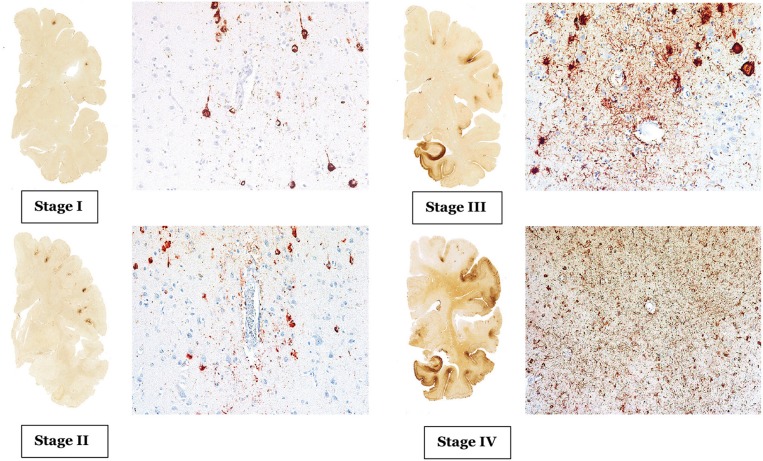
Chronic Traumatic Encephalopathy (CTE) is a debilitating neurodegenerative disease, which has been increasingly reported in athletes, especially American football players, as well as military veterans in combat settings, commonly as a result of repetitive mild traumatic brain injuries (TBIs). CTE has a unique neuropathological signature comprised of accumulation of phosphorylated tau (p-tau) in sulci and peri-vascular regions, microgliosis, and astrocytosis. As per most recent disease classification, the disease manifests itself in four different stages, characterized by widespread tauopathy. Clinically, CTE has a more subtle presentation, as patients often present with two distinct phenotypes, with one subtype initially presenting with affective changes, and the other subtype with more cognitive impairment. On a genetic basis, there are no clear risk factor genes. Although ApoE4 carriers have been reported to suffer more severe outcome post TBI. As there are no disease modifying regimen for CTE, the newly developed TBI treatments, if administered in a time sensitive manner, can offer a potential viable option. Prevention is another key strategy that needs to be implemented in various sports and military settings. Providing education for safe practice techniques, such as safe tackling and hitting, and providing ready access to full neuropsychiatric assessment by team physician could have measurable benefits. The combination of advanced of research techniques including neuroimaging, as well as increasing public awareness of CTE, offers promising vistas for research advancement.
Keywords: CTE; TBI; concussion and sports; dementia pugilistica; tau & phospho-tau protein.
Figures
References
-
- Martland H. Dementia pugilistica. JAMA. (1928) 91:364–65. 10.1001/jama.1928.02700150029009 - DOI
-
- Millspaugh J. Dementia pugilistica. US Naval Med Bull. (1937) 35:303.
-
- Critchley M. Hommage a Clovis Vincent. Paris: Maloine; (1949).
Publication types
LinkOut - more resources
Full Text Sources
Other Literature Sources
Research Materials
