


Characteristics and outcome of viral pneumonia caused by influenza and Middle East respiratory syndrome-coronavirus infections: A 4-year experience from a tertiary care center
- PMID: 31333767
- PMCID: PMC6611200
- DOI: 10.4103/atm.ATM_179_18
Characteristics and outcome of viral pneumonia caused by influenza and Middle East respiratory syndrome-coronavirus infections: A 4-year experience from a tertiary care center
Abstract
Background: After the emergence of new influenza viruses, the morbidity and mortality of viral pneumonia have received a great attention.
Objectives: The objective of this study is to describe the epidemiologic, clinical and laboratory changes, and outcomes of viral pneumonia caused by influenza and the Middle East respiratory syndrome-coronavirus (MERS-CoV) infections.
Methods: In a retrospective cohort study, the medical records of all patients diagnosed with viral pneumonia at Prince Sultan Military Medical City, Riyadh, Saudi Arabia, during the period from January 2012 to December 2015 were screened. Cases who were > 18 years old and were confirmed by a respiratory viral panel to have viral pneumonia either MERS-CoV or influenza viruses were included in the analysis. Sociodemographic, clinical, laboratory, and outcome data were extracted from patients' medical files. The data were analyzed descriptively and inferentially to identify the predictors of poor outcome.
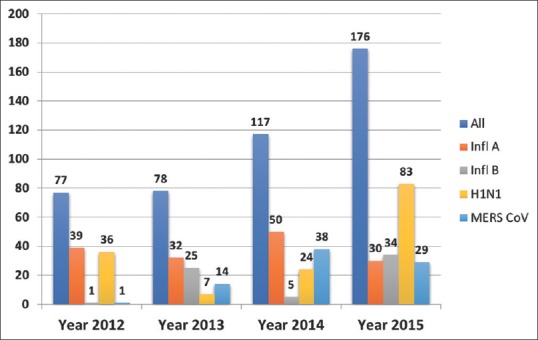
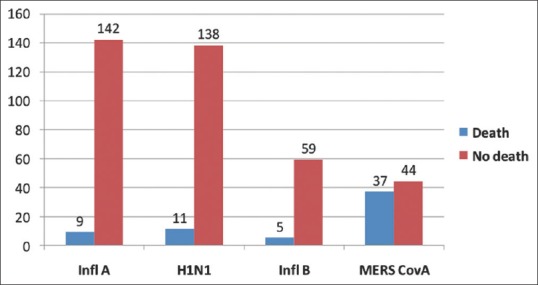
Results: A total of 448 patients with confirmed viral pneumonia were included, of those, 216 (48.2%) were caused by influenza A (non H1N1)/influenza B, 150 (33.5%) by H1N1, and 82 (18.3%) by MERS-CoV. The majority of patients presented with fever (82%), shortness of breath (64%), and flu-like symptoms (54.9%), particularly in MERS-CoV infected cases (92%). The peak incidence of viral pneumonia was in early spring and autumn. The mortality rate was 13.8%, and it was significantly higher among MERS-CoV cases. The predictors of death were age > 65 years, male gender, and associated comorbidities particularly diabetes mellitus, hypertension, and chronic kidney diseases. The number of comorbid illnesses was directly related to the increase in mortality in this group of patients.
Conclusion: Viral pneumonia caused by influenza and MERS-CoV carries a high mortality rate, particularly among MERS-CoV infected cases. Old age, male gender, and comorbid illnesses are predictors of poor outcome. Routine testing for newly emergent viruses is warranted for adults who have been hospitalized with pneumonia.
Keywords: H1N1; Middle East respiratory syndrome-coronavirus; Viral pneumonia; influenza.
Conflict of interest statement
There are no conflicts of interest.
Figures
References
-
- Louie JK, Acosta M, Winter K, Jean C, Gavali S, Schechter R, et al. Factors associated with death or hospitalization due to pandemic 2009 influenza A(H1N1) infection in California. JAMA. 2009;302:1896–902. - PubMed
-
- Domínguez-Cherit G, Lapinsky SE, Macias AE, Pinto R, Espinosa-Perez L, de la Torre A, et al. Critically ill patients with 2009 influenza A(H1N1) in Mexico. JAMA. 2009;302:1880–7. - PubMed
LinkOut - more resources
Full Text Sources