


A Comparative Trial of Incisional Negative-Pressure Wound Therapy in Abdominoplasty
- PMID: 31333924
- PMCID: PMC6571337
- DOI: 10.1097/GOX.0000000000002141
A Comparative Trial of Incisional Negative-Pressure Wound Therapy in Abdominoplasty
Abstract
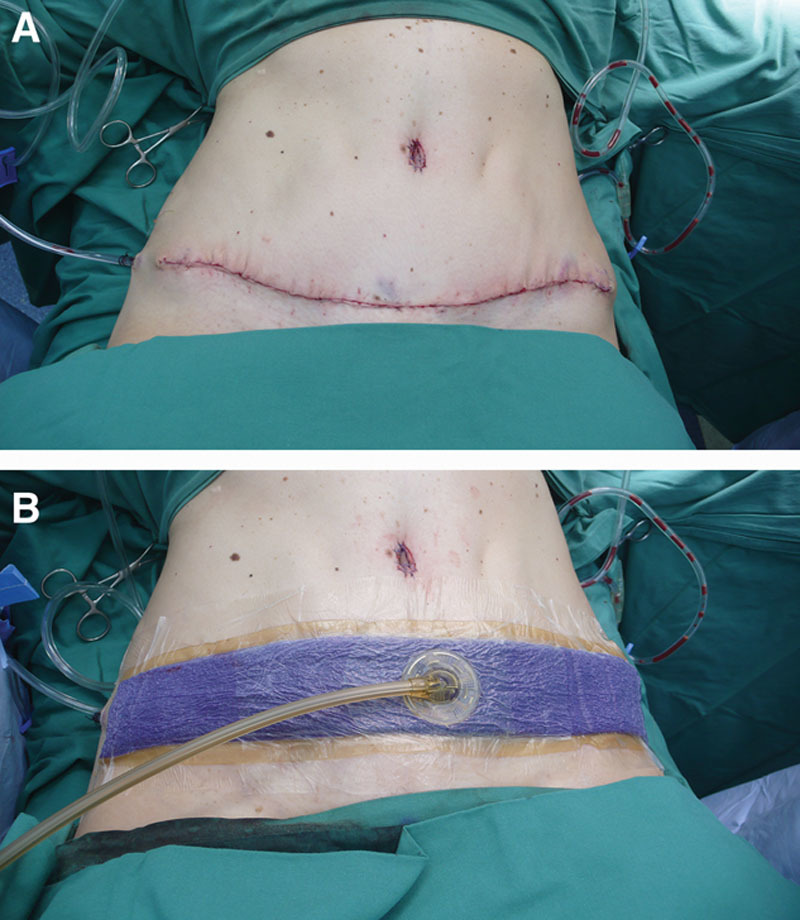
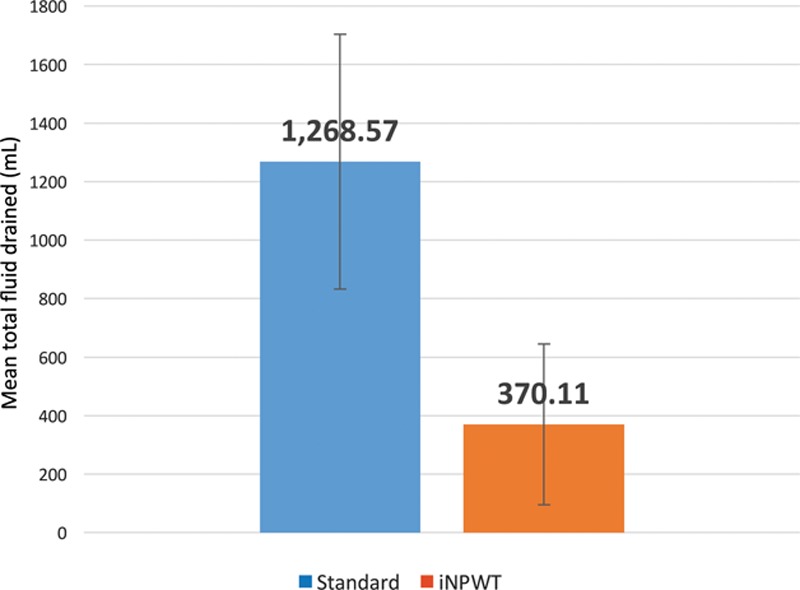
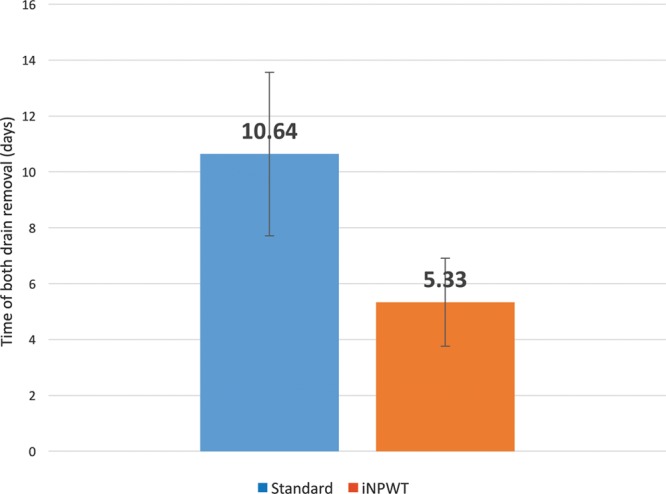
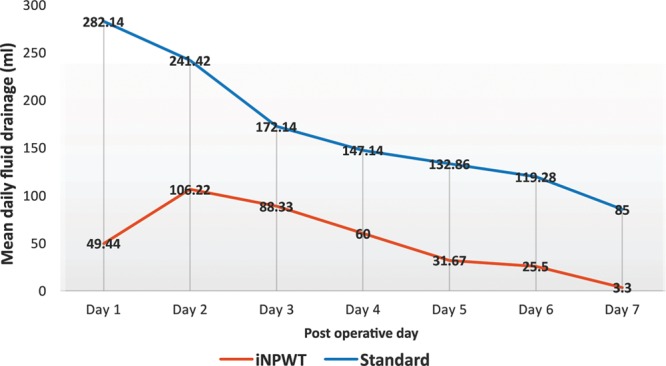
The risk for minor local complications for abdominoplasty remains high despite advances in strategies in recent years. The most common complication is the formation of seroma with reported rates ranging from 15% to 40%. The use of incisional negative-pressure wound therapy (iNPWT) on closed surgical sites has been shown to decrease the infection, dehiscence, and seroma rates. Thus, this article aims to determine whether an iNPWT dressing, Prevena Plus, is able to reduce postoperative drainage and seroma formation in patients who undergo abdominoplasty. Sixteen consecutive patients who underwent abdominoplasty by a single surgeon were dressed with standard dressings and iNPWT dressings. Total drain output, day of drain removal, and adverse events were compared between cohorts with a minimum follow-up of 6 months. The iNPWT group demonstrated a significantly less amount of fluid drainage with a mean total fluid output of 370 ± 275 ml compared to 1269 ± 436 ml mean total drainage from controls (P < 0.001). Time before removal of both drains was almost halved in the iNPWT group with an average of 5.3 ± 1.6 days, which was significantly less than the average time of 10.6 ± 2.9 days seen in control patients (P < 0.001). No observed adverse events were recorded in either group. Our findings show that iNPWT for a closed abdominoplasty incision decreases the rate of postoperative fluid accumulation and results in earlier drain removal.
Figures
References
-
- American Society of Plastic Surgeons. 2017 cosmetic plastic surgery statistics. 2018. https://www.plasticsurgery.org/documents/News/Statistics/2017/plastic-su.... Accessed April 2, 2018.
-
- Dragu A, Schnürer S, Unglaub F, et al. Wide topical negative pressure wound dressing treatment for patients undergoing abdominal dermolipectomy following massive weight loss. Obes Surg. 2011;21:1781–1786. - PubMed
-
- Neaman KC, Armstrong SD, Baca ME, et al. Outcomes of traditional cosmetic abdominoplasty in a community setting: a retrospective analysis of 1008 patients. Plast Reconstr Surg. 2013;131:403e–410e. - PubMed
-
- Matarasso A, Matarasso DM, Matarasso EJ. Abdominoplasty: classic principles and technique. Clin Plast Surg. 2014;41:655–672. - PubMed
LinkOut - more resources
Full Text Sources
Medical