


Toxicokinetics of perfluorobutane sulfonate (PFBS), perfluorohexane-1-sulphonic acid (PFHxS), and perfluorooctane sulfonic acid (PFOS) in male and female Hsd:Sprague Dawley SD rats after intravenous and gavage administration
- PMID: 31334035
- PMCID: PMC6624215
- DOI: 10.1016/j.toxrep.2019.06.016
Toxicokinetics of perfluorobutane sulfonate (PFBS), perfluorohexane-1-sulphonic acid (PFHxS), and perfluorooctane sulfonic acid (PFOS) in male and female Hsd:Sprague Dawley SD rats after intravenous and gavage administration
Erratum in
-
Erratum regarding missing Declaration of Competing Interest statements in previously published articles.Toxicol Rep. 2020 Dec 22;8:28-29. doi: 10.1016/j.toxrep.2020.12.007. eCollection 2021. Toxicol Rep. 2020. PMID: 33384945 Free PMC article.
-
Corrigendum to "Toxicokinetics of perfluorobutane sulfonate (PFBS), perfluorohexane-1-sulphonic acid (PFHxS), and perfluorooctane sulfonic acid (PFOS) in male and female Hsd:Sprague Dawley SD rats after intravenous and gavage administration" [Toxicol. Rep. 6 (2019) 645-655].Toxicol Rep. 2021 Feb 18;8:365. doi: 10.1016/j.toxrep.2021.02.001. eCollection 2021. Toxicol Rep. 2021. PMID: 33665134 Free PMC article.
Abstract
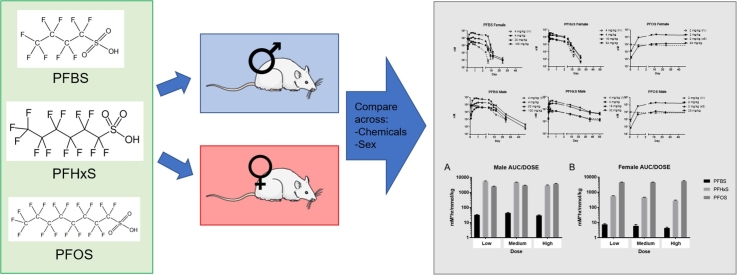
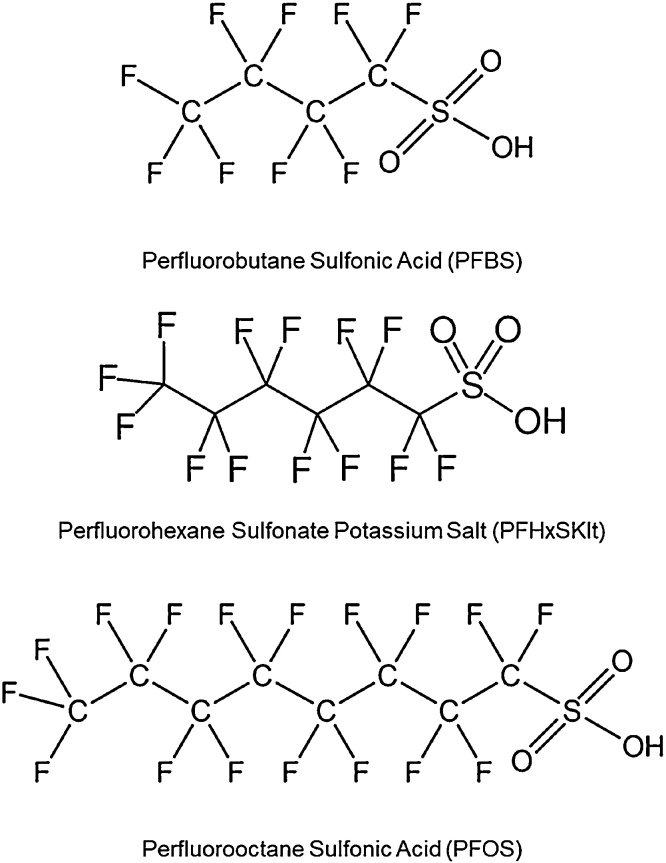
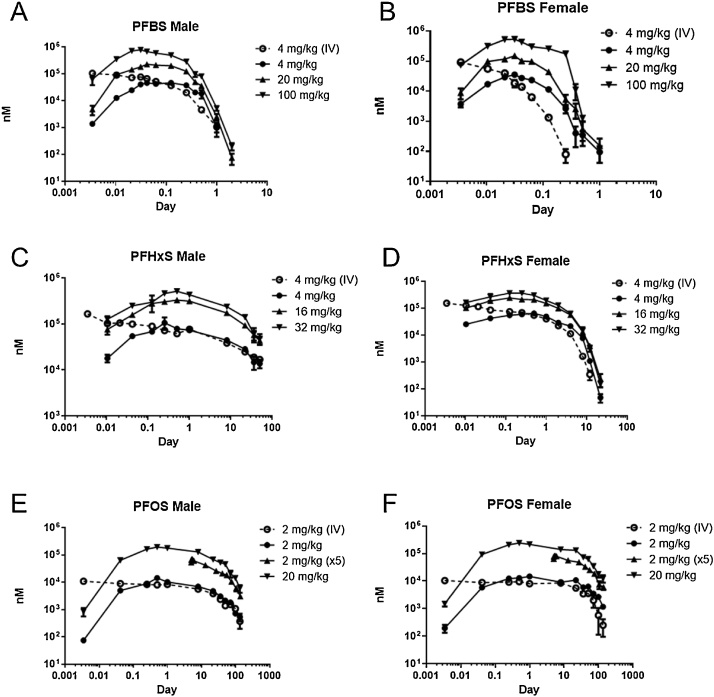
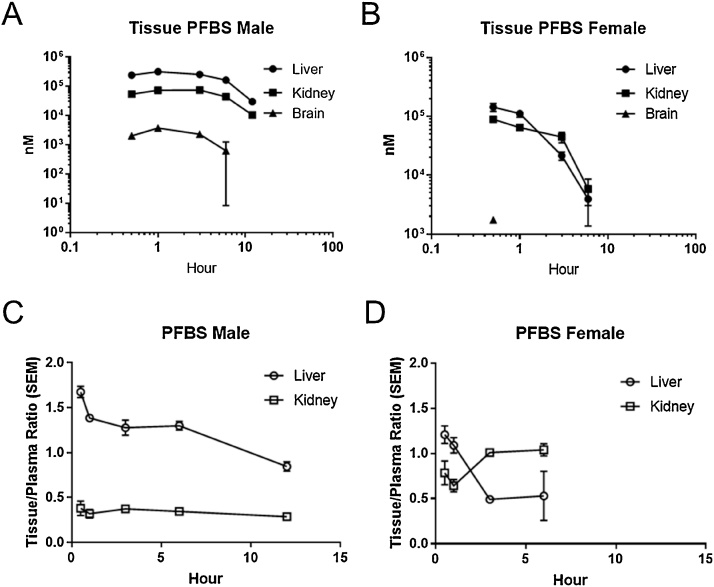
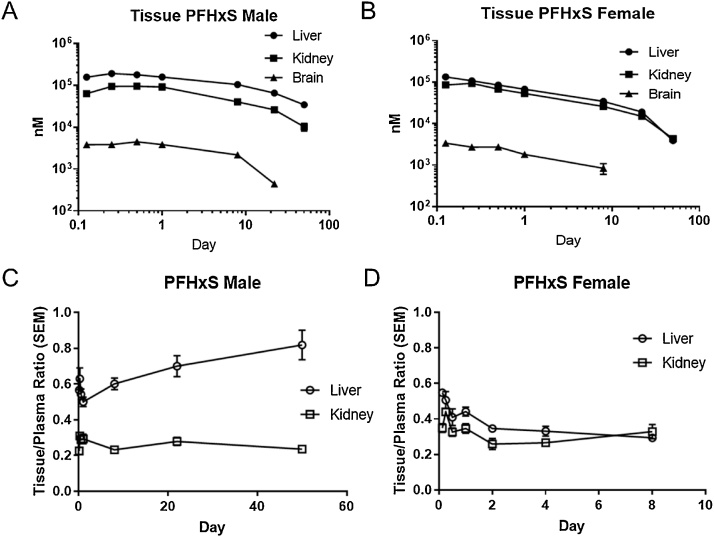
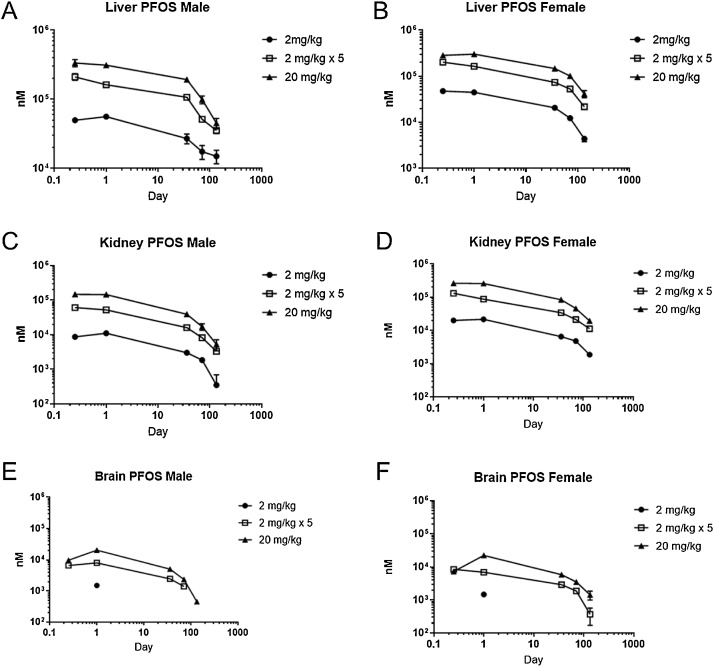
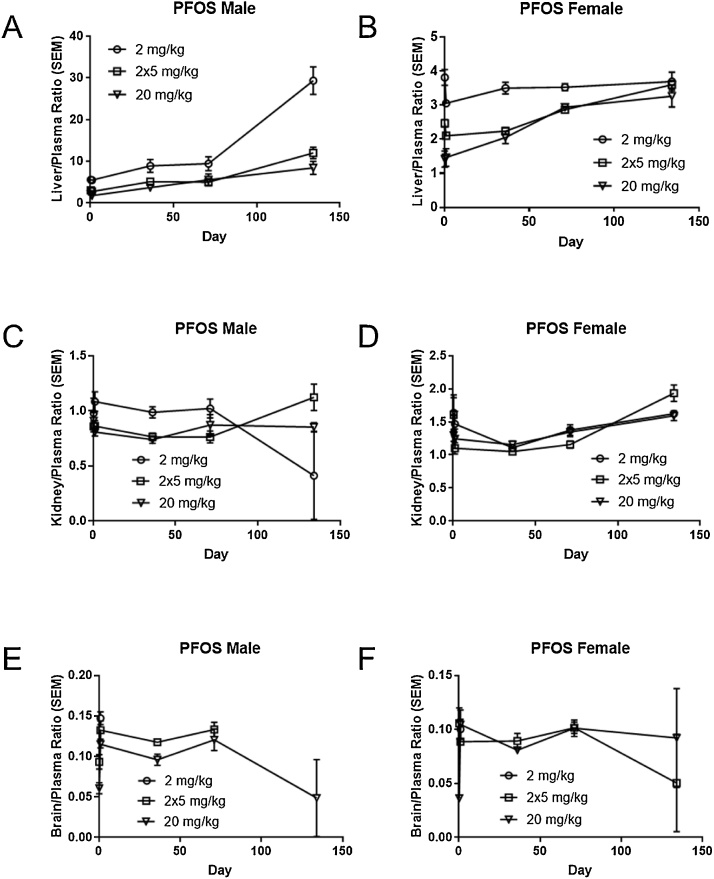
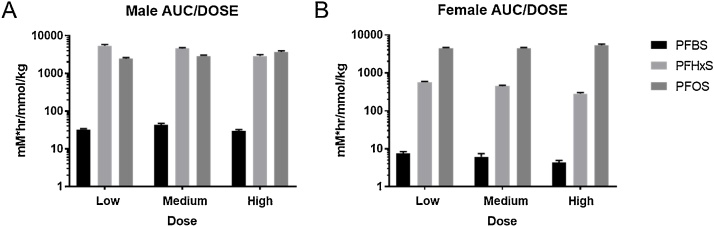
Perfluorinated alkyl substances (PFAS) are persistent contaminants that have been detected in the environment and in humans. With the PFAS chemical class, there are perfluorinated alkyl acids, many of which have been associated with certain toxicities. Because toxicity testing cannot feasibly be conducted for each individual PFAS, the National Toxicology Program (NTP) designed studies to compare toxicities across different subclasses of PFAS and across PFAS of different chain lengths to better understand the structure-toxicity relationship. Pharmacokinetic studies were conducted in parallel to these toxicity studies to facilitate comparisons across PFAS and to provide context for human relevance. Here, the toxicokinetic parameters of perfluorobutane sulfonate (PFBS), perfluorohexane-1-sulphonic acid (PFHxS), or perfluorooctane sulfonate (PFOS) after a single intravenous or gavage administration in male and female Hsd:Sprague-Dawley rats are reported. Concentrations of these PFAS were measured in the liver, kidney, and brain. Plasma half-life increased with longer chain length after gavage administration: PFBS- males averaged 3.3 h, females 1.3 h; PFHxS- males averaged 16.3 days, females 2.1 days; PFOS- males and females averaged ˜ 20 days. There were dose-dependent changes in clearance and systemic exposure for all administered chemicals and the direction of change was different in PFOS compared to the others. Liver:plasma ratios of PFOS were the highest followed by PFHxS and PFBS, while brain:plasma ratios were low in all three sulfonates. Sex differences in plasma half-life and tissue distribution were observed for PFBS and PFHxS, but not PFOS. These data provide a direct comparison of the kinetics of three different perfluoroalkyl sulfonic acids and allow for the contextualization of toxicity data in rats for human risk assessment of this chemical class.
Keywords: PFBS; PFHxS; PFOS; Perfluorinated alkyl acids; Perfluorinated chemicals; Rats; Toxicokinetics.
Figures
References
-
- Buck R.C. Toxicology data for alternative “short-chain” fluorinated substances. In: DeWitt J.C., editor. Toxicological Effects of Perfluoroalkyl and Polyfluoroalkyl Substances. Humana Press; London: 2014. pp. 451–477.
-
- Lau C., Butenhoff J.L., Rogers J.M. The developmental toxicity of perfluoroalkyl acids and their derivatives. Toxicol. Appl. Pharmacol. 2004;198:231–241. - PubMed
-
- Lau C., Anitole K., Hodes C., Lai D., Pfahles-Hutchens A., Seed J. Perfluoroalkyl acids: a review of monitoring and toxicological findings. Toxicol. Sci. 2007;99:366–394. - PubMed
-
- White S.S., Calafat A.M., Kuklenyik Z., Villanueva L., Zehr R.D., Helfant L., Strynar M.J., Lindstrom A.B., Thibodeaux J.R., Wood C. Gestational PFOA exposure of mice is associated with altered mammary gland development in dams and female offspring. Toxicol. Sci. 2007;96:133–144. - PubMed
-
- Wang Z., Cousins I.T., Scheringer M., Hungerbuhler K. Fluorinated alternatives to long-chain perfluoroalkyl carboxylic acids (PFCAs), perfluoroalkane sulfonic acids (PFSAs) and their potential precursors. Environ. Int. 2013;60:242–248. - PubMed
Grants and funding
LinkOut - more resources
Full Text Sources
