


Work-break schedules for preventing musculoskeletal symptoms and disorders in healthy workers
- PMID: 31334564
- PMCID: PMC6646952
- DOI: 10.1002/14651858.CD012886.pub2
Work-break schedules for preventing musculoskeletal symptoms and disorders in healthy workers
Abstract
Background: Work-related musculoskeletal disorders are a group of musculoskeletal disorders that comprise one of the most common disorders related to occupational sick leave worldwide. Musculoskeletal disorders accounted for 21% to 28% of work absenteeism days in 2017/2018 in the Netherlands, Germany and the UK. There are several interventions that may be effective in tackling the high prevalence of work-related musculoskeletal disorders among workers, such as physical, cognitive and organisational interventions. In this review, we will focus on work breaks as a measure of primary prevention, which are a type of organisational intervention.
Objectives: To compare the effectiveness of different work-break schedules for preventing work-related musculoskeletal symptoms and disorders in healthy workers, when compared to conventional or alternate work-break schedules.
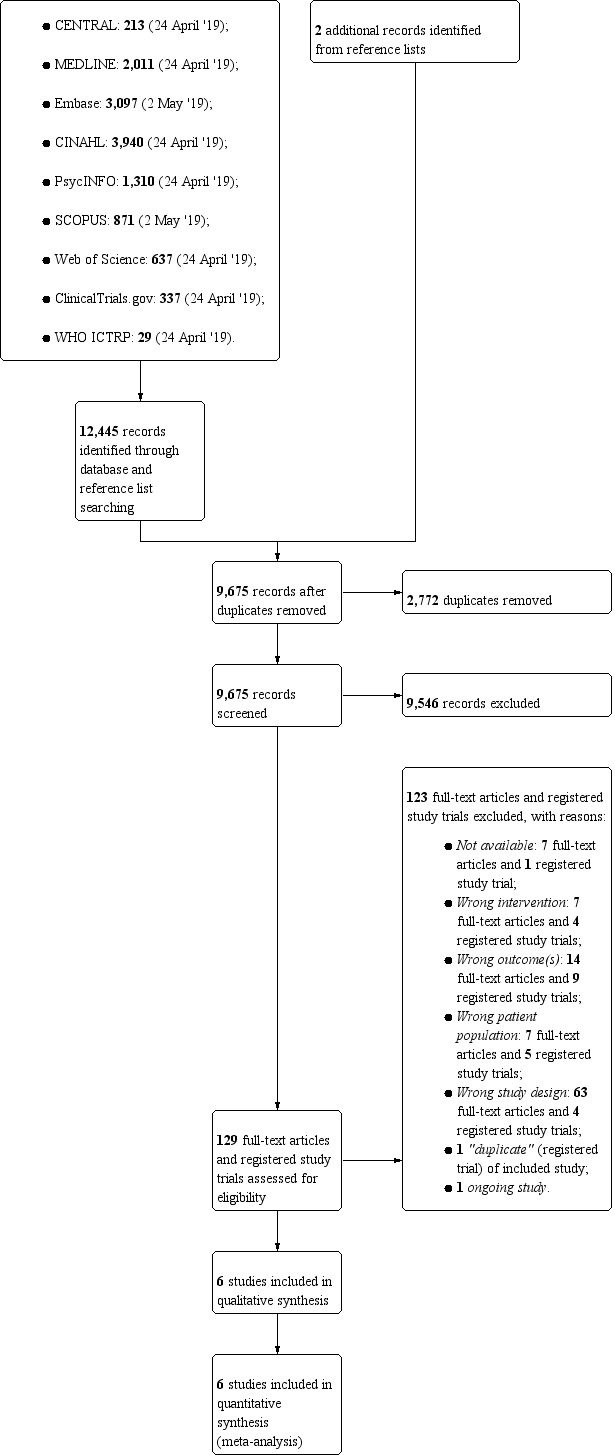
Search methods: We searched the Cochrane Central Register of Controlled Trials (CENTRAL), MEDLINE, Embase, CINAHL, PsycINFO, SCOPUS, Web of Science, ClinicalTrials.gov and the World Health Organization International Clinical Trials Registry Platform, to April/May 2019. In addition, we searched references of the included studies and of relevant literature reviews.
Selection criteria: We included randomised controlled trials (RCTs) of work-break interventions for preventing work-related musculoskeletal symptoms and disorders among workers. The studies were eligible for inclusion when intervening on work-break frequency, duration and/or type, compared to conventional or an alternate work-break intervention. We included only those studies in which the investigated population included healthy, adult workers, who were free of musculoskeletal complaints during study enrolment, without restrictions to sex or occupation. The primary outcomes were newly diagnosed musculoskeletal disorders, self-reported musculoskeletal pain, discomfort or fatigue, and productivity or work performance. We considered workload changes as secondary outcomes.
Data collection and analysis: Two review authors independently screened titles, abstracts and full texts for study eligibility, extracted data and assessed risk of bias. We contacted authors for additional study data where required. We performed meta-analyses, where possible, and we assessed the overall quality of the evidence for each outcome of each comparison using the five GRADE considerations.
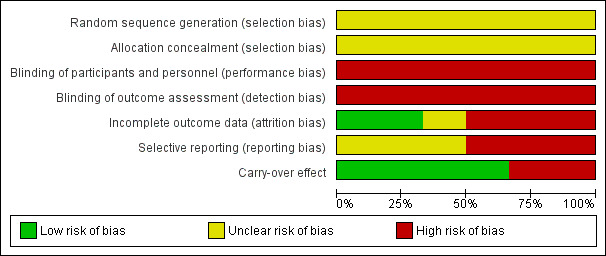
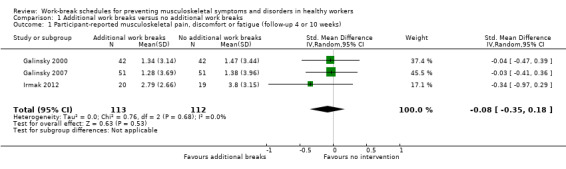
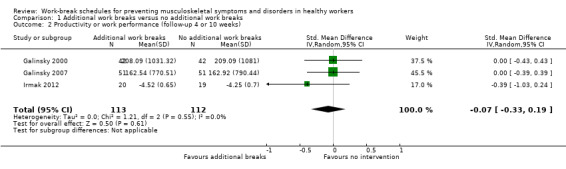
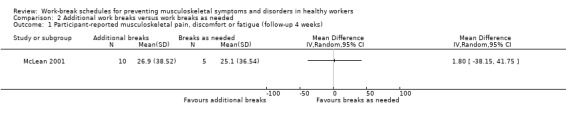
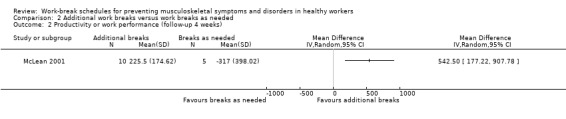
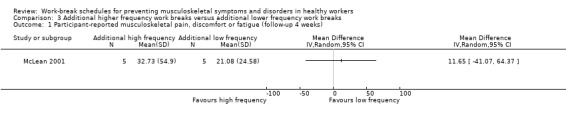
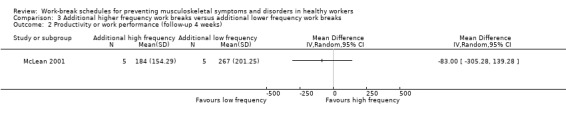
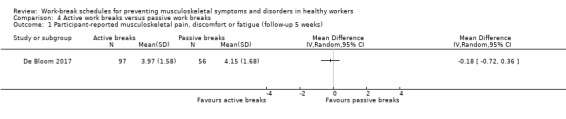
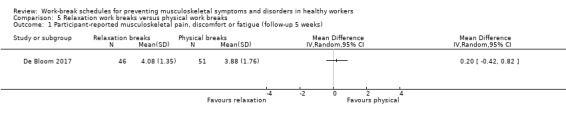
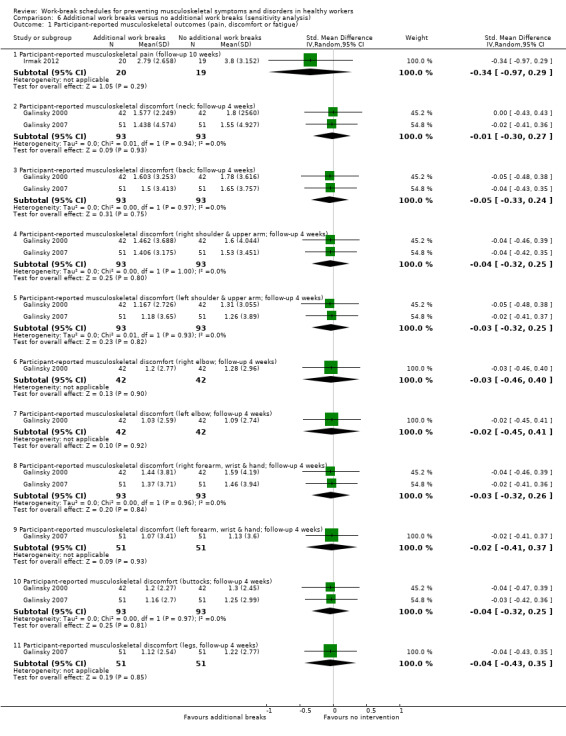
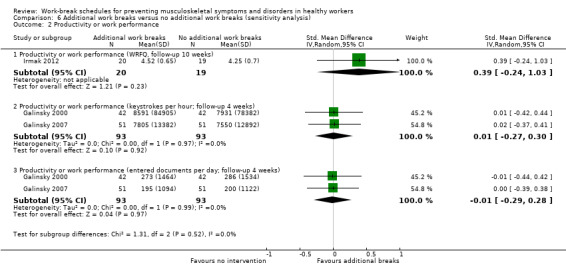
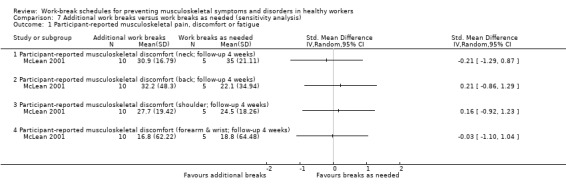
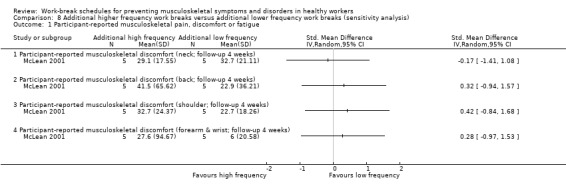
Main results: We included six studies (373 workers), four parallel RCTs, one cross-over RCT, and one combined parallel plus cross-over RCT. At least 295 of the employees were female and at least 39 male; for the remaining 39 employees, the sex was not specified in the study trial. The studies investigated different work-break frequencies (five studies) and different work-break types (two studies). None of the studies investigated different work-break durations. We judged all studies to have a high risk of bias. The quality of the evidence for the primary outcomes of self-reported musculoskeletal pain, discomfort and fatigue was low; the quality of the evidence for the primary outcomes of productivity and work performance was very low. The studies were executed in Europe or Northern America, with none from low- to middle-income countries. One study could not be included in the data analyses, because no detailed results have been reported.Changes in the frequency of work breaksThere is low-quality evidence that additional work breaks may not have a considerable effect on musculoskeletal pain, discomfort or fatigue, when compared with no additional work breaks (standardised mean difference (SMD) -0.08; 95% CI -0.35 to 0.18; three studies; 225 participants). Additional breaks may not have a positive effect on productivity or work performance, when compared with no additional work breaks (SMD -0.07; 95% CI -0.33 to 0.19; three studies; 225 participants; very low-quality evidence).We found low-quality evidence that additional work breaks may not have a considerable effect on participant-reported musculoskeletal pain, discomfort or fatigue (MD 1.80 on a 100-mm VAS scale; 95% CI -41.07 to 64.37; one study; 15 participants), when compared to work breaks as needed (i.e. microbreaks taken at own discretion). There is very low-quality evidence that additional work breaks may have a positive effect on productivity or work performance, when compared to work breaks as needed (MD 542.5 number of words typed per 3-hour recording session; 95% CI 177.22 to 907.78; one study; 15 participants).Additional higher frequency work breaks may not have a considerable effect on participant-reported musculoskeletal pain, discomfort or fatigue (MD 11.65 on a 100-mm VAS scale; 95% CI -41.07 to 64.37; one study; 10 participants; low-quality evidence), when compared to additional lower frequency work breaks. We found very low-quality evidence that additional higher frequency work breaks may not have a considerable effect on productivity or work performance (MD -83.00 number of words typed per 3-hour recording session; 95% CI -305.27 to 139.27; one study; 10 participants), when compared to additional lower frequency work breaks.Changes in the duration of work breaksNo trials were identified that assessed the effect of different durations of work breaks.Changes in the type of work breakWe found low-quality evidence that active breaks may not have a considerable positive effect on participant-reported musculoskeletal pain, discomfort and fatigue (MD -0.17 on a 1-7 NRS scale; 95% CI -0.71 to 0.37; one study; 153 participants), when compared to passive work breaks.Relaxation work breaks may not have a considerable effect on participant-reported musculoskeletal pain, discomfort or fatigue, when compared to physical work breaks (MD 0.20 on a 1-7 NRS scale; 95% CI -0.43 to 0.82; one study; 97 participants; low-quality evidence).
Authors' conclusions: We found low-quality evidence that different work-break frequencies may have no effect on participant-reported musculoskeletal pain, discomfort and fatigue. For productivity and work performance, evidence was of very low-quality that different work-break frequencies may have a positive effect. For different types of break, there may be no effect on participant-reported musculoskeletal pain, discomfort and fatigue according to low-quality evidence. Further high-quality studies are needed to determine the effectiveness of frequency, duration and type of work-break interventions among workers, if possible, with much higher sample sizes than the studies included in the current review. Furthermore, work-break interventions should be reconsidered, taking into account worker populations other than office workers, and taking into account the possibility of combining work-break intervention with other interventions such as ergonomic training or counselling, which may may possibly have an effect on musculoskeletal outcomes and work performance.
Conflict of interest statement
Tessy Luger: None known
Christopher Maher: I have received competitive grants from government agencies and industry to support my research. As an invited speaker at conferences, I have had my expenses covered and also received small gifts such as a box of chocolates or a bottle of wine. I have received honoraria for marking theses, reviewing grants and preparing talks.
Monika A. Rieger: Our Institute receives an unrestricted grant by Südwestmetall (employers' association of the metal and electric industry Baden‐Württemberg) which covered about half of the costs of the Institute for several years. The cooperation treaty between Südwestmetall, University of Tübingen, Medical Faculty of the University of Tübingen, University Hospital of Tübingen rules all aspects which are necessary to secure the 'unrestrictedness', and a board of independent trustees monitors this regulation.
Benjamin Steinhilber: None known
Figures

Update of
References
References to studies included in this review
De Bloom 2017 {published data only}
-
- Bloom J, Sianoja M, Korpela K, Tuomisto M, Lilja A, Geurts S, et al. Effects of park walks and relaxation exercises during lunch breaks on recovery from job stress: two randomized controlled trials. Journal of Environmental Psychology 2017;51:14‐30. [DOI: 10.1016/j.jenvp.2017.03.006] - DOI
-
- NCT02124837. Intervention study on break activities and workers' psychological and physiological health and performance. clinicaltrials.gov/ct2/show/NCT02124837 (first received 24 April 2014).
Galinsky 2000 {published data only}
Galinsky 2007 {published data only}
Henning 1997 {published data only}
Irmak 2012 {published data only}
References to studies excluded from this review
Abdelrahmen 2017 {published data only}
-
- Abdelrahmen AM, Lowndes BR, Bingener J, Park AE, Hallbeck MS. Intraoperative microbreaks exercises impact surgical trainees' musculoskeletal discomfort and workload. Journal of the American College of Surgeons 2017;225(4):S120‐1. [DOI: 10.1016/j.jamcollsurg.2017.07.266] - DOI
ACTRN12618000061235 {published data only}
-
- ACTRN12618000061235. Program to break up long bouts of sitting among male office workers at a public university in Saudi Arabia: SLIM trial [The SLIM (Sit Less, Impress and Motivate) program targeting sedentary behaviour among male office workers at a public university in Saudi Arabia: a cluster randomised controlled trial]. anzctr.org.au/ACTRN12618000061235.aspx (first received 18 December 2017).
Baidya 1988 {published data only}
-
- Baidya KN, Stevenson MG. Effect of rest breaks on local muscle fatigue during repetitive work. 10th Congress of the International Ergonomics Association; 1988 Aug 1‐5; Sydney (AUS). London (UK): Taylor & Francis, 1988:421‐3.
Balci 2004 {published data only}
-
- Balci R, Aghazadeh F. Effects of exercise breaks on performance, muscular load, and perceived discomfort in data entry and cognitive tasks. Computers and Industrial Engineering 2004;46(3):399‐411. [DOI: 10.1016/j.cie.2004.01.003] - DOI
Battecha 2019 {published data only}
-
- Battecha K, Abdelatif N, Shewitta D, Tantawy S. The effect of cranio‐cervical flexion training and rest breaks on neck pain and functional performance in visual display unit users. Bioscience Research 2019;15(4):3708‐17.
Bautch 1998 {published data only}
-
- Bautch S, Conway S. Why micro‐breaks?. Dynamic Chiropractic 1998;16(20):8.
Beynon 2000 {published data only}
Bhatia 1969 {published data only}
Blasche 2017 {published data only}
Blasche 2018 {published data only}
Boucsein 1995 {published data only}
-
- Boucsein W, Thum M. Recovery from strain under different work/rest schedules. Designing for the Global Village. Human Factors and Ergonomics Society 39th Annual Meeting; 1995 Oct 9‐13; San Diego (CA). Philadelphia (PENN), 1995; Vol. 39, issue 12:785‐8. [DOI: 10.1177/154193129503901208] - DOI
Boucsein 1996 {published data only}
-
- Boucsein W, Thum M. Multivariate psychophysiological analysis of stress‐strain processes under different break schedules during computer work. In: Fahrenberg J, Myrtek M editor(s). Ambulatory Assessment: Computer‐Assisted Psychological and Psychophysiological Methods in Monitoring and Field Studies. Ashland (OH): Hogrefe & Huber Publishers, 1996:305‐13.
Boucsein 1997 {published data only}
-
- Boucsein W, Thum M. Design of work/rest schedules for computer work based on psychophysiological recovery measures. International Journal of Industrial Ergonomics 1997;20(1):51‐7. [DOI: 10.1016/S0169-8141(96)00031-5] - DOI
Brown 2014 {published data only}
Butkovskaia 1981 {published data only}
-
- Butkovskaia ZM, Dol'nik RI, Safonova AF. Importance of breaks in working with vibration‐hazardous instruments. Gigiena Truda i Professional'nye Zabolevaniia 1981;10:40‐3. - PubMed
Cáceres‐Muñoz 2017 {published data only}
-
- Cáceres‐Muñoz VS, Magallanes‐Meneses AA, Torres‐Coronel D, Copara‐Moreno P, Escobar‐Galindo M, Mayta‐Tristán P. Effect of rest pauses combined with information leaflets on the decrease in musculoskeletal pain in administrative workers. Revista Peruana de Medicina Experimental y Salud Publica 2017;34(4):611‐8. [DOI: 10.17843/rpmesp.2017.344.2848] - DOI - PubMed
Cambo 2017 {published data only}
-
- Cambo SA, Avrahami D, Lee ML. BreakSense: combining physiological and location sensing to promote mobility during work‐breaks. Advancing Computing as a Science & Profession. 2017 CHI Conference on HUman Factors in Computing Systems; 2017 May 6‐11; Denver (CO). New York (NY): The Association for Computing Machinery, 2017:3595‐607. [DOI: 10.1145/3025453.3026021] - DOI
Carstensen 1998 {published data only}
-
- Carstensen B. Mini pause gymnastics. Journal of Manual and Manipulative Therapy 1998;6(1):37‐42. [DOI: 10.1179/jmt.1998.6.1.37] - DOI
Chaikumarn 2018 {published data only}
-
- Chaikumarn M, Nakphet N, Janwantanakul P. Impact of rest‐break interventions on the neck and shoulder posture of symptomatic VDU operators during prolonged computer work. International Journal of Occupational Safety and Ergonomics 2018;24(2):251‐9. [DOI: 10.1080/10803548.2016.1267469] - DOI - PubMed
-
- JPRN‐UMIN000008385. Impact of rest‐break interventions on neck and shoulder posture during prolonged computer terminal work. cochranelibrary.com/central/doi/10.1002/central/CN‐01820022/full (first received 2012).
Chakrabarty 2016 {published data only}
Coleman Wood 2018 {published data only}
Conway 1998 {published data only}
-
- Conway FT. The influence of job factors in the introduction of rest breaks for intensive data entry work. Human Factors and Ergonomics Society 42nd Annual Meeting; 1998 Oct 5‐9; Chicago (ILL). Santa Monica (CA): Human Factors and Ergonomics Society, 1998; Vol. 2:999‐1003.
Crenshaw 2006 {published data only}
CTRI/2019/01/017117 {published data only}
-
- CTRI/2019/01/017117. Effect of smart phone delivered breaks on health of office workers [Short term influence of smart phone based m‐Health application in altering cardiometabolic risk and cardiorespiratory fitness of white collar workers in and around Udupi]. ctri.nic.in/Clinicaltrials/pmaindet2.php?trialid=29856 (first received 14 January 2019).
Czernieckij 1966 {published data only}
-
- Czernieckij JM. Effect of rest period gymnastics on hemodynamic changes in assembly line workers. Medycyna Pracy 1966;17(3):209‐12. - PubMed
Dababneh 1998 {published data only}
-
- Dababneh WJ. Temporal structure of the workday: a study of the impact of added rest breaks on the productivity and well being of workers. Dissertation Abstracts International: Section B: The Sciences and Engineering 06 1998;58(12b):6749.
Dababneh 2001 {published data only}
De Looze 2010 {published data only}
-
- Looze MP, Bosch T, Rhijn JW. Increasing short‐term output in assembly work. Human Factors and Ergonomics in Manufacturing & Service Industries 2010;20(5):470‐7. [DOI: 10.1002/hfm.20199] - DOI
Engelmann 2011 {published data only}
-
- Engelmann C, Schneider M, Krischbaum C, Grote G, Dingemann J, Schoof S, et al. Effects of intraoperative breaks on mental and somatic operator fatigue: a randomized clinical trial. Surgical Endoscopy and Other Interventional Techniques 2011;25(4):1245‐50. [DOI: 10.1007/s00464-010-1350-1] - DOI - PubMed
-
- NCT01009372. The intermittent pneumoperitoneum scheme of work breaks in complex laparoscopic surgery [Prospective study on the effects of the intermittent pneumoperitoneum (IPP) work break scheme on surgeons and patients]. clinicaltrials.gov/ct2/show/NCT01009372 (first received 5 November 2009).
Evans 2012 {published data only}
Faucett 2007 {published data only}
Finkbeiner 2016 {published data only}
Frey 2002 {published data only}
-
- Frey R, Decker K, Reinfried L, Klösch G, Saletu B, Anderer P, et al. Effect of rest on physicians’ performance in an emergency department, objectified by electroencephalographic analyses and psychometric tests. Critical Care Medicine 2002;30(10):2322‐9. [DOI: 10.1097/00003246-200210000-00022] - DOI - PubMed
Genaidy 1995 {published data only}
Gilson 2009 {published data only}
-
- Gilson ND, Puig‐Ribera A, McKenna J, Brown WJ, Burton NW, Cooke CB. Do walking strategies to increase physical activity reduce reported sitting in workplaces: a randomized control trial. International Journal of Behavioral Nutrition and Physical Activity 2009;6:43. [DOI: 10.1186/1479-5868-6-43] - DOI - PMC - PubMed
Hallbeck 2017a {published data only}
-
- Hallbeck MS, Lowndes BR, Abdelrahman AM, Bingener J. Should you and your surgical team be taking introperative microbreaks with stretches?. Surgical Endoscopy 2017;31 Suppl 2:57. [DOI: 10.1007/s00464-017-5540-y] - DOI
Hallbeck 2017b {published data only}
Havenstein 2017 {published data only}
-
- Havenstein JL. Requisite work day rest periods for anesthesia providers working 24‐hour shifts: a quantitative pilot study [dissertation]. Flint (MI): University of Michigan‐Flint, 2017:43.
Hayashi 2004 {published data only}
Helander 1990 {published data only}
Henning 1993 {published data only}
-
- Henning RA, Alteras‐Webb SM, Jacques P, Kissel KV, Sullivan AB. Frequent, short breaks during computer work: the effects on productivity and well‐being in a field study. In: Luczak H, Çakir A, Çakir G editor(s). Work with Display Units 92. Amsterdam (NL): Elsevier Science Publishers B.V., 1993:292‐5.
Hoe 2018 {published data only}
IRCT201202204242N3 {published data only}
-
- IRCT201202204242N3. Assessment of the effect of ergonomics intervention on reducing musculoskeletal symptoms in office workers of Isfahan University of Medical Sciences. cochranelibrary.com/central/doi/10.1002/central/CN‐01805143/full (first received 2012).
ISRCTN13222474 {published data only}
-
- ISRCTN13222474. The Computer Automated Pause Software (CAPS) study, randomised controlled trial in the effectiveness of pause software in VDU workers [The Computer Automated Pause Software (CAPS) study: randomised controlled trial in the effectiveness of pause software in VDU workers for prevention of work related upper extremity complaints]. isrctn.com/ISRCTN13222474 (first received 4 August 2005).
JPRN‐UMIN000033210 {published data only}
-
- JPRN‐UMIN000033210. Effectiveness of workplace active rest program on low back pain among office workers. apps.who.int/trialsearch/trial2.aspx?Trialid=jprn‐umin000033210 (first received 2 July 2018).
Karlsson 1988 {published data only}
-
- Karlsson GB, Adle B, Lofgren B, Sundstrom I. Microbreaks preventing musculoskeletal disorders. Lakartidnigngen 1988;85(42):3463‐4. - PubMed
Karwowski 1990 {published data only}
-
- Karwowski W, Noland S, Eberts R, Salvendy G. Effects of keying method, image preview and work/rest schedule on posture of the remote bar coding operators. Countdown to the 21st century. Human Factors Society 34th Annual Meeting; 1990; Orlando (FLOR). Santa Monica (CA): Human Factors Society, 1990; Vol. 1:738‐42. [DOI: ]
Keller 2019 {published data only}
-
- Keller AC, Meier LL, Elfering A, Semmer NK. Please wait until I am done! Longitudinal effects of work interruptions on employee well‐being. Work & Stress 2019 Feb 15 [Epub ahead of print]. [DOI: 10.1080/02678373.2019.1579266] - DOI
Kildebro 2014 {published data only}
-
- Kildebro N, Amirian I, Gögenur I, Rosenberg J. Micropauses during surgery may benefit surgeons and patients. Ugeskrift for laeger 2014;176(41):1726‐9. - PubMed
Kiseleva 1970 {published data only}
-
- Kiseleva VI, Semenov AB. Physiological substantiation of work and rest schedules of construction workers. Gigiena Truda i Professional'nye Zabolevaniia 1970;14(11):47‐8. - PubMed
Kissel 1994 {published data only}
-
- Kissel GV, Henning RA. Work design, smoking behavior and the productivity and well‐being of VDT operators: the results of a field study. People and Technology in Harmony. Human Factors and Ergonomics Society 38th Annual Meeting; 1994 Oct 24‐28; Nashville (TENN). Santa Monica (CA): Human Factors Society, 1994:975. [DOI: ]
Kogi 1982 {published data only}
-
- Kogi K. Finding appropriate work‐rest rhythm for occupational strain on the basis of electromyographic and behavioural changes. Electroencephalography and Clinical Neurophysiology 1982;36:738‐49. - PubMed
Krajewski 1979 {published data only}
Krajewski 2010 {published data only}
Lacaze 2010 {published data only}
Lancry 1995 {published data only}
-
- Lancry A, Stoklosa MH. Breaks effects on vigilance and tasks efficiency. Travail Humain 1995;58(1):71‐83.
Lanhers 2015 {published data only}
-
- Lanhers C, Pereira B, Maublant C, Garde G, Coudeyre E. Evaluation of i‐Préventive: active prevention digital tool for musculoskeletal disorders among computer workers. Annals of Physical and Rehabilitation Medicine 2015;58:e38. [DOI: 10.1016/j.rehab.2015.07.092] - DOI
-
- NCT02350244. Active prevention of MSDs (musculoskeletal disorders, upper and spine members) in the context of computer screen work (I‐Preventive). clinicaltrials.gov/ct2/show/NCT02350244 (first received 29 January 2015).
Laporte 1966 {published data only}
Largo‐Wight 2017 {published data only}
-
- Largo‐Wight E, Wlyudka PS, Merten JW, Cuvelier EA. Effectiveness and feasibility of a 10‐minute employee stress intervention: Outdoor Booster Break. Journal of Workplace Behavioral Health 2017;32(3):159‐71. [DOI: 10.1080/15555240.2017.1335211] - DOI
Lim 2016 {published data only}
Luger 2018 {published data only}
Mailey 2017 {published data only}
-
- Mailey EL, Rosenkranz SK, Ablah E, Swank A, Casey K. Effects of an intervention to reduce sitting at work on arousal, fatigue, and mood among sedentary female employees: a parallel‐group randomized trial. Journal of Occupational and Environmental Medicine 2017;59(12):1166‐71. [DOI: 10.1097/JOM.0000000000001131] - DOI - PubMed
-
- NCT02609438. An intervention to reduce sitting time at work: effects on metabolic health and inactivity (Up4Health) [The effects of short, frequent breaks in sitting versus longer, planned breaks in sitting on sedentary behavior and metabolic health among inactive females working sedentary jobs]. clinicaltrials.gov/ct2/show/NCT02609438 (first received 20 November 2015).
Martin‐Gill 2018 {published data only}
-
- Martin‐Gill C, Barger LK, Moore CG, Higgins JS, Teasley EM, Weiss PM, et al. Effects of napping during shift work on sleepiness and performance in emergency medical services personnel and similar shift workers: a systematic review and meta‐analysis. Prehospital Emergency Care 2018;22(S1):47‐57. [DOI: 10.1080/10903127.2017.1376136] - DOI - PubMed
McLean 2000 {published data only}
Michishita 2017a {published data only}
-
- Michishita R, Jiang Y, Ariyoshi D, Yoshida M, Moriyama H, Obata Y, et al. The introduction of an active rest program by workplace units improved the workplace vigor and presenteeism among workers: a randomized controlled trial. Journal of Occupational and Environmental Medicine 2017;59(12):1140‐7. [DOI: 10.1097/JOM.0000000000001121] - DOI - PubMed
Michishita 2017b {published data only}
Middaugh 2002 {published data only}
-
- Middaugh SJ. Work related musculoskeletal pain and the work/rest cycle: microbreaks, gap analysis, Cinderella hypothesis, and more. Applied Psychophysiology and Biofeedback 2002;27(4):301. [DOI: 10.1023/A:1021065519264] - DOI
Mihaila 1971 {published data only}
-
- Mihaila I, Pafnote M, Vaida I, Patru G, Roua C, Stefanescu E, et al. Studies of work schedules in mechanized forestry operations. Fiziologia Normala şi Patologica 1971;17(1):57‐64. - PubMed
Mihaila 1973 {published data only}
-
- Mihaila I, Pafnote M, Vaida I, Patru G, Roua C, Stefanescu E. Studies of the establishment of optimum rest schedules in work with mechanical saws in forestry and lumbering. Fiziologia Normala şi Patologica 1973;19(5):429‐37. - PubMed
Mitra 2008 {published data only}
Mohan 1969 {published data only}
-
- Mohan V, Mohan J. Effect of rest on performance. Indian Journal of Experimental Psychology 1969;3(1):1‐3.
Moreira 2007 {published data only}
-
- Moreira PHC, Cirelli G, Amorim CF, Moraes, ER. Influence of rest and stretching on muscle electric activity after typing. Fisioterapia e Pesquisa 2007;14(1):22‐8.
NCT01996176 {published data only}
-
- NCT01996176. Take a Stand! ‐ an intervention to reduce occupational sitting time [Take a Stand ! ‐ a cluster randomized controlled intervention study at four office‐based workplaces aiming to reduce occupational sitting time]. clinicaltrials.gov/ct2/show/NCT01996176 (first received 27 November 2013).
NCT02951624 {published data only}
-
- NCT02951624. The effect of frequency and duration of breaks in sitting time on metabolic cardiovascular risk factors (BPS2). clinicaltrials.gov/ct2/show/NCT02951624 (first received 1 November 2016).
NCT02960750 {published data only}
-
- NCT02960750. Effectiveness of a workplace "sit less and move more" web‐based program in Spanish office employees (Walk@WorkSpain) [Effectiveness of a workplace "sit less and move more" web‐based program (Walk@WorkSpain) on occupational sedentary behavior, habitual physical activity, physical risk factors for chronic disease and efficiency‐related outcomes in Spanish office employees]. clinicaltrials.gov/ct2/show/NCT02960750 (first received 10 November 2016).
NCT03163953 {published data only}
-
- NCT03163953. Promoting physical activity and break in office workers [Survey and promoting physical aActivity in employees and entrepreneurial projects of software park Thailand under the office of science and technology (NSTDA)]. clinicaltrials.gov/ct2/show/NCT03163953 (first received 23 May 2017).
NCT03375749 {published data only}
-
- NCT03375749. StandUP UBC: reducing workplace sitting [StandUP UBC: impact of a low‐cost standing desk on reducing workplace sitting]. clinicaltrials.gov/ct2/show/NCT03375749 (first received 18 December 2017).
NCT03468894 {published data only}
-
- NCT03468894. Breaking up sitting with a treadmill desk in office workers [Breaking up prolonged sitting time in office workers with light‐intensity walking: a pilot randomized controlled trial]. clinicaltrials.gov/ct2/show/NCT03468894 (first received 19 March 2018).
NCT03560544 {published data only}
-
- NCT03560544. The effect of breaking up sitting in the workplace on cardiometabolic risk and worker productivity [Pilot study of a tailored intervention to break up sitting in the workplace on cardiometabolic risk and worker productivity]. clinicaltrials.gov/ct2/show/NCT03560544 (first received 18 June 2018).
NCT03715816 {published data only}
-
- NCT03715816. Work breaks during simulated minimally invasive surgery [Work breaks during minimally invasive surgery ‐ target‐group specific development of work break schedules]. clinicaltrials.gov/ct2/show/NCT03715816 (first received 23 October 2018).
NCT03840304 {published data only}
-
- NCT03840304. Effect of Yoga@Work program [Effectiveness of Yoga@Work program on neck and shoulder pain in information technology (IT) employees]. clinicaltrials.gov/ct2/show/NCT03840304 (first received 15 February 2019).
NCT03863340 {published data only}
-
- NCT03863340. Short interventions to prevent trapezius muscle fatigue in computer work [Trapezius muscle fatigue of long duration: a likely neuromuscular control issue]. clinicaltrials.gov/ct2/show/NCT03863340 (first received 5 March 2019).
Neri 2002 {published data only}
-
- Neri DF, Oyung RL, Colletti LM, Mallis MM, Tam PY, Dinges DF. Controlled breaks as a fatigue countermeasure on the flight deck. Aviation, Space, and Environmental Medicine 2002;73(7):654‐64. - PubMed
Nijp 2016 {published data only}
Oriyama 2014 {published data only}
Oude Hengel 2012 {published data only}
-
- Oude Hengel KM, Blatter BM, Joling CI, Beek AJ, Bongers PM. Effectiveness of an intervention at construction worksites on work engagement, social support, physical workload, and need for recovery: results from a cluster randomized controlled trial. BMC Public Health 2012;12:1008. [DOI: 10.1186/1471-2458-12-1008] - DOI - PMC - PubMed
Oude Hengel 2013 {published data only}
-
- Oude Hengel KM, Blatter BM, Molen HF, Bongers PM, Beek AJ. The effectiveness of a construction worksite prevention program on work ability, health, and sick leave: results from a cluster randomized controlled trial. Scandinavian Journal of Work, Environment and Health 2013;39(5):456‐67. [DOI: 10.5271/sjweh.3361] - DOI - PubMed
Park 2017 {published data only}
Peper 2006 {published data only}
-
- Peper E, Giney KH. Micro‐breaks help prevent computer related stress. Rehab & Therapy Products Review. Darick Publishing Co., 2006:18‐9.
Petz 1964 {published data only}
-
- Petz B. Effect of the number and length of rest pauses on work output in static effort. Arhiv za Higijenu Rada i Toksikologiju 1964;15:183‐8. - PubMed
Purnell 2002 {published data only}
Rahman 2018 {published data only}
Rosa 1985 {published data only}
-
- Rosa RR. Alternative work schedules: effects on performance and ratings of fatigue and alertness. Dissertation Abstracts International 1985;45(9b):3101.
Scammell 2018 {published data only}
Scholz 2018 {published data only}
Schrempf 2017 {published data only}
Scott 2018 {published data only}
Sheahan 2016 {published data only}
Shrestha 2018 {published data only}
Sianoja 2018 {published data only}
Stock 2018 {published data only}
-
- Stock SR, Nicolakakis N, Vézina N, Vézina M, Gilbert L, Turcot A, et al. Are work organization interventions effective in preventing or reducing work‐related musculoskeletal disorders? A systematic review of the literature. Scandinavian Journal of Work, Environment & Health 2018;44(2):113‐33. [DOI: 10.5271/sjweh.3696] - DOI - PubMed
Sundelin 1989 {published data only}
Takahashi 2004 {published data only}
Taylor 2016 {published data only}
-
- ISRCTN25767399. Booster Breaks: health promoting work breaks [Impact of Booster Breaks on physical activity among sedentary employees: a cluster randomized controlled trial]. isrctn.com/ISRCTN25767399 (first received 16 February 2015). [DOI: 10.1186/ISRCTN25767399] - DOI
-
- Taylor WC, Paxton RJ, Shegog R, Coan SP, Dubin A, Page TF, et al. Impact of booster breaks and computer prompts on physical activity and sedentary behavior among desk‐based workers: a cluster‐randomized controlled trial. Preventing Chronic Disease 2016;13:e155. [DOI: 10.5888/pcd13.160231] - DOI - PMC - PubMed
Tempesta 2013 {published data only}
Tiwari 2006 {published data only}
-
- Tiwari PS, Gite LP. Evaluation of work‐rest schedules during operation of a rotary power tiller. International Journal of Industrial Ergonomics 2006;36(3):203‐10. [DOI: 10.1016/j.ergon.2005.11.001] - DOI
Tooley 2004 {published data only}
-
- Tooley SA, Stuart MA. The effects of stretching and micro breaks on office workers musculoskeletal health. Human and Organisational Issues in teh Digital Enterprise. 9th International Conference on Human Aspects of Advanced Manufacturing: Agility & Hybrid Automation (HAAMAHA); 2004 Aug 25‐27; Galway (IRE). Galway (IRE): National University of Ireland, 2004:220‐30.
Van den Heuvel 2003 {published data only}
Van Dieën 1998 {published data only}
Verhaegen 1960 {published data only}
-
- Verhaegen M. Preparatory gymnastics for the profession. Gymnastics during the work break. Archives Belges de Medecine Sociale, Hygiene, Medecine du Travail et Medecine Legale 1960;18:501‐12. - PubMed
Vijendren 2018 {published data only}
Yusuf 2006 {published data only}
-
- Yusuf M, Mulawarman AA, Suarta IM. Application short rest and gives snack can decreased workload and musculoskeletal disorder and can increased work productivity for worker chips stir fry in Sanggulan Hill Kediri Village Tabanan regency. Ergo Future. International Symposium on Past, Present and Future Ergonomics, Occupational Safety and Health; 2006 Aug 28‐30; Bali (IND). Denpasar (IND): School of Medicine, Department of Physiology, Udayana University, 2006:267‐71.
Zhu 2019 {published data only}
-
- Zhu Z, Kuykendall L, Zhang X. The impact of within‐day work breaks on daily recovery processes: an event‐based pre/post experience sampling study. Journal of Occupational & Organizational Psychology 2019;92:191‐211. [DOI: 10.1111/joop.12246] - DOI
Zolina 1963 {published data only}
-
- Zolina ZM, Moikin IUV, Barkhash GI. Physiological evaluation of the work and rest schedule in the 7‐hour work day on an assembly line. Gigiena Truda i Professional'nye Zabolevanija 1963;7:28‐33. - PubMed
References to ongoing studies
NCT03559153 {published data only}
-
- NCT03559153. Effect of passive and active rest break in musculoskeletal complains [Effect of passive and active rest break in musculoskeletal complains in office workers]. clinicaltrials.gov/ct2/show/nct03559153 (first received 15 June 2018).
Additional references
ArboNed 2019
-
- ArboNed. Disease specific absenteeism by gender & Work‐disability by cause and age [Ziektespecifiek verzuim naar geslacht & Arbeidsongeschiktheid naar oorzaak en leeftijd]. volksgezondheidenzorg.info (accessed 30 April 2019).
Armstrong 1993
Barr 2004
Basu 2017
Boocock 2007
-
- Boocock MG, McNair PJ, Larmer PJ, Armstrong B, Collier J, Simmonds M, et al. Interventions for the prevention and management of neck/upper extremity musculoskeletal conditions: a systematic review. Occupational and Environmental Medicine 2007;64(5):291‐303. [DOI: 10.1136/oem.2005.025593] - DOI - PMC - PubMed
Borenstein 2009
-
- Borenstein M, Hedges LV, Higgins JPT, Rothstein HR, editor(s). Chapter 13: Fixed‐effect versus random‐effects models. Introduction to Meta‐Analysis. 1st Edition. Chichester (UK): John Wiley & Sons, Ltd, 2009:77‐86. [DOI: 10.1002/9780470743386.ch13] - DOI
Brewer 2006
Buckle 2002
Burger 1959
-
- Burger GC. The meaning of quantitative measurement and functional assessment of workload and loadability for the practical company doctor [De betekenis van kwantitatieve meting en functionele beoordeling van arbeidsbelasting en belastbaarheid voor de praktische bedrijfsarts]. Tijdschrift voor Sociale Geneeskunde 1959;37:377‐84.
Campbell 2001
Covidence 2019 [Computer program]
-
- Veritas Health Innovation. Covidence. Version accessed 2 May 2019. Melbourne (AUS): Veritas Health Innovation, 2019.
DAK 2019
-
- DAK. Percentage of the ten most important types of illness at the working disability days in Germany in the years 2012 to 2018 [Anteile der zehn wichtigsten krankheitsarten an den arbeitsunfähigkeitstagen in Deutschland in den jahren 2012 bis 2018]. de.statista.com (accessed 30 April 2019).
Deeks 2011
-
- Deeks JJ, Higgins JP, Altman DG. Chapter 9: Analysing data and undertaking meta‐analyses. In: Higgins JP, Green S, editor(s). Cochrane Handbook for Systematic Reviews of Interventions Version 5.1.0 (updated March 2011). The Cochrane Collaboration, 2011. Available from handbook.cochrane.org.
Docherty 2002
-
- Docherty P, Forslin J, Shani AB, editor(s). Creating sustainable work systems: emerging perspectives and practice. 1st Edition. London (UK): Routledge, 2002.
Dorion 2013
Eltayeb 2009
Ezzat 2014
Falla 2007
Foye 2007
-
- Foye PM, Sullivan WJ, Sable AW, Panagos A, Zuhosky JP, Irwin RW. Industrial medicine and acute musculoskeletal rehabilitation. 3. Work‐related musculoskeletal conditions: the role for physical therapy, occupational therapy, bracing, and modalities. Archives of Physical Medicine and Rehabilitation 2007;88(3):S14‐7. [DOI: 10.1016/j.apmr.2006.12.010] - DOI - PubMed
Fritz 2013
-
- Fritz C, Ellis AM, Demsky CA, Lin BC, Guros F. Embracing work breaks: recovering from work stress. Organizational Dynamics 2013;42(4):274‐80. [DOI: 10.1016/j.orgdyn.2013.07.005] - DOI
GRADEpro GDT [Computer program]
-
- McMaster University (developed by Evidence Prime, Inc.). GRADEpro GDT. Version accessed 8 May 2019. Hamilton (ON): McMaster University (developed by Evidence Prime, Inc.), 2019.
Hart 1988
-
- Hart SG, Staveland LE. Development of NASA‐TLX (Task Load Index): results of empirical and theoretical research. Advances in Psychology 1988;52:139‐83. [DOI: 10.1016/S0166-4115(08)62386-9] - DOI
Hemming 2017
Herquelot 2013
Higgins 2011a
-
- Higgins JP, Green S, editor(s). Cochrane Handbook for Systematic Reviews of Interventions Version 5.1.0 (updated March 2011). The Cochrane Collaboration, 2011. Available from handbook.cochrane.org.
Higgins 2011b
-
- Higgins JP, Altman DG, Sterne JA. Chapter 8: Assessing risk of bias in included studies. In: Higgins JP, Green S, editor(s). Cochrane Handbook for Systematic Reviews of Interventions Version 5.1.0 (updated March 2011). The Cochrane Collaboration, 2011. Available from handbook.cochrane.org.
Higgins 2011c
-
- Higgins JP, Deeks JJ, Altman DG. Chapter 16: Special topics in statistics. In: Higgins JP, Green S, editor(s). Cochrane Handbook for Systematic Reviews of Interventions Version 5.1.0 (updated March 2011). The Cochrane Collaboration, 2011. Available from handbook.cochrane.org.
HSE 2019
-
- Health and Safety Executive. Work‐related musculoskeletal disorders in Great Britain (WRMSDs), 2018. hse.gov.uk/statistics (accessed 30 April 2019).
Irwin 2007
-
- Irwin RW, Zuhosky JP, Sullivan WJ, Foye PM, Sable AW, Panagos A. Industrial medicine and acute musculoskeletal rehabilitation. 5. Interventional procedures for work‐related lumbar spine conditions. Archives of Physical Medicine and Rehabilitation 2007;88(3):S22‐8. [DOI: 10.1016/j.apmr.2006.12.012] - DOI - PubMed
Kennedy 2010
-
- Kenney CA, Amick BC, Dennerlein JT, Brewer S, Catli S, Williams R, et al. Systematic review of the role of occupational health and safety interventions in the prevention of upper extremity musculoskeletal symptoms, signs, disorders, injuries, claims and lost time. Journal of Occupational Rehabilitation 2010;20(2):127‐62. [DOI: 10.1007/s10926-009-9211-2] - DOI - PubMed
Kessler 2003
King 2013
Kraatz 2013
-
- Kraatz S, Lang J, Kraus T, Münster E, Ochsmann E. The incremental effect of psychosocial workplace factors on the development of neck and shoulder disorders: a systematic review of longitudinal studies. International Archives of Occupational and Environmental Health 2013;86(4):375‐95. [DOI: 10.1007/s00420-013-0848-y] - DOI - PubMed
Laulan 2011
Luger 2015
-
- Luger T, Bosch T, Hoozemans M, Looze M, Veeger D. Task variation during simulated, repetitive, low‐intensity work – influence on manifestation of shoulder muscle fatigue, perceived discomfort and upper‐body postures. Ergonomics 2015;58(11):1851‐67. [DOI: 10.1080/00140139.2015.1043356] - DOI - PubMed
March 2014
Mathiassen 1996
Mathiassen 2006
Mathiassen 2014
Moher 2009
Nakphet 2014
-
- Nakphet N, Chaikumarn M, Janwantanakul P. Effect of different types of rest‐break interventions on neck and shoulder muscle activity, perceived discomfort and productivity in symptomatic VDU operators: a randomized controlled trial. Journal of Occupational Safety and Ergonomics 2014;20(2):339‐53. [DOI: 10.1080/10803548.2014.11077048] - DOI - PubMed
Nayak 2010
Ohtake 2014
Palmer 2007
Patino 2016
Rashedi 2015
-
- Rashedi E, Nussbaum MA. A review of occupationally‐relevant models of localised muscle fatigue. International Journal of Human Factors Modelling and Simulation 2015;5(1):61‐80. [DOI: 10.1504/IJHFMS.2015.068119] - DOI
Review Manager 2014 [Computer program]
-
- Nordic Cochrane Centre, The Cochrane Collaboration. Review Manager 5 (RevMan 5). Version 5.3. Copenhagen: Nordic Cochrane Centre, The Cochrane Collaboration, 2014.
Roquelaure 2009
Schünemann 2011
-
- Schünemann HJ, Oxman AD, Vist GE, Higgings JP, Deeks JJ, Glasziou P, et al. Chapter 12: Analysing data and undertaking meta‐analyses. In: Higgins JP, Green S, editor(s). Cochrane Handbook for Systematic Reviews of Interventions Version 5.1.0 (updated March 2011). The Cochrane Collaboration, 2011. Available from handbook.cochrane.org.
Schünemann 2013
-
- Schünemann H, Brożek J, Guyatt G, Oxman A, editor(s). Handbook for grading quality of evidence and the strength of recommendations using the GRADE approach (updated October 2013). GRADE Working Group, 2013. Available from gdt.guidelinedevelopment.org/app/handbook/handbook.html (accessed prior to 1 July 2019).
Snoeker 2013
Stahl 2015
Sundelin 1993
Tucker 2003
-
- Tucker P. The impact of rest breaks upon accident risk, fatigue and performance: a review. Work and Stress 2003;17(2):123‐37. [DOI: 10.1080/0267837031000155949] - DOI
Van der Beek 1998
Van Eerd 2016
-
- Eerd D, Munhall C, Irvin E, Rempel D, Brewer S, Beek AJ, et al. Effectiveness of workplace interventions in the prevention of upper extremity musculoskeletal disorders and symptoms: an update of the evidence. Occupational and Environmental Medicine 2016;73(1):62‐70. [DOI: 10.1136/oemed-2015-102992] - DOI - PMC - PubMed
Verbeek 2012
Verbeek 2019
Waongenngarm 2018
Publication types
MeSH terms
LinkOut - more resources
Full Text Sources
Medical
Miscellaneous
