


Somatosensory predictors of response to pregabalin in painful chemotherapy-induced peripheral neuropathy: a randomized, placebo-controlled, crossover study
- PMID: 31335651
- PMCID: PMC6687437
- DOI: 10.1097/j.pain.0000000000001577
Somatosensory predictors of response to pregabalin in painful chemotherapy-induced peripheral neuropathy: a randomized, placebo-controlled, crossover study
Abstract
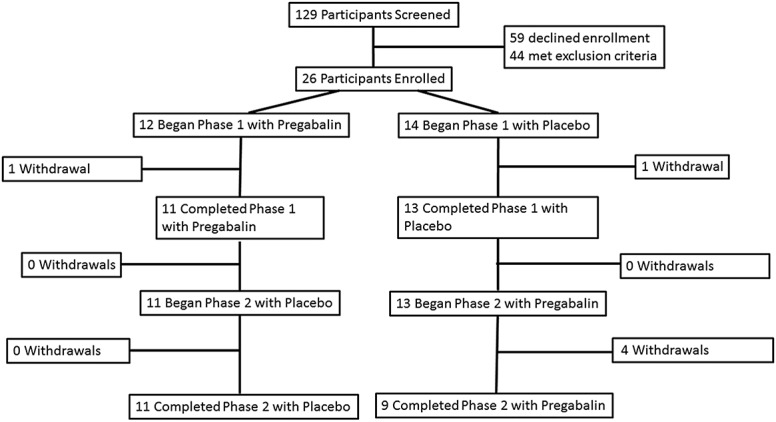
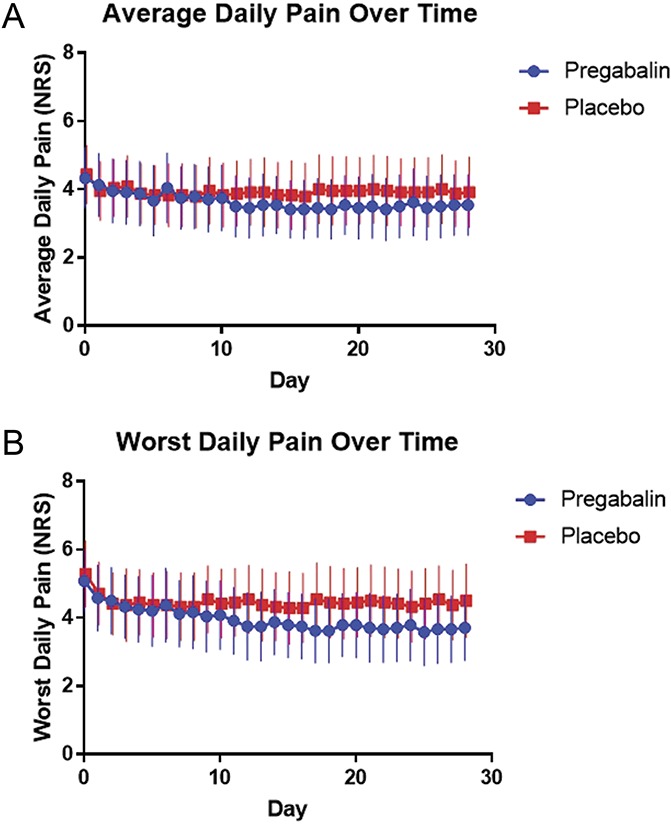
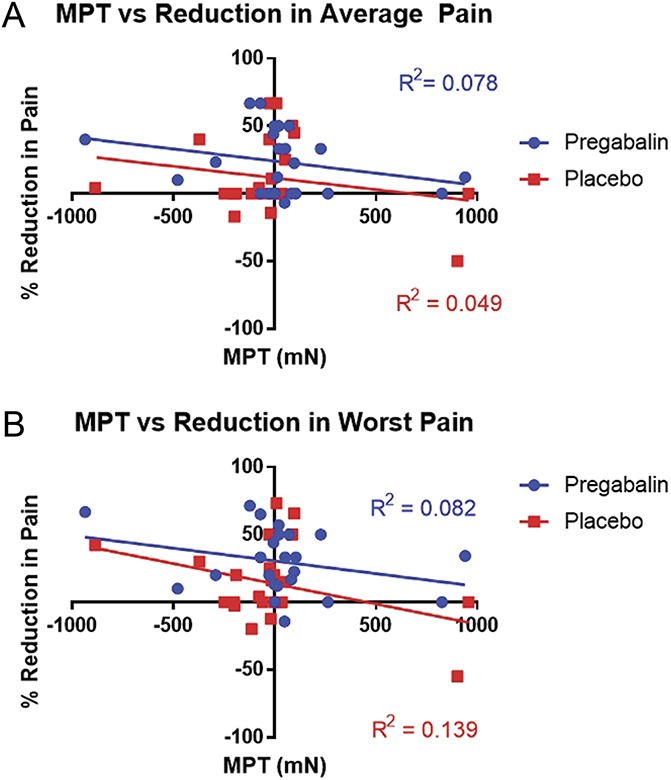
Painful chemotherapy-induced peripheral neuropathy (CIPN) is a debilitating and treatment-resistant sequela of many chemotherapeutic medications. Ligands of α2δ subunits of voltage-gated Ca channels, such as pregabalin, have shown efficacy in reducing mechanical sensitivity in animal models of neuropathic pain. In addition, some data suggest that pregabalin may be more efficacious in relieving neuropathic pain in subjects with increased sensitivity to pinprick. We hypothesized that greater mechanical sensitivity, as quantified by decreased mechanical pain threshold at the feet, would be predictive of a greater reduction in average daily pain in response to pregabalin vs placebo. In a prospective, randomized, double-blinded study, 26 patients with painful CIPN from oxaliplatin, docetaxel, or paclitaxel received 28-day treatment with pregabalin (titrated to maximum dose 600 mg per day) and placebo in crossover design. Twenty-three participants were eligible for efficacy analysis. Mechanical pain threshold was not significantly correlated with reduction in average pain (P = 0.97) or worst pain (P = 0.60) in response to pregabalin. There was no significant difference between pregabalin and placebo in reducing average daily pain (22.5% vs 10.7%, P = 0.23) or worst pain (29.2% vs 16.0%, P = 0.13) from baseline. Post hoc analysis of patients with CIPN caused by oxaliplatin (n = 18) demonstrated a larger reduction in worst pain with pregabalin than with placebo (35.4% vs 14.6%, P = 0.04). In summary, baseline mechanical pain threshold tested on dorsal feet did not meaningfully predict the analgesic response to pregabalin in painful CIPN.
Conflict of interest statement
Sponsorships or competing interests that may be relevant to content are disclosed at the end of this article.
Figures
References
-
- Aoki M, Kurauchi Y, Mori A, Nakahara T, Sakamoto K, Ishii K. Comparison of the effects of single doses of elcatonin and pregabalin on oxaliplatin-induced cold and mechanical allodynia in rats. Biol Pharm Bull 2014;37:322–6. - PubMed
-
- Attal N, de Andrade DC, Adam F, Ranoux D, Teixeira MJ, Galhardoni R, Raicher I, Üçeyler N, Sommer C, Bouhassira D. Safety and efficacy of repeated injections of botulinum toxin A in peripheral neuropathic pain (BOTNEP): a randomised, double-blind, placebo-controlled trial. Lancet Neurol 2016;15:555–65. - PubMed
-
- Barton DL, Wos EJ, Qin R, Mattar BI, Green NB, Lanier KS, Bearden JD, Kugler JW, Hoff KL, Reddy PS, Rowland KM, Riepl M, Christensen B, Loprinzi CL. A double-blind, placebo-controlled trial of a topical treatment for chemotherapy-induced peripheral neuropathy: NCCTG trial N06CA. Support Care Cancer 2011;19:833–41. - PMC - PubMed
Publication types
MeSH terms
Substances
Grants and funding
LinkOut - more resources
Full Text Sources
