


Neuropsychiatric and Behavioral Involvement in AAS Abusers. A Literature Review
- PMID: 31336641
- PMCID: PMC6681542
- DOI: 10.3390/medicina55070396
Neuropsychiatric and Behavioral Involvement in AAS Abusers. A Literature Review
Abstract
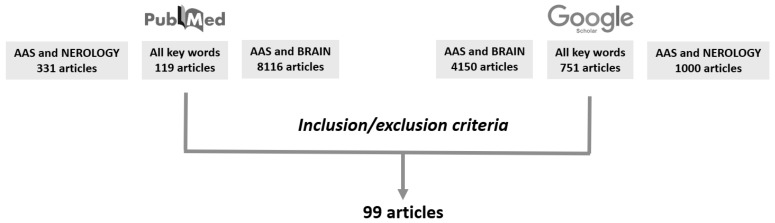
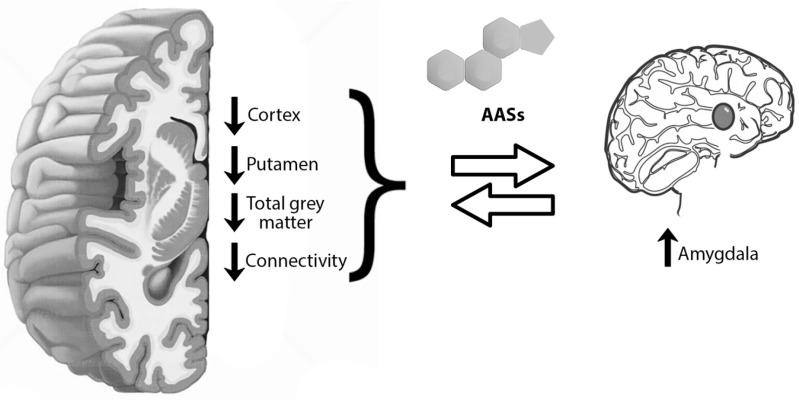
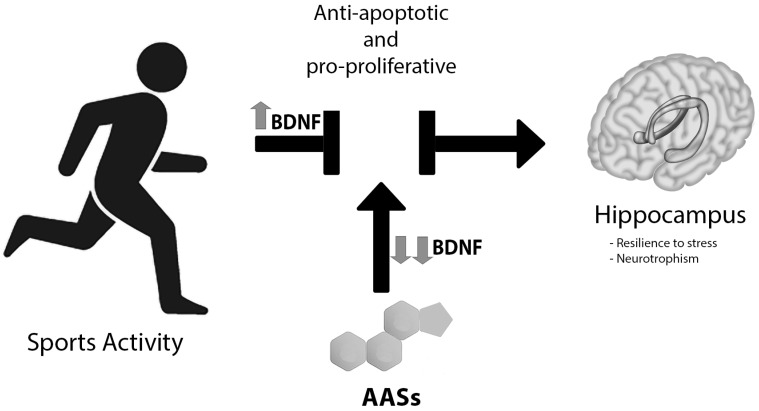
Background and Objectives: Anabolic androgenic steroids (AASs) are a complex group of molecules that include both steroidal androgens and synthetic compounds, derived from testosterone. AASs are commonly used to support pharmacological therapy in cases of primary or secondary hypogonadism, major burns, and neoplastic cachexia. Their prolonged and supra-physiological consumption can provoke several adverse effects on various organs and systems. Among these, the physiopathological mechanisms that induce neuropsychiatric disorders related to AAS abuse are poorly known. For this reason, the proposed review aims to retrace the pathway of action of testosterone to focus on the effects on the central nervous system and specifically highlight the effects of AASs on neuropsychiatric and behavioral functions, as well as on lifestyle. Materials and Methods: This review was conducted using PubMed and Google Scholar databases. On these database websites, we searched for articles from 1 January 1980 to March 2019 using the key terms: "AAS," "Anabolic Androgenic Steroids," "brain," and "neurology." Results: The use of AASs through self-administration yields circulating androgens levels, inducing neuron apoptosis, which is linked to thinner cortex and, in general, less cortical volume. The same alterations affect the putamen. These differences were more evident when correlated with longer use. From a functional point of view, prolonged AAS consumption seemed to be related to lower connectivity between amygdala and frontal, striatal, limbic, hippocampal and visual cortical areas. On the other hand, AAS use seems to negatively condition the positive effects of the sport exercise, reducing its important anti-apoptotic and pro-proliferative functions on the hippocampus, implicated in anxiolytic control. Conclusion: This review clarifies the major aspects of the side effects related to AAS use/abuse highlighting the complex mechanisms on neuropsychiatric and cognitive pathological alterations and also the emotional and behavioral dysfunctions.
Keywords: anabolic androgenic steroids; behavior; lifestyle; neuropsychiatric manifestations; side effects.
Conflict of interest statement
The authors declare no conflict of interest.
Figures
References
-
- Albano G.D., Sessa F., Messina A., Monda V., Bertozzi G., Maglietta F., Giugliano P., Vacchiano G., Gabriella M., Salerno M. AAS and Organs Damage: A Focus on Nandrolone Effects. Acta Med. Mediterr. 2017;2017:939–946.
Publication types
MeSH terms
Substances
LinkOut - more resources
Full Text Sources
Medical
