


Antioxidant Defence Systems and Oxidative Stress in Poultry Biology: An Update
- PMID: 31336672
- PMCID: PMC6680731
- DOI: 10.3390/antiox8070235
Antioxidant Defence Systems and Oxidative Stress in Poultry Biology: An Update
Abstract
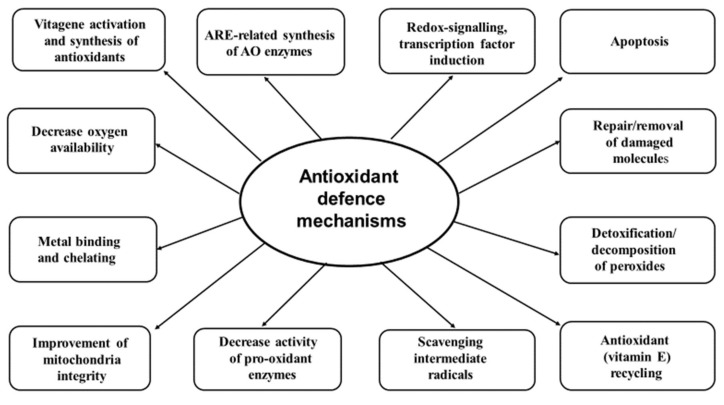
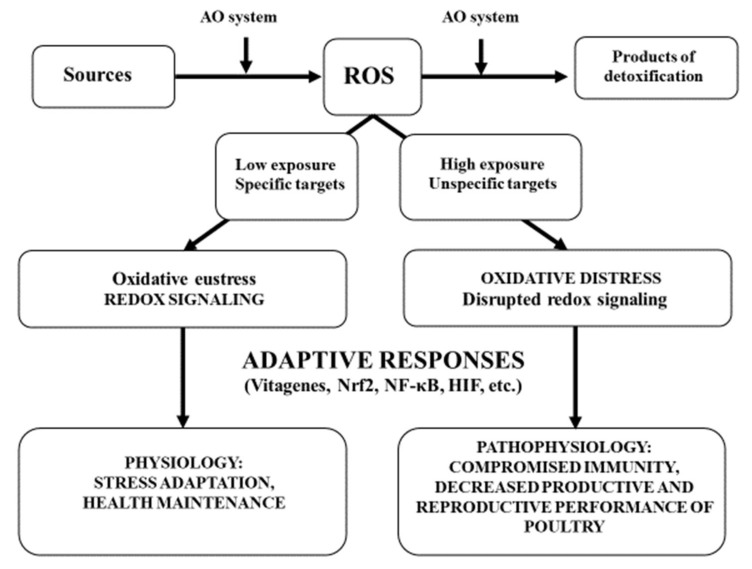
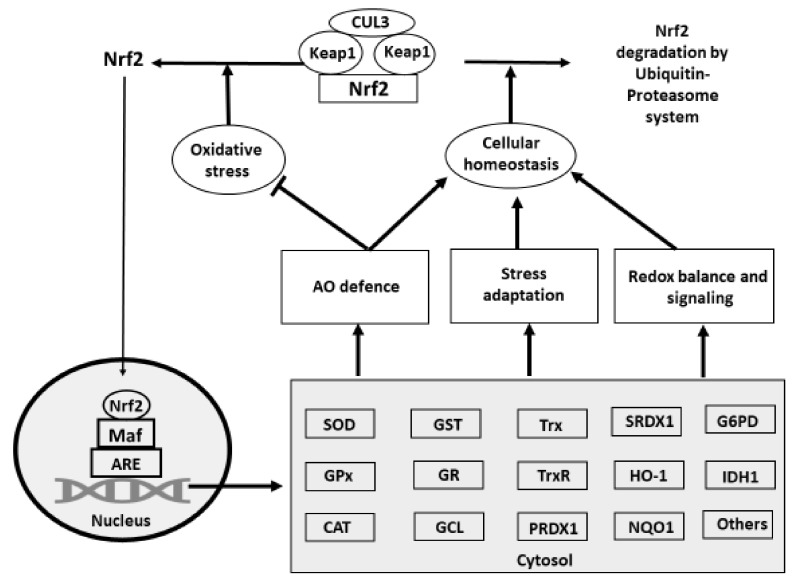
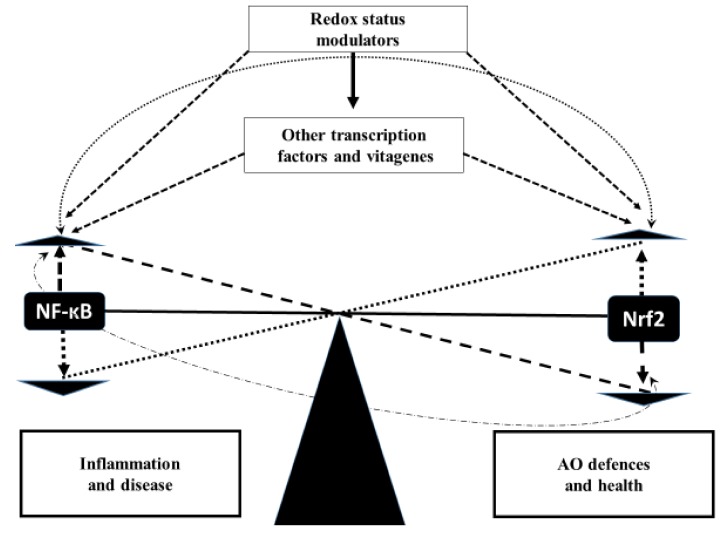
Poultry in commercial settings are exposed to a range of stressors. A growing body of information clearly indicates that excess ROS/RNS production and oxidative stress are major detrimental consequences of the most common commercial stressors in poultry production. During evolution, antioxidant defence systems were developed in poultry to survive in an oxygenated atmosphere. They include a complex network of internally synthesised (e.g., antioxidant enzymes, (glutathione) GSH, (coenzyme Q) CoQ) and externally supplied (vitamin E, carotenoids, etc.) antioxidants. In fact, all antioxidants in the body work cooperatively as a team to maintain optimal redox balance in the cell/body. This balance is a key element in providing the necessary conditions for cell signalling, a vital process for regulation of the expression of various genes, stress adaptation and homeostasis maintenance in the body. Since ROS/RNS are considered to be important signalling molecules, their concentration is strictly regulated by the antioxidant defence network in conjunction with various transcription factors and vitagenes. In fact, activation of vitagenes via such transcription factors as Nrf2 leads to an additional synthesis of an array of protective molecules which can deal with increased ROS/RNS production. Therefore, it is a challenging task to develop a system of optimal antioxidant supplementation to help growing/productive birds maintain effective antioxidant defences and redox balance in the body. On the one hand, antioxidants, such as vitamin E, or minerals (e.g., Se, Mn, Cu and Zn) are a compulsory part of the commercial pre-mixes for poultry, and, in most cases, are adequate to meet the physiological requirements in these elements. On the other hand, due to the aforementioned commercially relevant stressors, there is a need for additional support for the antioxidant system in poultry. This new direction in improving antioxidant defences for poultry in stress conditions is related to an opportunity to activate a range of vitagenes (via Nrf2-related mechanisms: superoxide dismutase, SOD; heme oxygenase-1, HO-1; GSH and thioredoxin, or other mechanisms: Heat shock protein (HSP)/heat shock factor (HSP), sirtuins, etc.) to maximise internal AO protection and redox balance maintenance. Therefore, the development of vitagene-regulating nutritional supplements is on the agenda of many commercial companies worldwide.
Keywords: Nrf2; antioxidants; oxidative stress; poultry; vitagenes.
Conflict of interest statement
The authors declare that they have no competing interests.
Figures
References
-
- Surai P.F., Fisinin V.I. Vitagenes in poultry production. Part 1. Technological and environmental stresses. Worlds Poult. Sci. J. 2016;72:721–733. doi: 10.1017/S0043933916000714. - DOI
-
- Surai P.F., Fisinin V.I. Vitagenes in poultry production. Part 2. Nutritional and internal stresses. Worlds Poult. Sci. J. 2016;72:761–772. doi: 10.1017/S0043933916000726. - DOI
-
- Surai P.F. Vitamin E in avian reproduction. Poult. Avian Biol. Rev. 1999;10:1–60.
Publication types
Grants and funding
LinkOut - more resources
Full Text Sources
