


Effectiveness of Teacher-Led Nutritional Lessons in Altering Dietary Habits and Nutritional Status in Preschool Children: Adoption of a NASA Mission X-Based Program
- PMID: 31337047
- PMCID: PMC6682966
- DOI: 10.3390/nu11071590
Effectiveness of Teacher-Led Nutritional Lessons in Altering Dietary Habits and Nutritional Status in Preschool Children: Adoption of a NASA Mission X-Based Program
Abstract
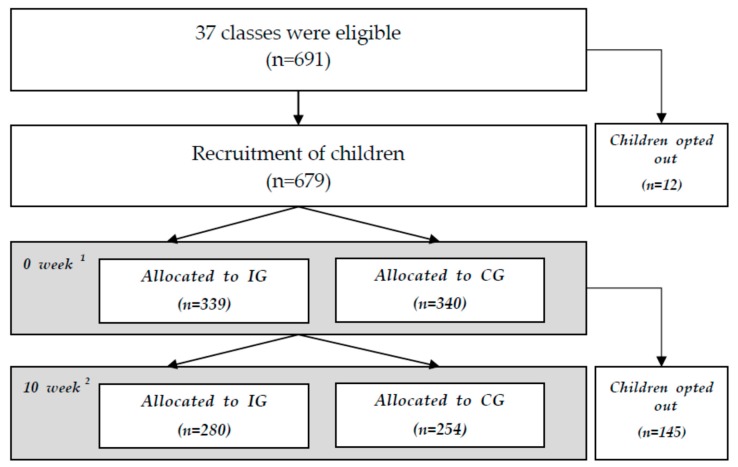
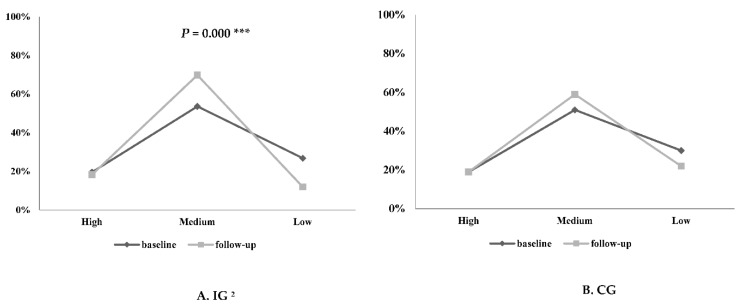
The preschool years are a sensitive period for the development of food preferences that will affect physical growth and life-long health. The promotion of healthy eating and nutritional status was achieved by adapting the US National Aeronautics and Space Administration (NASA) Mission X (MX) Program among young children in South Korea. The intervention program was delivered by nutritional experts and class teachers over 10 weeks. Children from 37 school classes (n = 534) from 7 daycares and kindergartens were randomized into a control group (CG, n = 280) and an intervention group (IG, n = 254). Parents were surveyed for their children's characteristics and nutrition quotient (NQ) at baseline and at the 10-week follow-up. At baseline, 18.8% (boys: 18.9%; girls: 18.8%) of the subjects were overweight or obese (body mass index ≥ 85th percentile). After the intervention, the mean differences in various anthropometric measures did not differ significantly between the groups in a linear regression model adjusted for age, sex, and type of school. The NQ grades were significantly higher in the IG than the CG after the intervention (p = 0.000). In summary, the 10-week South Korean MX program improved the eating behaviors and nutrition status of young children. A further multisector prevention program is needed to prevent childhood obesity in young children.
Keywords: childhood obesity; dietary behavior; early childhood; nutrition education; prevention.
Conflict of interest statement
The authors declare no conflict of interest. The funders had no role in the design of the study; in the collection, analyses, or interpretation of data; in the writing of the manuscript, or in the decision.
Figures
References
-
- Birch L.L., Anzman S.L. Learning to Eat in an Obesogenic Environment: A Developmental Systems Perspective on Childhood Obesity. Child Dev. Perspect. 2010;4:138–143. doi: 10.1111/j.1750-8606.2010.00132.x. - DOI
-
- Ng M., Fleming T., Robinson M., Thomson B., Graetz N., Margono C., Mullany E.C., Biryukov S., Abbafati C., Abera S.F., et al. Global, regional, and national prevalence of overweight and obesity in children and adults during 1980–2013: A systematic analysis for the Global Burden of Disease Study. Lancet. 2014;384:766–781. doi: 10.1016/S0140-6736(14)60460-8. - DOI - PMC - PubMed
-
- Di Angelantonio E., Bhupathiraju S.N., Wormser D., Gao P., Kaptoge S., De Gonzalez A.B., Cairns B.J., Huxley R., Jackson C.L., Joshy G., et al. Body-mass index and all-cause mortality: individual-participant-data meta-analysis of 239 prospective studies in four continents. Lancet. 2016;388:776–786. doi: 10.1016/S0140-6736(16)30175-1. - DOI - PMC - PubMed
MeSH terms
LinkOut - more resources
Full Text Sources
