


Dietary Intake and Its Determinants Among Adults Living in the Metropolitan Area of Puerto Rico
- PMID: 31337152
- PMCID: PMC6683066
- DOI: 10.3390/nu11071598
Dietary Intake and Its Determinants Among Adults Living in the Metropolitan Area of Puerto Rico
Abstract
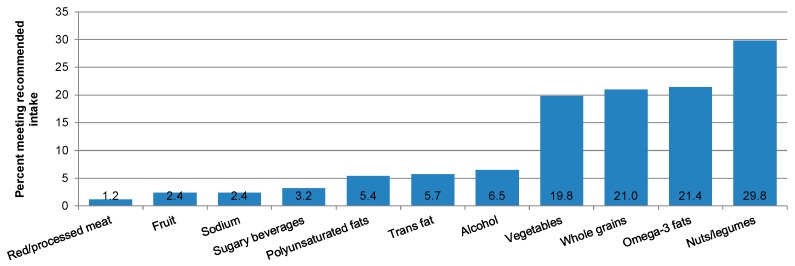
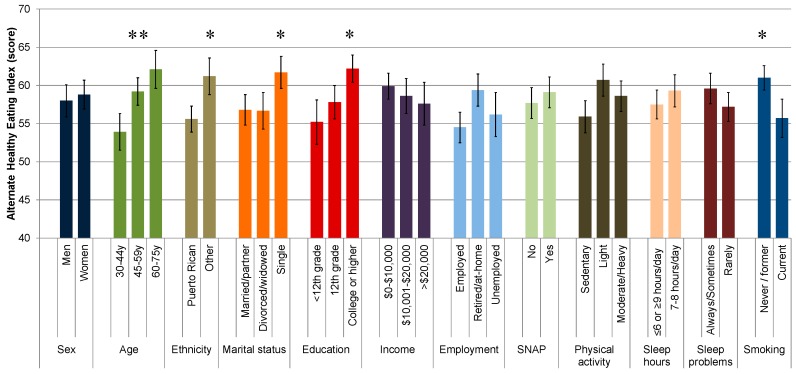
There is scarce information regarding the dietary intake of adults living in Puerto Rico (PR). We aimed to assess intake of nutrients and foods, adherence to recommended intake of nutrients and diet quality, and sociodemographic and lifestyle factors correlated with diet quality among adults in the San Juan metropolitan area of PR. Data were obtained from participants of the cross-sectional convenience-sample Puerto Rico Assessment of Diet, Lifestyle, and Diseases (n = 248; ages 30-75 years). Diet quality was defined using the Alternate Healthy Eating Index 2010 (AHEI; range 0-110 indicating lower-higher quality). Linear regression models were used to relate AHEI to sociodemographic and lifestyle factors. Most participants met the Estimated Average Requirement (EAR) for iron, folate, and vitamins B12 and B6; 61% met the EAR for magnesium and 56% for calcium. Only 4% met the EAR for vitamin D, and 7% met the adequate intake for potassium. The main contributors to total energy intake were sugary beverages (11.8%), sweets/desserts (10.2%), dairy (8.5%), mixed dishes (7.6%), starches (6.3%), fast foods (5.5%), and rice (4.9%). The mean (SD) AHEI score was 59.8 (11.0). The lowest AHEI components for which recommended servings were met were red/processed meats, fruit, sodium, sugary beverages, and polyunsaturated fats, and the highest were nuts/legumes, omega-3 fats, and whole grains. Significantly higher AHEI scores were noted for older adults, other ethnicities (vs. Puerto Rican), being single, having some college or higher education, and never/formerly smoking. Adults living in PR report healthy and unhealthy dietary intakes, providing an opportunity to improve diet at the population level.
Keywords: Hispanics; Latinos; Puerto Rico; beverages and food; food intake; minority group; nutrients; nutritional requirements.
Conflict of interest statement
The authors declare no conflict of interest. The funders had no role in the design of the study; in the collection, analyses, or interpretation of data; in the writing of the manuscript, or in the decision to publish the results.
Figures
References
-
- Willett W.C., Koplan J.P., Nugent R., Dusenbury C., Puska P., Gaziano T.A. Prevention of Chronic Disease by Means of Diet and Lifestyle Changes. In: Jamison D.T., Breman J.G., Measham A.R., Alleyne G., Claeson M., Evans D.B., Jha P., Mills A., Musgrove P., editors. Disease Control Priorities in Developing Countries. 2nd ed. World Bank and Oxford University Press; Washington, DC, USA: 2006.
MeSH terms
Substances
Grants and funding
LinkOut - more resources
Full Text Sources
Molecular Biology Databases
Research Materials
Miscellaneous
