


Clinical and Molecular Predictors of Response to Immune Checkpoint Inhibitors in Patients with Advanced Esophagogastric Cancer
- PMID: 31337644
- PMCID: PMC6905384
- DOI: 10.1158/1078-0432.CCR-18-3603
Clinical and Molecular Predictors of Response to Immune Checkpoint Inhibitors in Patients with Advanced Esophagogastric Cancer
Abstract
Purpose: Immune checkpoint inhibitors (ICI) are effective in only a minority of patients with esophagogastric cancer (EGC). Here, we aimed to identify predictors of durable clinical benefit to ICI in EGC.
Experimental design: Patients with advanced EGC treated with ICIs at Memorial Sloan Kettering Cancer Center (New York, NY) were identified. Clinicopathologic variables were assessed. In patients profiled by MSK-IMPACT-targeted sequencing, outcomes were correlated with tumor genomic features.
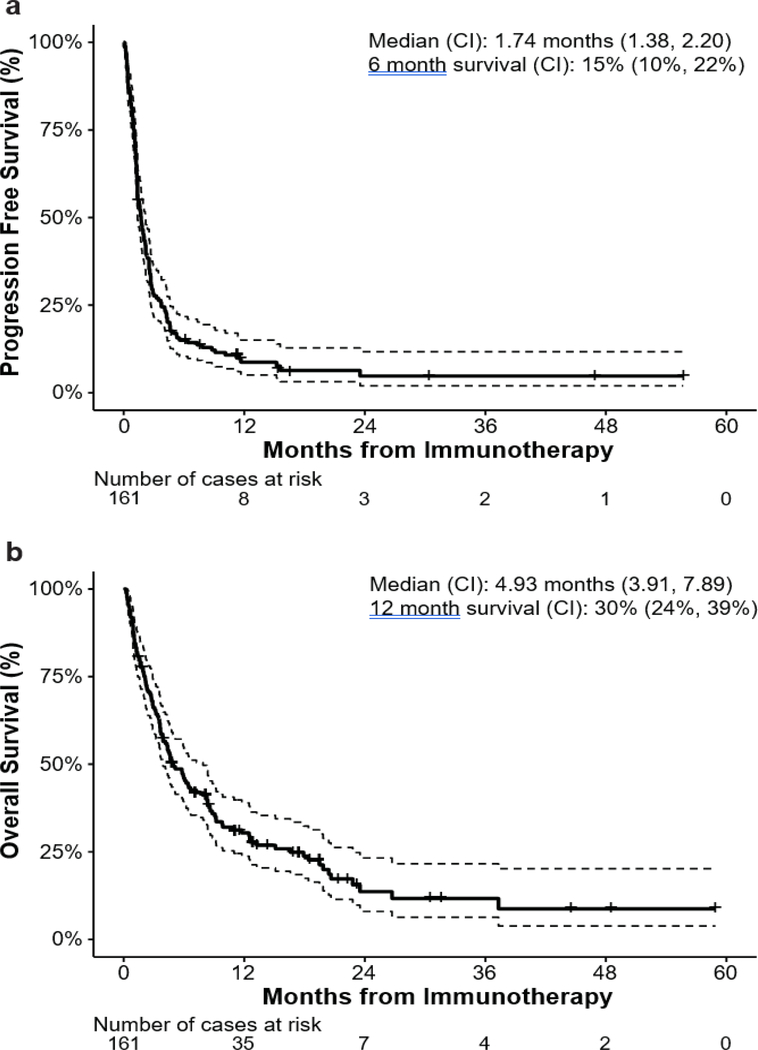
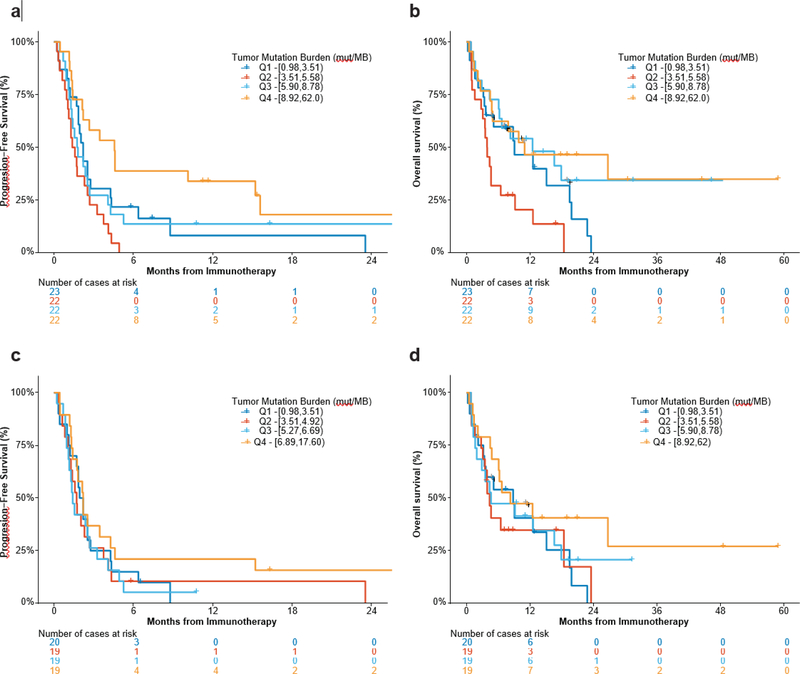
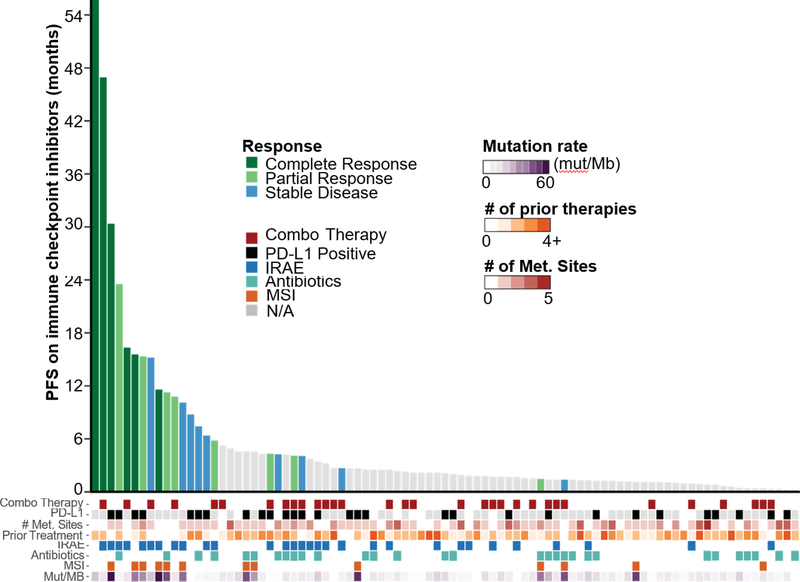
Results: One-hundred sixty-one patients were treated with ICIs (110 with anti-PD-1/PD-L1 antibodies and 51 with anti-CTLA-4 and PD-1/PD-L1 antibodies). The median progression-free survival (PFS) and overall survival (OS) were 1.7 and 4.9 months, respectively. Greater number of disease sites (≥3), liver metastases, treatment with ≥3 prior therapies and ECOG performance status ≥2 were associated with poorer PFS and OS. Patients treated with combination ICI and those with PD-L1-positive tumors had improved outcomes. There was no difference in outcomes between patients treated with antibiotics during or in the 2 months preceding ICI treatment versus those who were not. Occurrence of irAEs was associated with improved OS. In genomically profiled tumors (n = 89), survival was associated with increasing tumor mutation burden (TMB). However, in multivariable analyses and when microsatellite unstable (MSI) patients were excluded, a significant association was no longer observed.
Conclusions: In patients with advanced EGC, heavily pretreated patients, those with high-volume disease and/or poor PS were less likely to benefit from ICI. irAEs were associated with improved OS. TMB correlated with improved survival, but this association was not observed when MSI-high patients were excluded.
©2019 American Association for Cancer Research.
Figures
References
-
- Bray F, Ferlay J, Soerjomataram I, Siegel RL, Torre LA, Jemal A: Global cancer statistics 2018: GLOBOCAN estimates of incidence and mortality worldwide for 36 cancers in 185 countries. CA Cancer J Clin, 2018 - PubMed
-
- Kang YK, Boku N, Satoh T, Ryu MH, Chao Y, Kato K, et al. : Nivolumab in patients with advanced gastric or gastro-oesophageal junction cancer refractory to, or intolerant of, at least two previous chemotherapy regimens (ONO-4538–12, ATTRACTION-2): a randomised, double-blind, placebo-controlled, phase 3 trial. Lancet, 2017 - PubMed
Publication types
MeSH terms
Substances
Grants and funding
LinkOut - more resources
Full Text Sources
Medical
Research Materials
