Chronic Wasting Disease in Cervids: Implications for Prion Transmission to Humans and Other Animal Species
- PMID: 31337719
- PMCID: PMC6650550
- DOI: 10.1128/mBio.01091-19
Chronic Wasting Disease in Cervids: Implications for Prion Transmission to Humans and Other Animal Species
Abstract
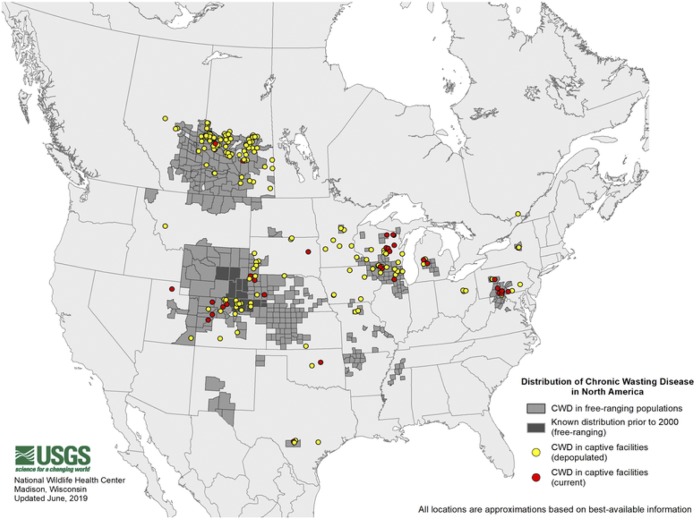
Chronic wasting disease (CWD) is a prion-related transmissible spongiform encephalopathy of cervids, including deer, elk, reindeer, sika deer, and moose. CWD has been confirmed in at least 26 U.S. states, three Canadian provinces, South Korea, Finland, Norway, and Sweden, with a notable increase in the past 5 years. The continued geographic spread of this disease increases the frequency of exposure to CWD prions among cervids, humans, and other animal species. Since CWD is now an established wildlife disease in North America, proactive steps, where possible, should be taken to limit transmission of CWD among animals and reduce the potential for human exposure.
Keywords: chronic wasting disease; infectious disease; prion disease; prions; public health.
Copyright © 2019 Osterholm et al.
Figures
Comment in
-
Is There a Breach in the Barrier Protecting Humans from Cervid Chronic Wasting Disease?mBio. 2020 Sep 1;11(5):e01971-20. doi: 10.1128/mBio.01971-20. mBio. 2020. PMID: 32873762 Free PMC article. No abstract available.
References
-
- NIH, NINDS. 2018. Creutzfeldt-Jakob disease fact sheet. https://www.ninds.nih.gov/Disorders/Patient-Caregiver-Education/Fact-She....
MeSH terms
Substances
LinkOut - more resources
Full Text Sources
Other Literature Sources
Miscellaneous