


Potential application of herbs and spices and their effects in functional dairy products
- PMID: 31338458
- PMCID: PMC6607025
- DOI: 10.1016/j.heliyon.2019.e01989
Potential application of herbs and spices and their effects in functional dairy products
Abstract
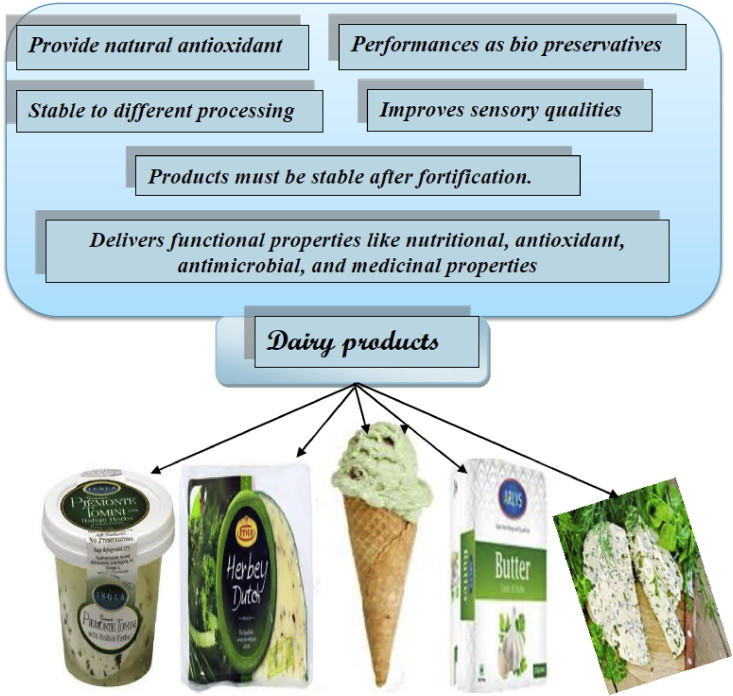
Herbs and spices come from different parts of the plant are used to impart an aroma and taste to food. Several herbs have therapeutic properties such as antioxidative, anti-inflammatory, antidiabetic, antihypertensive and antimicrobial activities. Therefore, fortification of dairy foods with herbs and spices could help to provide functional dairy products with nutritional and medicinal values. Also, herbs and spices are used to improve the appearance and attractiveness of fortified foods for consumers and to increase the sale of those herbs. Therefore, only the highest quality herbs or spices can be added to dairy products to combat contaminating microorganisms. In this review the latest progresses in the dairy sector concerning the addition of numerous herbs and spices in different forms (i.e. powder, fresh, extract, essential oils) to dairy food has been conversed. Also, the effects of those herbs and spices on the quality of dairy products such as yoghurts, cheeses, butter, gee and ice creams have been presented.
Keywords: Antimicrobial; Antioxidants; Environmental science; Food science; Fortification; Functional dairy products; Herbs; Spices; Veterinary medicine.
Figures
References
-
- Amirdivani S., Baba A.S. Changes in yoghurt fermentation characteristics, and antioxidant potential and in vitro inhibition of angiotensin-1 converting enzyme upon the inclusion of peppermint, dill and basil. LWT - Food Sci. Technol. (Lebensmittel-Wissenschaft -Technol.) 2011;44:1458–1464. and Technology, 50(2), 432–438.
-
- Anderson J.J., Anthony M.S., Cline J.M., Washburn S.A., Garner S.C. Health potential of soy isoflavones for menopausal women. Publ. Health Nutr. 1999;2:489–504. antimicrobial agents from starch-based films into a food simulant. LWT - Food Science. - PubMed
-
- Bakheit A.M., Foda M.I. Sensory evaluation and antioxidant activity of new Mudaffara cheese with spices under different storage temperatures. J. Appl. Sci. Res. 2012;8(7):3143–3150.
-
- Bakrm S.A., Salihin B.A. Effects of inclusion of Allium sativum and Cinnamomumverum in milk on the growth and activity of lactic acid bacteria during yoghurt fermentation. Amer-Euras. J. Agric. Environ. Sci. 2013;13:1448–1457.
-
- Behrad S., Yusof M.Y., Goh K.L. Manipulation of probiotics fermentation of yoghurt by cinnamon and licorice: effects on yoghurt formation and inhibition of Helicobacter pylori growth in vitro. Int. Scholarly & Sci. Res.& Innovation. 2009;3:563‒567.
Publication types
LinkOut - more resources
Full Text Sources
Other Literature Sources
