


Upregulation of the Autophagy Adaptor p62/SQSTM1 Prolongs Health and Lifespan in Middle-Aged Drosophila
- PMID: 31340141
- PMCID: PMC6688777
- DOI: 10.1016/j.celrep.2019.06.070
Upregulation of the Autophagy Adaptor p62/SQSTM1 Prolongs Health and Lifespan in Middle-Aged Drosophila
Abstract
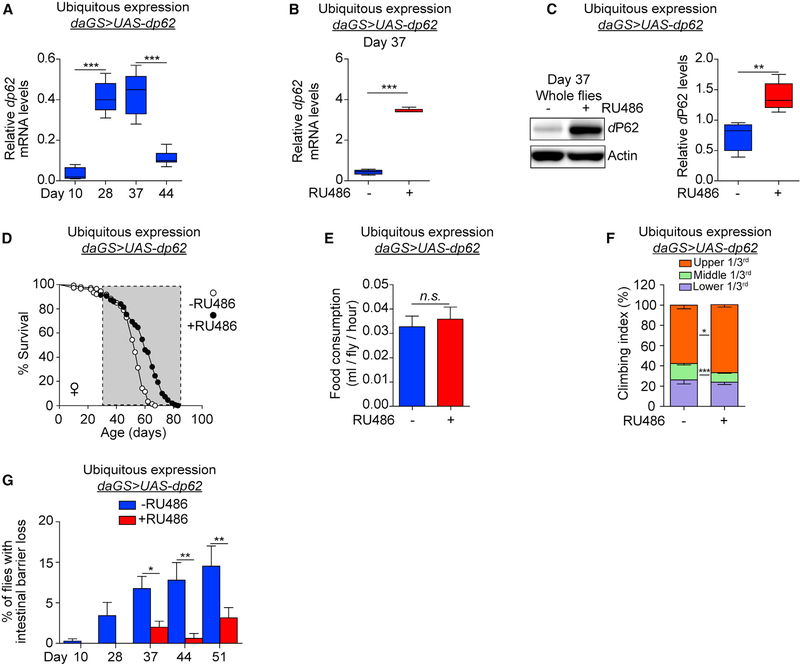
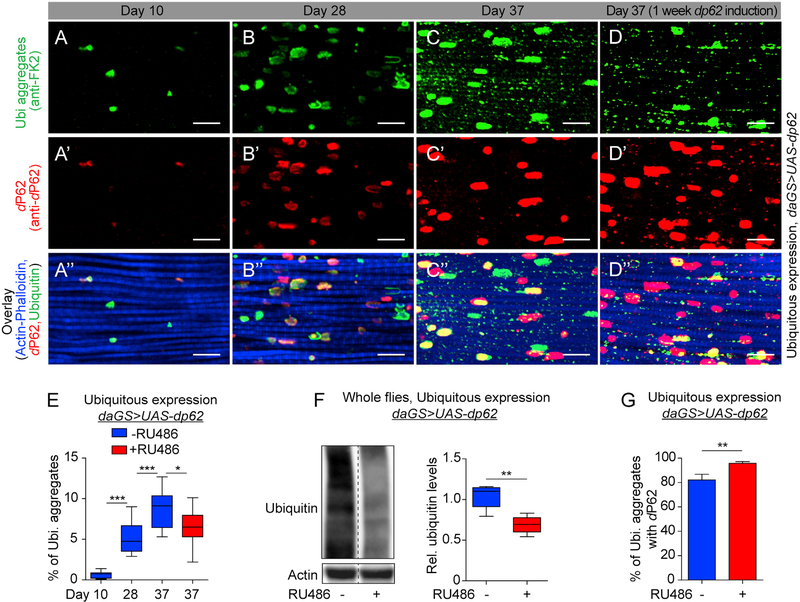
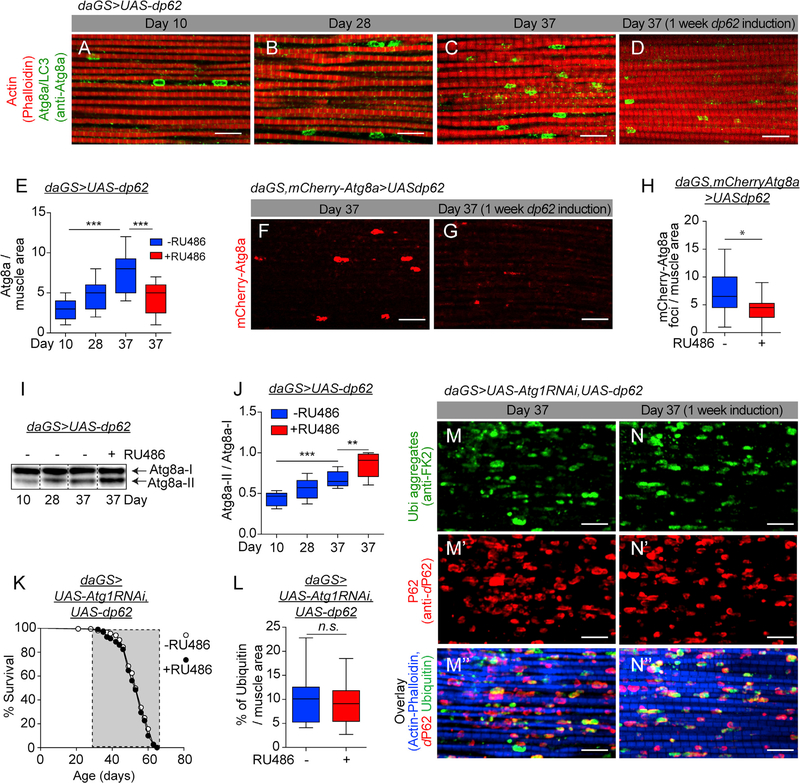
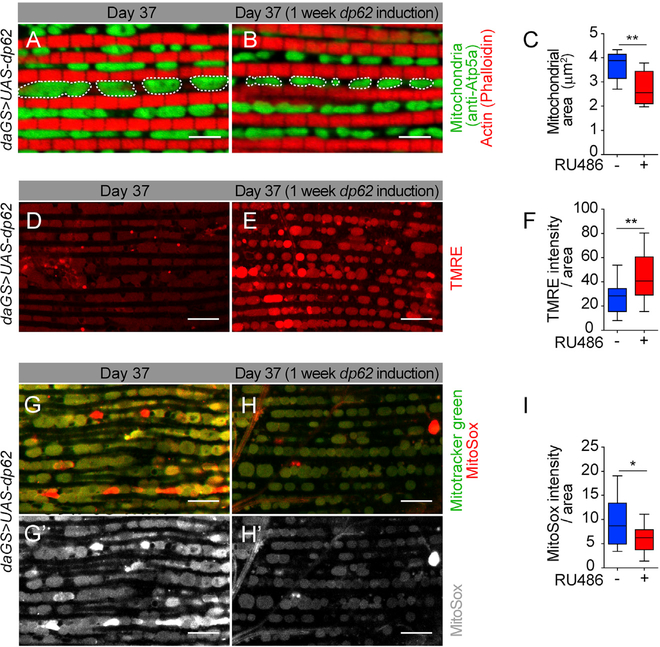
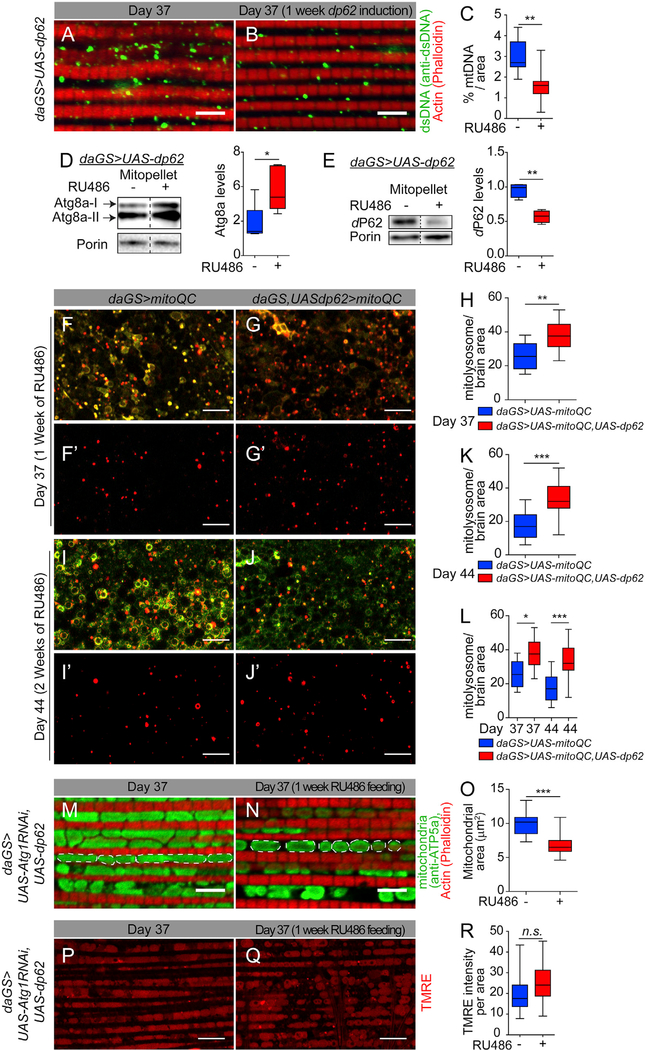
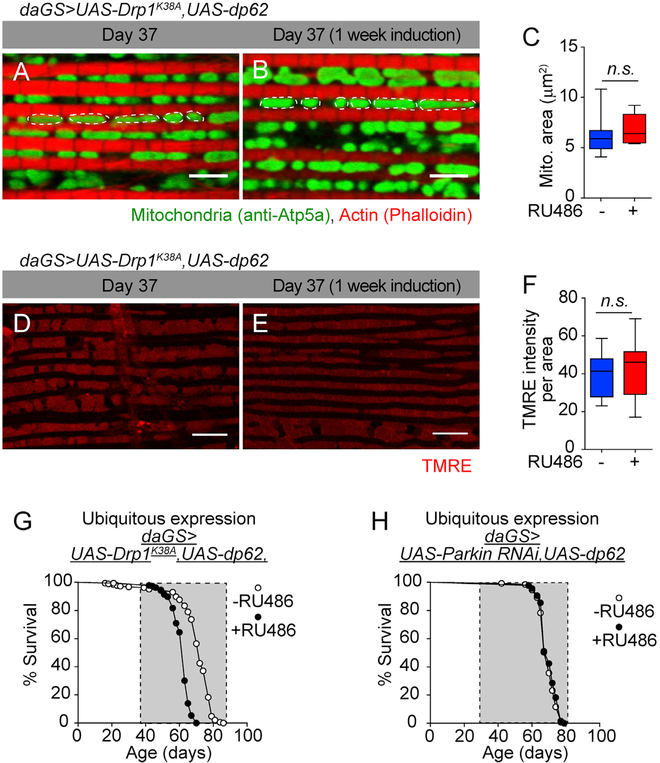
Autophagy, a lysosomal degradation pathway, plays crucial roles in health and disease. p62/SQSTM1 (hereafter p62) is an autophagy adaptor protein that can shuttle ubiquitinated cargo for autophagic degradation. Here, we show that upregulating the Drosophila p62 homolog ref(2)P/dp62, starting in midlife, delays the onset of pathology and prolongs healthy lifespan. Midlife induction of dp62 improves proteostasis, in aged flies, in an autophagy-dependent manner. Previous studies have reported that p62 plays a role in mediating the clearance of dysfunctional mitochondria via mitophagy. However, the causal relationships between p62 expression, mitochondrial homeostasis, and aging remain largely unexplored. We show that upregulating dp62, in midlife, promotes mitochondrial fission, facilitates mitophagy, and improves mitochondrial function in aged flies. Finally, we show that mitochondrial fission is required for the anti-aging effects of midlife dp62 induction. Our findings indicate that p62 represents a potential therapeutic target to counteract aging and prolong health in aged mammals.
Keywords: aging; autophagy; longevity; midlife; mitophagy; p62.
Copyright © 2019 The Author(s). Published by Elsevier Inc. All rights reserved.
Conflict of interest statement
DECLARATION OF INTERESTS
The authors declare no competing interests.
Figures
References
Publication types
MeSH terms
Substances
Grants and funding
LinkOut - more resources
Full Text Sources
Molecular Biology Databases
