Review
. 2019 Jul 23;17(7):427.
doi: 10.3390/md17070427.

Quorum Sensing Inhibition by Marine Bacteria

Affiliations
Review

Quorum Sensing Inhibition by Marine Bacteria

Anabela Borges et al. Mar Drugs. .

Abstract

Antibiotic resistance has been increasingly reported for a wide variety of bacteria of clinical significance. This widespread problem constitutes one of the greatest challenges of the twenty-first century. Faced with this issue, clinicians and researchers have been persuaded to design novel strategies in order to try to control pathogenic bacteria. Therefore, the discovery and elucidation of the mechanisms underlying bacterial pathogenesis and intercellular communication have opened new perspectives for the development of alternative approaches. Antipathogenic and/or antivirulence therapies based on the interruption of quorum sensing pathways are one of several such promising strategies aimed at disarming rather than at eradicating bacterial pathogens during the course of colonization and infection. This review describes mechanisms of bacterial communication involved in biofilm formation. An overview of the potential of marine bacteria and their bioactive components as QS inhibitors is further provided.

Keywords: antimicrobial resistance; antipathogenic and antivirulence; marine bacteria; quorum quenching; quorum sensing; selective pressure.


Conflict of interest statement

The authors declare no conflict of interest.

Figures
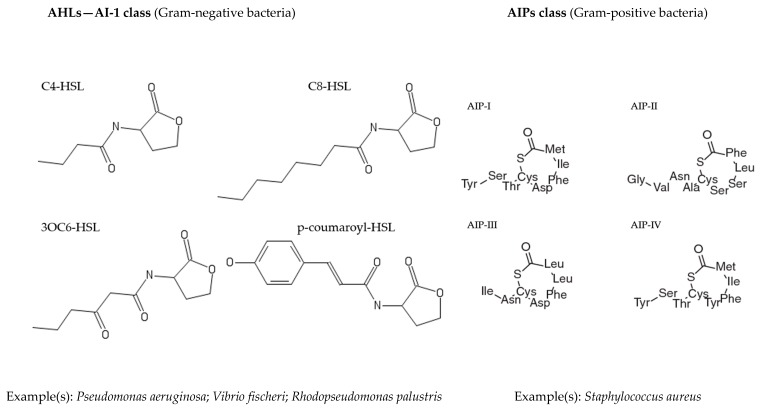
Figure 1
Figure 1
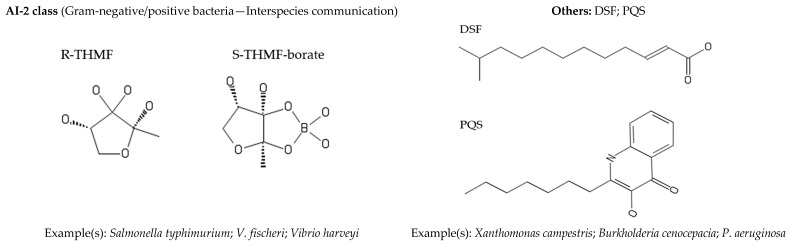
Chemical structures of the main representative types of QS signal molecules used in the microbial regulation of QS. Note: C4-HSL—N-Butyryl-l-homoserine lactone; C8-HSL—N-Octanoyl-l-homoserine lactone; 3OC6-HSL—N-(3-Oxohexanoyl)homoserine lactone; p-coumaroyl-HSL—N-(4-coumaroyl)-l-homoserine lactone; Non-boron containing AI-2 (R-THMF—(2R,4S)-2-methyl-2,3,3,4-tetrahydroxytetrahydrofuran); Boron containing AI-2 (S-THMF-borate—(2S,4S)-2-methyl-2,3,3,4-tetrahydroxytetrahydrofuran).
Figure 1
Figure 1
Chemical structures of the main representative types of QS signal molecules used in the microbial regulation of QS. Note: C4-HSL—N-Butyryl-l-homoserine lactone; C8-HSL—N-Octanoyl-l-homoserine lactone; 3OC6-HSL—N-(3-Oxohexanoyl)homoserine lactone; p-coumaroyl-HSL—N-(4-coumaroyl)-l-homoserine lactone; Non-boron containing AI-2 (R-THMF—(2R,4S)-2-methyl-2,3,3,4-tetrahydroxytetrahydrofuran); Boron containing AI-2 (S-THMF-borate—(2S,4S)-2-methyl-2,3,3,4-tetrahydroxytetrahydrofuran).
Figure 2
Figure 2
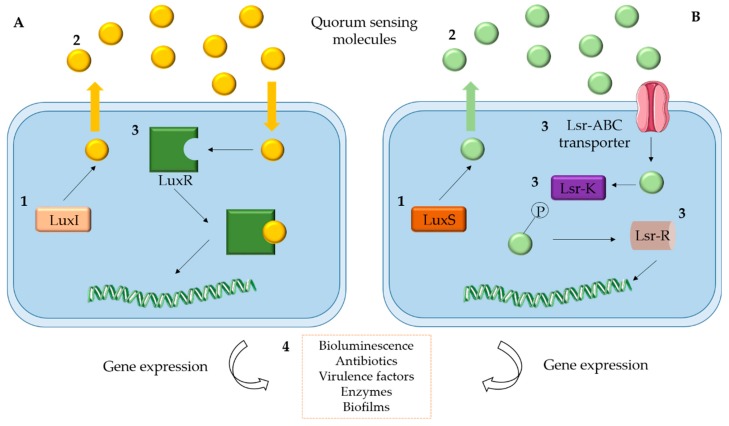
General scheme of the main QS mechanisms described for marine bacteria. (A) LuxI/R-type system; (B) LuxS/AI-2 system. 1—Signal synthase protein (LuxI, LuxS); 2—Autoinducers (AI-1, AI-2); 3—Response regulator protein/receptor (LuxR; Lsr-ABCKR); 4—QS regulated behaviors. Adapted from Raffa et al. [11].
Figure 3
Figure 3
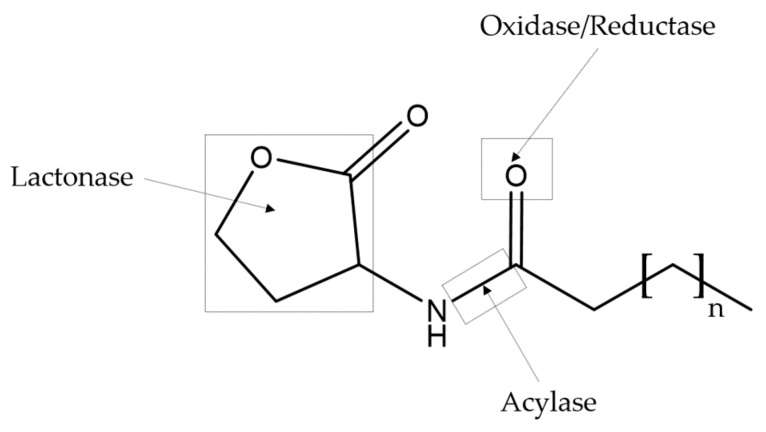
Schematic representation of the AHL-degrading enzyme targets. Broken lines mark position of possible cleavages of N-Butyryl-l-homoserine lactone (C4-HSL) molecule by lactonase, acylase and oxidase/reductase.
Figure 4
Figure 4
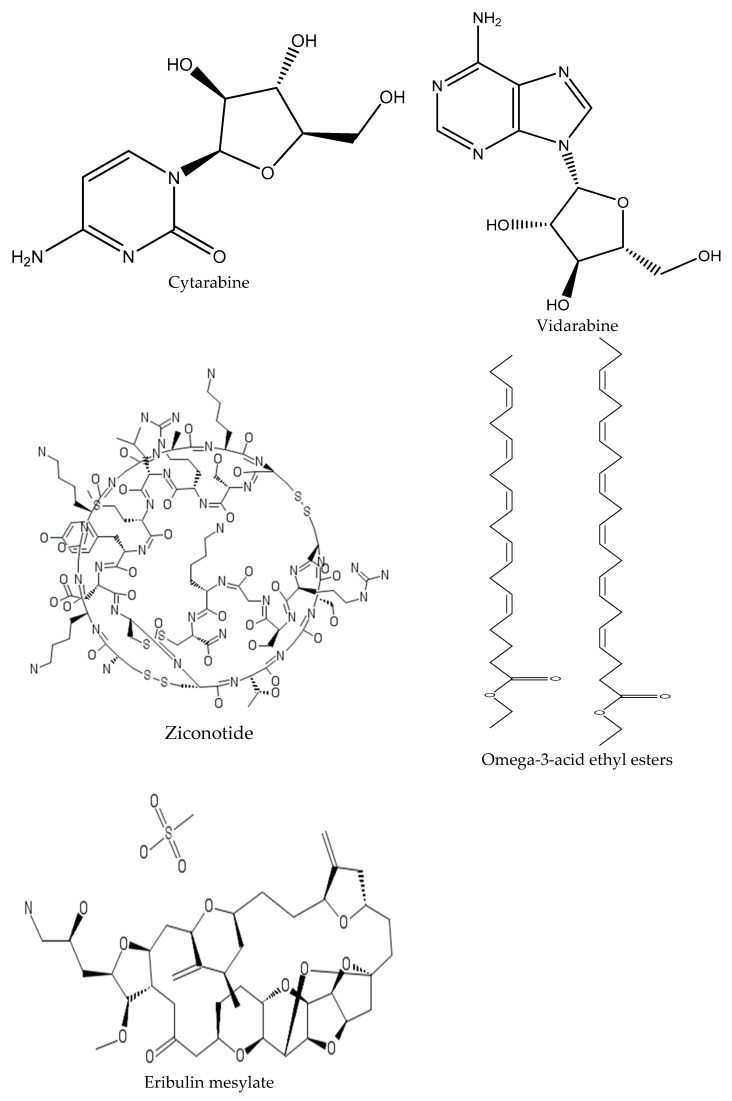
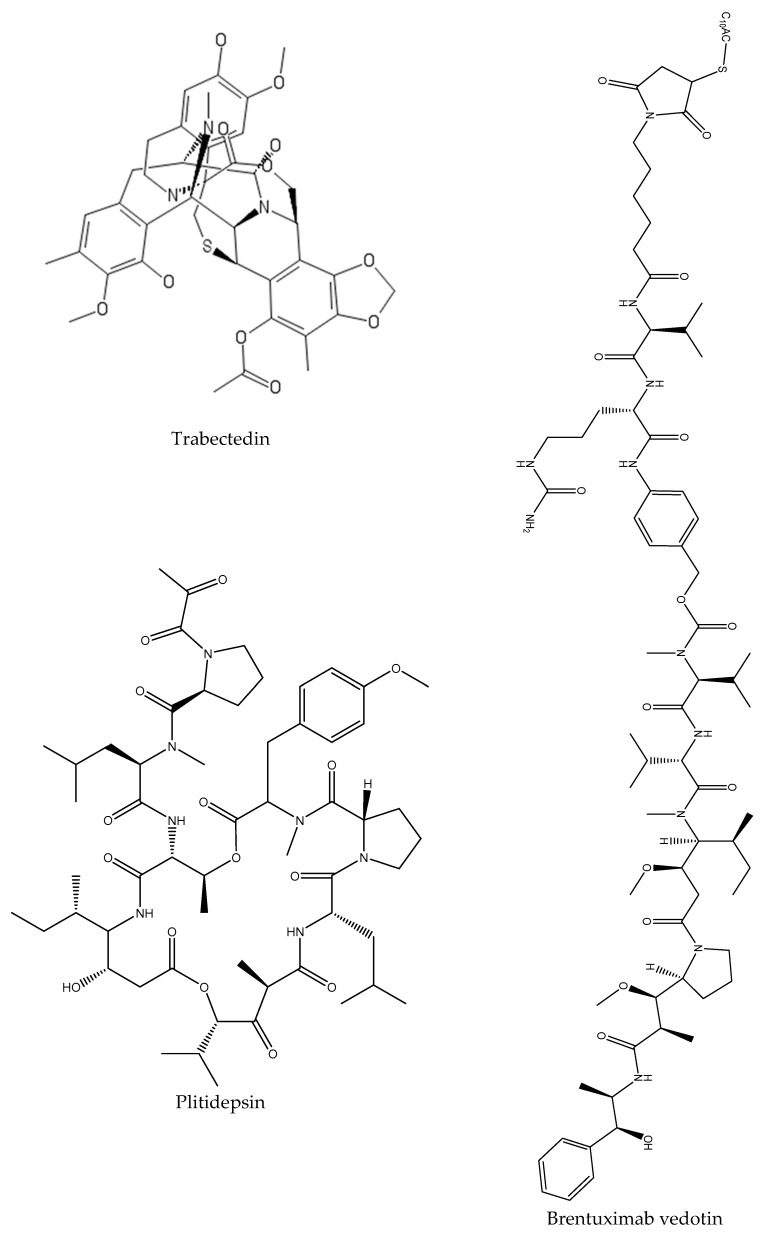
Chemical structures of eight approved marine-derived drugs: cytarabine, vidarabine ziconotide, omega-3-acid ethyl esters, eribulin mesylate, brentuximab vedotin, trabectedin and plitidepsin.
Figure 4
Figure 4
Chemical structures of eight approved marine-derived drugs: cytarabine, vidarabine ziconotide, omega-3-acid ethyl esters, eribulin mesylate, brentuximab vedotin, trabectedin and plitidepsin.
Figure 5
Figure 5
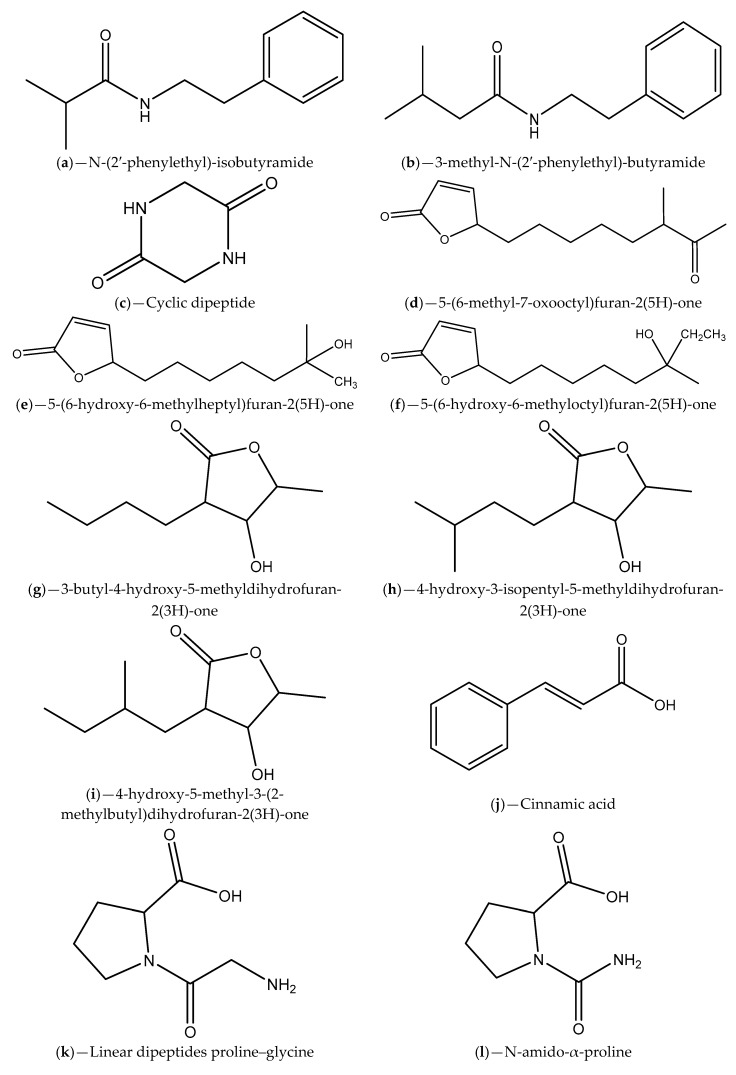
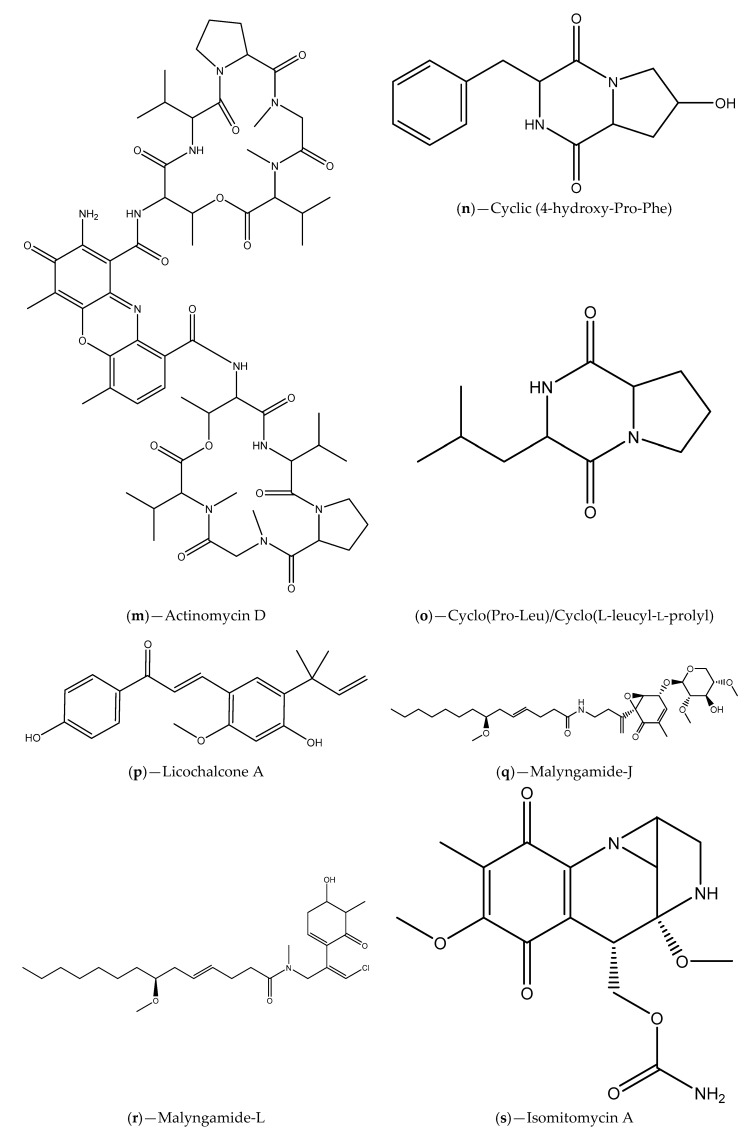
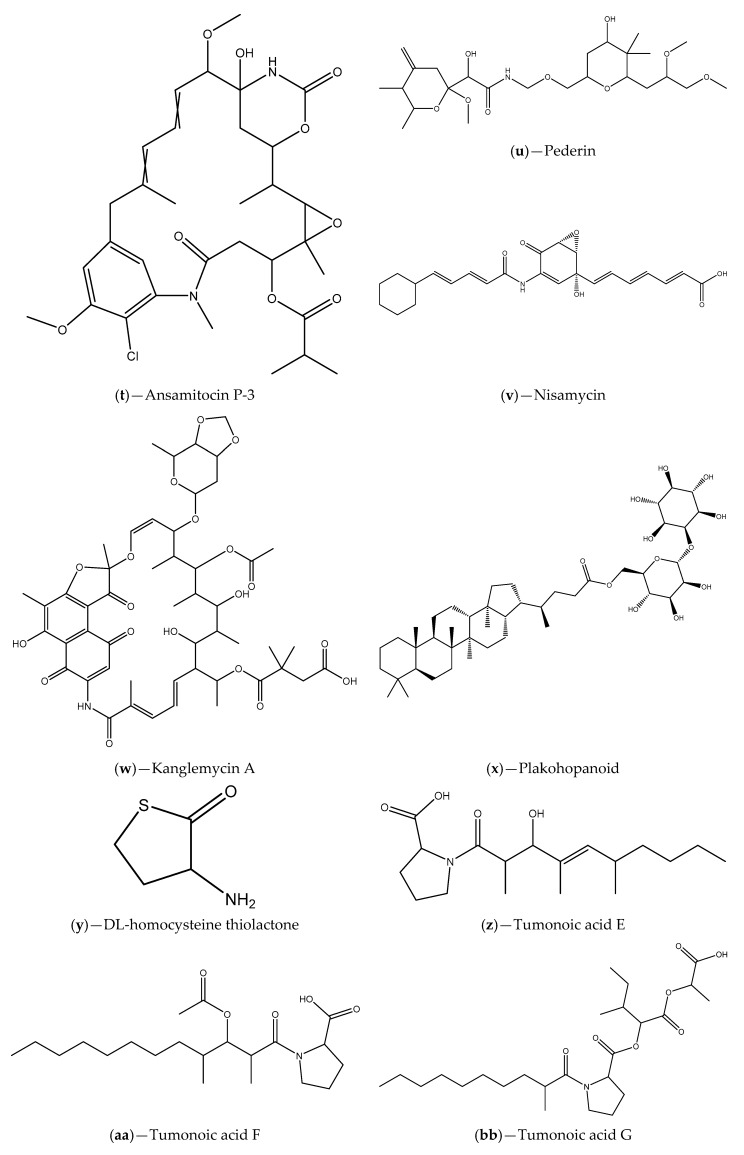
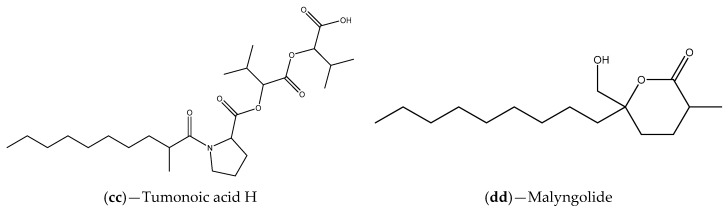
Chemical structures of secondary metabolites associated with bacterial QS inhibitory activities.
Figure 5
Figure 5
Chemical structures of secondary metabolites associated with bacterial QS inhibitory activities.
Figure 5
Figure 5
Chemical structures of secondary metabolites associated with bacterial QS inhibitory activities.
Figure 5
Figure 5
Chemical structures of secondary metabolites associated with bacterial QS inhibitory activities.

References

    1. Borges A., Saavedra M.J., Simões M. Insights on antimicrobial resistance, biofilms and the use of phytochemicals as new antimicrobial agents. Curr. Med. Chem. 2015;22:2590–2614. doi: 10.2174/0929867322666150530210522. - DOI - PubMed
    1. Cantas L., Shah S.Q.A., Cavaco L.M., Manaia C., Walsh F., Popowska M., Garelick H., Bürgmann H., Sørum H. A brief multi-disciplinary review on antimicrobial resistance in medicine and its linkage to the global environmental microbiota. Front. Microbiol. 2013;4:1–14. doi: 10.3389/fmicb.2013.00096. - DOI - PMC - PubMed
    1. Davies J., Davies D. Origins and evolution of antibiotic resistance. Microbiol. Mol. Biol. Rev. 2010;74:417–433. doi: 10.1128/MMBR.00016-10. - DOI - PMC - PubMed
    1. French G.L. Clinical impact and relevance of antibiotic resistance. Adv. Drug Deliv. Rev. 2005;57:1514–1527. doi: 10.1016/j.addr.2005.04.005. - DOI - PubMed
    1. Center for Disease Control and Prevention (CDC) Antibiotic Resistance Threats in the United States. Department of Health and Human Services; Washington, DC, USA: 2013. pp. 1–113.

MeSH terms

LinkOut - more resources