


Head and Neck Cancer Immunotherapy beyond the Checkpoint Blockade
- PMID: 31340724
- PMCID: PMC6704427
- DOI: 10.1177/0022034519864112
Head and Neck Cancer Immunotherapy beyond the Checkpoint Blockade
Abstract
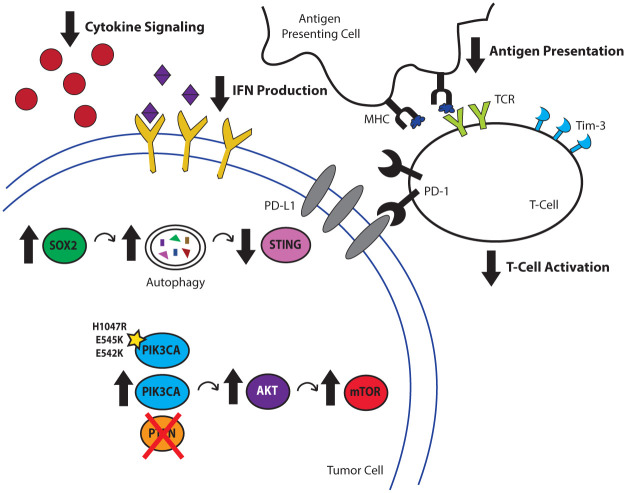
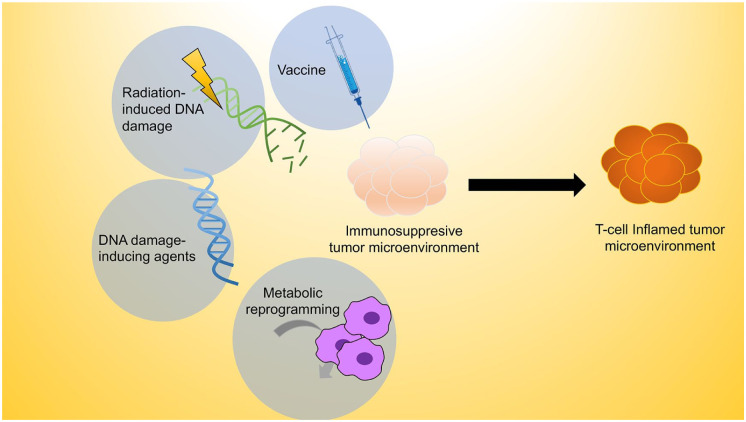
The success of immune checkpoint receptor blockade has brought exciting promises for the treatment of head and neck squamous cell carcinoma (HNSCC). While patients who respond to checkpoint inhibitors tend to develop a durable response, <15% of patients with HNSCC respond to immune checkpoint inhibitors, underscoring the critical need to alleviate cancer resistance to immunotherapy. Major advances have been made to elucidate the intrinsic and adaptive resistance mechanisms to immunotherapy. Central genomic events in HNSCC have been found to possess previously unknown roles in suppressing immune sensing. Such inhibitory function affects both the innate and adaptive arms of tumor-specific immunity. While checkpoint blockade effectively reinvigorates adaptive T-cell responses, additional targeting of the oncogenic inhibitors of innate immune sensing likely informs a novel and potent strategy for immune priming. This review discusses the recent advances on the identification of key HNSCC oncogenes that impair antitumor immunity and emerging immune-priming approaches that sensitize poorly immunogenic HNSCCs to checkpoint blockade. These approaches include but are not limited to cancer vaccine systems utilizing novel type I interferon agonists as immune adjuvants, radiation, DNA damage-inducing agents, and metabolic reprogramming. The goal of these multipronged approaches is to expand tumor-specific effector T-cells, break checkpoint receptor-mediated tolerance, and metabolically support sustained T-cell activation. The translation of therapeutics that reverses oncogenic inhibition of immune sensing requires thorough characterization of the HNSCC regulators of innate immune sensors, development of additional immunocompetent HNSCC mouse models, as well as engineering of more robust immune adjuvant delivery systems. Built on the success of checkpoint blockade, validation of novel immune-priming approaches holds key promises to expand the pool of responders to immunotherapy.
Keywords: cancer vaccines; glycolysis; head and neck cancer; immunotherapy; innate immunity; type I interferon.
Conflict of interest statement
The authors declare no potential conflicts of interest with respect to the authorship and/or publication of this article.
Figures
References
-
- Apetoh L, Ghiringhelli F, Tesniere A, Obeid M, Ortiz C, Criollo A, Mignot G, Maiuri MC, Ullrich E, Saulnier P, et al.. 2007. Toll-like receptor 4-dependent contribution of the immune system to anticancer chemotherapy and radiotherapy. Nat Med. 13(9):1050–1059. - PubMed
-
- Bauman JE, Cohen E, Ferris RL, Adelstein DJ, Brizel DM, Ridge JA, O’Sullivan B, Burtness BA, Butterfield LH, Carson WE, et al.. 2017. Immunotherapy of head and neck cancer: emerging clinical trials from a National Cancer Institute Head and Neck Cancer Steering Committee Planning Meeting. Cancer. 123(7):1259–1271. - PMC - PubMed
Publication types
MeSH terms
Substances
Grants and funding
LinkOut - more resources
Full Text Sources
Medical
