. 2020 Mar 1;11(2):420-438.
doi: 10.1093/advances/nmz074.

The Effect of Isolated and Synthetic Dietary Fibers on Markers of Metabolic Diseases in Human Intervention Studies: A Systematic Review

Affiliations

The Effect of Isolated and Synthetic Dietary Fibers on Markers of Metabolic Diseases in Human Intervention Studies: A Systematic Review

Anissa M Armet et al. Adv Nutr. .

Abstract

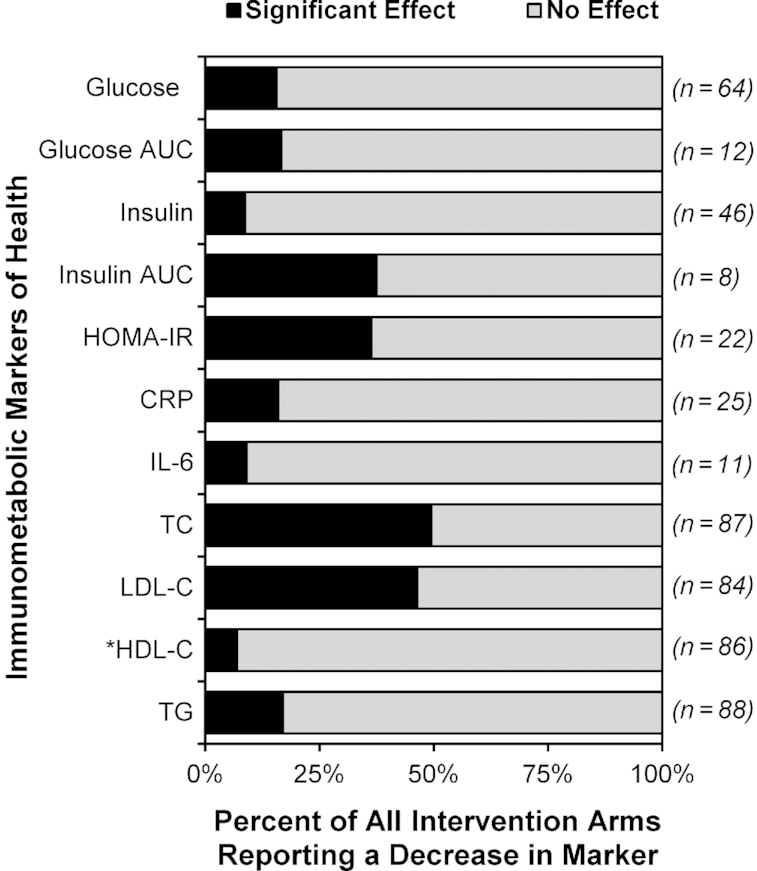
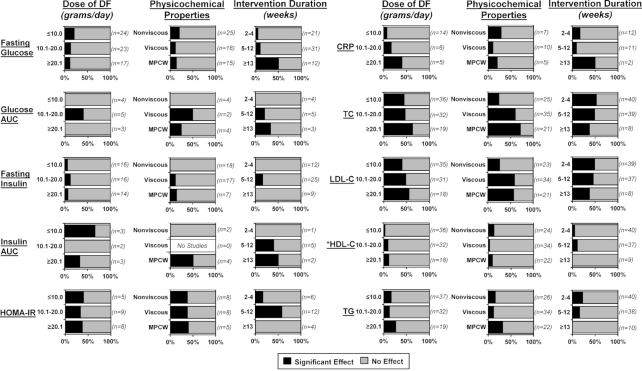
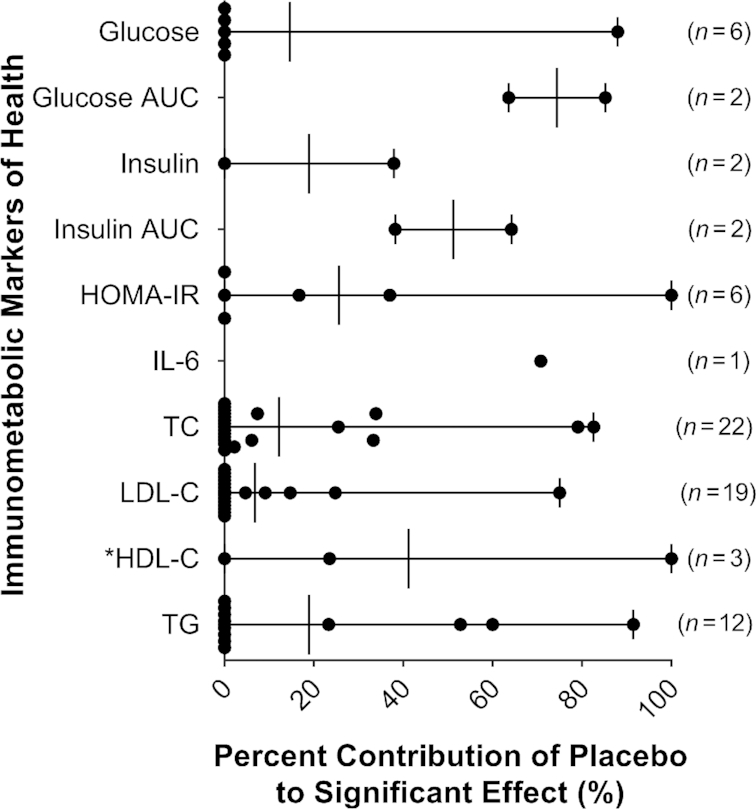
Observational studies provide strong evidence for the health benefits of dietary fiber (DF) intake; however, human intervention studies that supplement isolated and synthetic DFs have shown inconsistent results. Therefore, we conducted a systematic review to summarize the effects of DF supplementation on immunometabolic disease markers in intervention studies in healthy adults, and considered the role of DF dose, DF physicochemical properties, intervention duration, and the placebo used. Five databases were searched for studies published from 1990 to 2018 that assessed the effect of DF on immunometabolic markers. Eligible studies were those that supplemented isolated or synthetic DFs for ≥2 wk and reported baseline data to assess the effect of the placebo. In total, 77 publications were included. DF supplementation reduced total cholesterol (TC), LDL cholesterol, HOMA-IR, and insulin AUC in 36-49% of interventions. In contrast, <20% of the interventions reduced C-reactive protein (CRP), IL-6, glucose, glucose AUC, insulin, HDL cholesterol, and triglycerides. A higher proportion of interventions showed an effect if they used higher DF doses for CRP, TC, and LDL cholesterol (40-63%), viscous and mixed plant cell wall DFs for TC and LDL cholesterol (>50%), and longer intervention durations for CRP and glucose (50%). Half of the placebo-controlled studies used digestible carbohydrates as the placebo, which confounded findings for IL-6, glucose AUC, and insulin AUC. In conclusion, interventions with isolated and synthetic DFs resulted mainly in improved cholesterol concentrations and an attenuation of insulin resistance, whereas markers of dysglycemia and inflammation were largely unaffected. Although more research is needed to make reliable recommendations, a more targeted supplementation of DF with specific physicochemical properties at higher doses and for longer durations shows promise in enhancing several of its health effects.

Keywords: adults; dietary fiber; dysglycemia; dyslipidemia; insulin resistance; systemic inflammation.


Figures

FIGURE 1
FIGURE 1
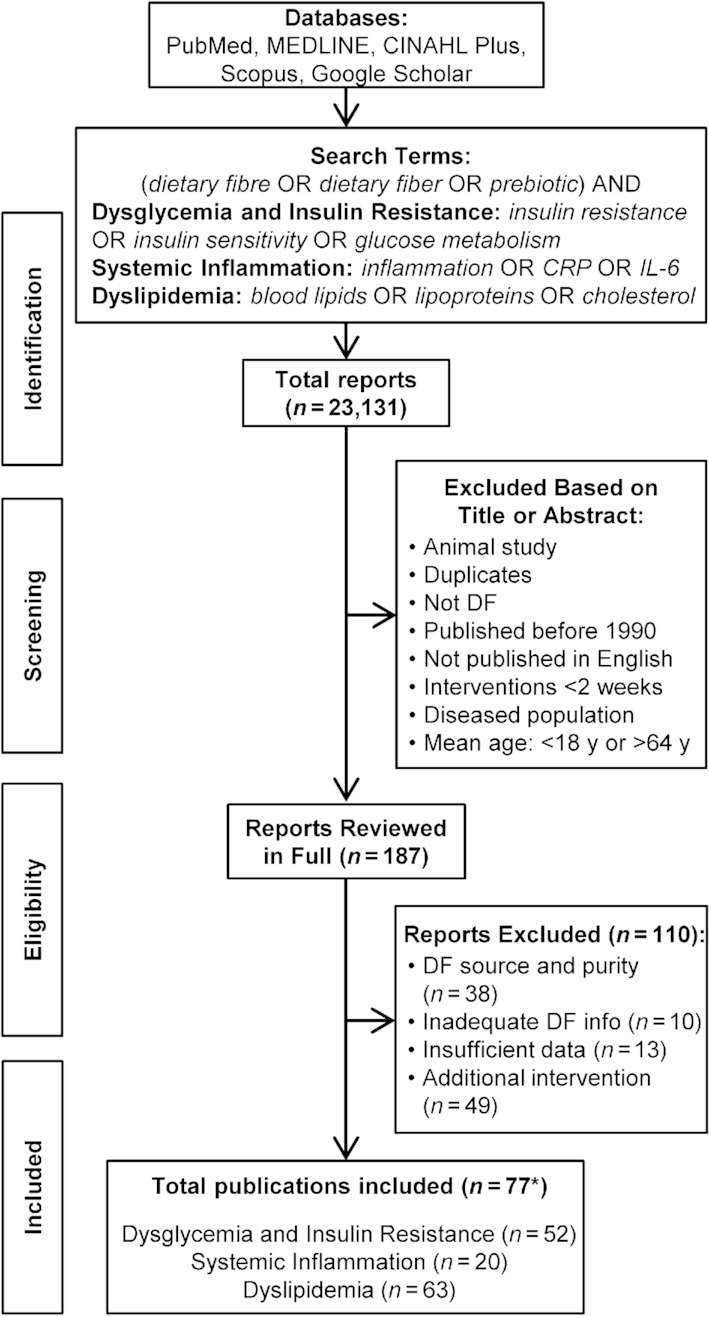
PRISMA flow diagram of article search and selection process. The literature search was first conducted during May 2016, and included all studies published from January 1990 onward. An updated literature search was conducted in December 2018. *Includes two articles that analyzed the same subject population but performed different analyses. CRP, C-reactive protein; DF, dietary fiber; PRISMA, Preferred Reporting Items for Systematic Reviews and Meta-Analyses.
FIGURE 2
FIGURE 2
Reported effects of DF supplementation on immunometabolic markers in healthy adults. Intervention arms were considered to have a significant decrease in the assessed marker relative to baseline and/or placebo if the reported P value was <0.05. Data are reported as a percentage of all intervention arms. *Considered to have a significant increase in HDL cholesterol rather than decrease. CRP, C-reactive protein; DF, dietary fiber; HDL-C, HDL cholesterol; LDL-C, LDL cholesterol; TC, total cholesterol; TG, triglycerides.
FIGURE 3
FIGURE 3
Reported effects of DF supplementation on immunometabolic markers in healthy adults when stratified by DF dose, DF physicochemical properties, and intervention duration. Intervention arms were considered to have a significant effect on the assessed marker relative to baseline and/or placebo if the reported P value was <0.05. Data are reported as a percentage of all intervention arms that assessed these markers. DFs were categorized as soluble with minimal viscosity, soluble with high viscosity, and mixed plant cell wall DFs (nonviscous, viscous, and MPCW, respectively) using information provided in the publications themselves or studies that characterized similar DF products. Seven interventions supplemented a resistant starch, but only 2 reported significant effects to the markers: 25 g/d reduced insulin, insulin AUC, and HOMA-IR (66), and 24 g/d reduced glucose, TC, and LDL cholesterol (92). *Considered to have a significant increase in HDL cholesterol rather than decrease. CRP, C-reactive protein; DF, dietary fiber; HDL-C, HDL cholesterol; LDL-C, LDL cholesterol; MPCW, mixed plant cell wall; TC, total cholesterol; TG, triglycerides.
FIGURE 4
FIGURE 4
Contribution of the placebo to the perceived effect of DF on immunometabolic markers. The change relative to baseline was calculated and subtracted from the change reported by the placebo (i.e., ∆P − ∆DF). The change relative to baseline in each intervention arm and placebo were then both divided by this value and multiplied by 100 formula image to calculate the percent of the effect attributable to DF supplementation and to placebo, respectively. *Considered to have a significant increase in HDL cholesterol rather than decrease. HDL-C, HDL cholesterol; LDL-C, LDL cholesterol; TC, total cholesterol; TG, triglycerides.

References

    1. Ludwig DS, Hu FB, Tappy L, Brand-Miller J. Dietary carbohydrates: role of quality and quantity in chronic disease. BMJ. 2018;361:k2340. - PMC - PubMed
    1. Jones JM. CODEX-aligned dietary fiber definitions help to bridge the “fiber gap”. Nutr J. 2014;13:34. - PMC - PubMed
    1. Dahl WJ, Stewart ML.. Position of the Academy of Nutrition and Dietetics: Health Implications of Dietary Fiber. J Acad Nutr Diet. 2015;115(11):1861–70. - PubMed
    1. Delcour JA, Aman P, Courtin CM, Hamaker BR, Verbeke K. Prebiotics, fermentable dietary fiber, and health claims. Adv Nutr. 2016;7(1):1–4. - PMC - PubMed
    1. Reynolds A, Mann J, Cummings J, Winter N, Mete E, Morenga LT. Carbohydrate quality and human health: a series of systematic reviews and meta-analyses. Lancet. 2019;393(10170):434–45. - PubMed

Publication types

Grants and funding